24 Results for "

Memory Dysfunction

" in MedChemExpress (MCE) Product Catalog:
Products (24)

24 Results for "Memory Dysfunction" in MCE Product Catalog:

33
33 Publications Verification
Cat. No.: HY-18731
CAS No.: 214358-33-5
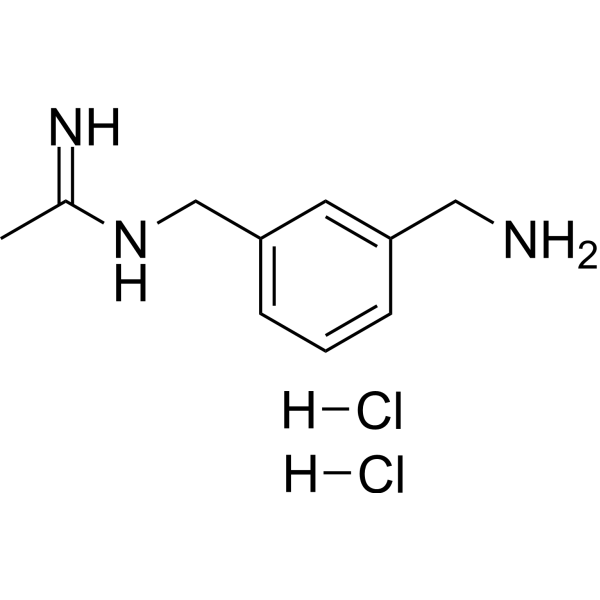
1400W dihydrochloride is the dihydrochloride form of 1400W (HY-18730). 1400W is a slow, tight binding, and highly selective inducible nitric-oxide synthase (iNOS) inhibitor, with a Kd value ≤ 7 nM. 1400W inhibits iNOS induction in microglial cells, and reduces generation of NO, thereby mitigating oxidative stress and neuronal cell apoptosis in the rat cerebral cortex, and improving the spatial memory dysfunction caused by acute hypobaric hypoxia-reoxygenation .
loading...
    loading...
33
33 Publications Verification
Cat. No.: HY-18730
CAS No.: 180001-34-7
Synonyms: W1400
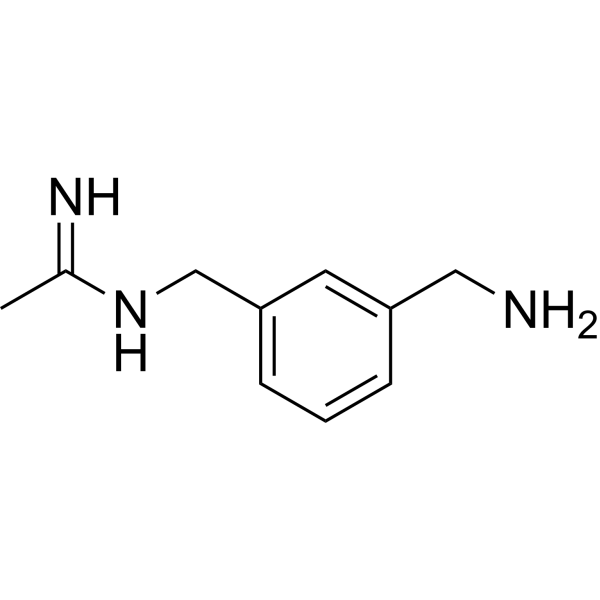
1400W is a slow, tight binding, and highly selective inducible nitric-oxide synthase (iNOS) inhibitor, with a Kd value ≤ 7 nM. 1400W inhibits iNOS induction in microglial cells, and reduces generation of NO, thereby mitigating oxidative stress and neuronal cell apoptosis in the rat cerebral cortex, and improving the spatial memory dysfunction caused by acute hypobaric hypoxia-reoxygenation .
loading...
    loading...
2
2 Cited Publications
Cat. No.: HY-148013
CAS No.: 702668-62-0
Purity:  99.94%
K284-6111 is a high-affinity and orally active CHI3L1 inhibitor, and inhibits CHI3L1 expression. K284-6111 inhibits ERK and NF-κB pathway. K284-6111 suppresses nuclear translocation of p50 and p65, and phosphorylation of IκB. K284-6111 improves memory dysfunction by alleviating amyloidogenesis and neuroinflammation, with the reduction of inflammatory proteins (eg: iNOS, COX-2, GFAP, and Iba-1). K284-6111 reduces atopic-like skin inflammation and inhibits LPS (HY-D1056) -induced liver injury. K284-6111 can be used for the study of Alzheimer's diseases and sepsis like hepatic injury .
loading...
    loading...
1
1 Cited Publications
Cat. No.: HY-P0267
CAS No.: 121062-08-6
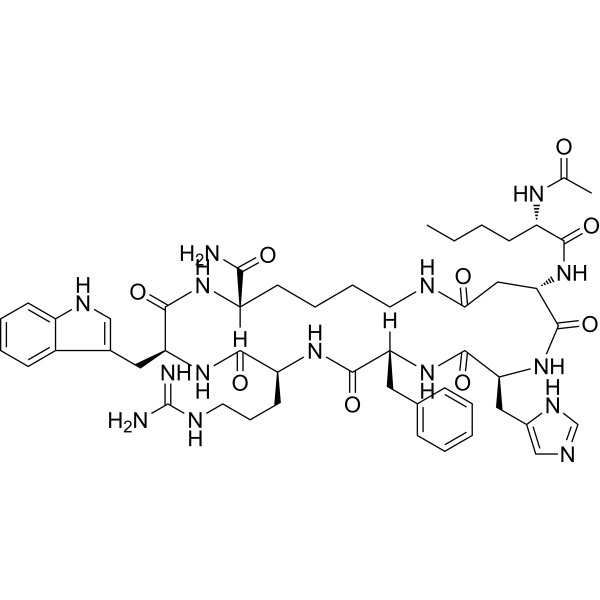
Melanotan (MT)-II is a melanocortin receptor agonist. Melanotan (MT)-II activates melanocortin receptor 3 and melanocortin receptor 4, and stimulates the release of central endogenous oxytocin. Melanotan (MT)-II reverses recognition memory impairment, increased anxiety levels and reduced exploratory tendency in zebrafish exposed to short-term high-fat diet. Melanotan (MT)-II improves impaired social behavior indicators in mouse models of autism spectrum disorder. Melanotan (MT)-II induces weight loss, reduces food intake and exerts anorectic effects. Melanotan (MT)-II increases intracavernous pressure and erectile activity in brown rats. Melanotan (MT)-II can be used in studies related to memory impairment, anxiety, reduced exploratory behavior, autism spectrum disorder, obesity and erectile dysfunction .
loading...
    loading...
1
1 Cited Publications
Cat. No.: HY-160505
CAS No.: 2648837-04-9
Target:  

HCN Channel

Research Areas:  

Neurological Disease

RO-275 (compound 29) is a potent, selective and orally active HCN1 inhibitor with IC50 values of 0.046, 14.3, 4.6, 13.9 µM for HCN1, HCN2, HCN3, HCN4, respectively. RO-275 rescues decremented working memory. RO-275 has the potential for the research of cognitive dysfunction in brain disorder .
loading...
    loading...
Cat. No.: HY-B0978
CAS No.: 134-62-3
Synonyms: DEET; N,N-Diethyl-m-toluamide
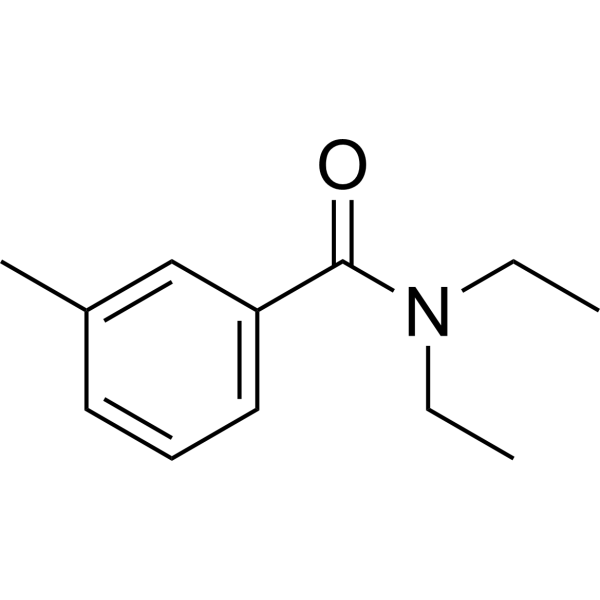
Diethyltoluamide (DEET) is the most common active ingredient in insect repellents. It is intended to provide protection against mosquitoes, ticks, fleas, chiggers, leeches, and many other biting insects. Diethyltoluamide is toxic to hepatocytes and can lead to many physiological, pharmacological, and behavioral abnormalities, particularly motor deficits and learning and memory dysfunction .
loading...
    loading...
Cat. No.: HY-16361A
CAS No.: 200189-97-5
Synonyms: CGP3466B; CGP3446 maleate; TCH346 maleate
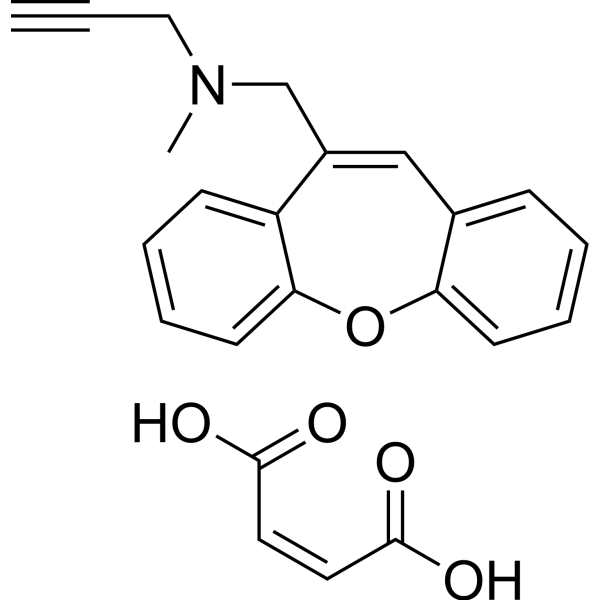
Omigapil maleate (CGP3466B), an orally active GAPDH nitrosylation inhibitor, abrogates Aβ1-42-induced tau acetylation, memory impairment, and locomotor dysfunction in mice. Omigapil maleate has the potential for the research of Alzheimer's disease. Omigapil maleate is a apoptosis inhibitor. Omigapil maleate can be used for the research of congenital muscular dystrophy (CMD). Omigapil maleate is a click chemistry reagent, it contains an Alkyne group and can undergo copper-catalyzed azide-alkyne cycloaddition (CuAAc) with molecules containing Azide groups .
loading...
    loading...
Cat. No.: HY-125931
CAS No.: 272786-64-8
Purity:  99.78%
Synonyms: DM232
Target:  

iGluR

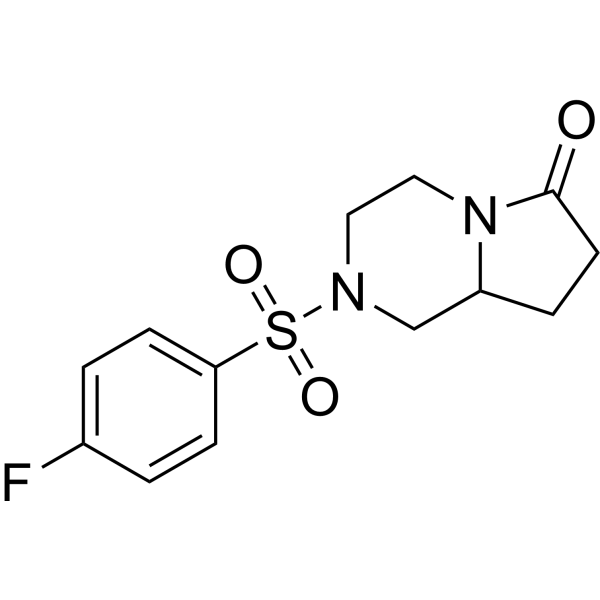
Unifiram (DM232) is a AMPA receptor activator and cognitive enhancer. Unifiram activates the AMPA-mediated neurotransmission system. Unifiram reverses NBQX-induced amnesia in the passive avoidance test in mice. Unifiram reverses the antagonistic effect of kynurenic acid on NMDA-mediated [ 3H]NA release in rat hippocampal slices. Unifiram enhances excitatory synaptic transmission in the rat hippocampus in vitro. Unifiram can be used in studies related to amnesia and cognitive dysfunction, including age-related memory decline, neurodegenerative diseases such as Alzheimer's disease or Parkinson's disease, multiple sclerosis, schizophrenia, and attention deficit hyperactivity disorder .
loading...
    loading...
Cat. No.: HY-N8210
CAS No.: 446-71-9
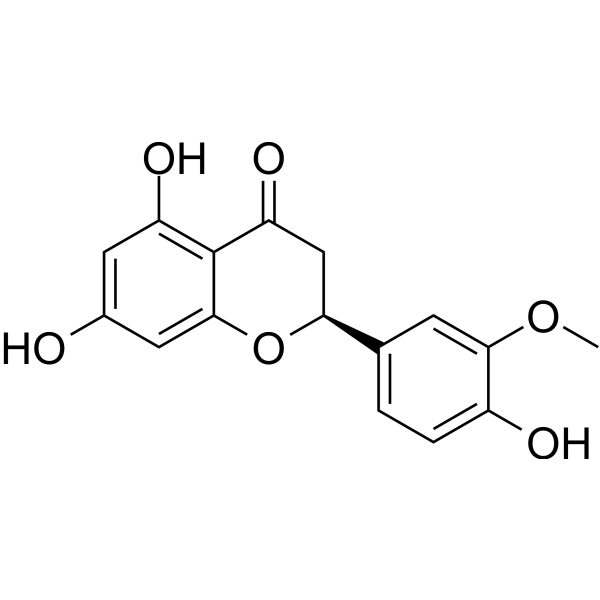
Homoeriodictyol is an orally active, bitter-tasting flavanone that can penetrate the blood-brain barrier. Homoeriodictyol enhances synaptic-related protein expression through NCOA4-mediated ferritin autophagy. Homoeriodictyol improves memory impairment in mice by inhibiting the NLRP3 inflammasome. Homoeriodictyol protects human endothelial cells from oxidative damage by activating Nrf2 and inhibiting mitochondrial dysfunction. Homoeriodictyol enhances ROS activity and induces apoptosis, exhibiting anticancer effects. Homoeriodictyol inhibits the survival and migration of androgen-resistant prostate cancer cells in vitro. Homoeriodictyol exerts antinociceptive activity in mice in vivo .
loading...
    loading...
Cat. No.: HY-B0978R
CAS No.: 134-62-3
Synonyms: DEET (Standard); N,N-Diethyl-m-toluamide (Standard)
Diethyltoluamide (Standard) is the analytical standard of Diethyltoluamide. This product is intended for research and analytical applications. Diethyltoluamide (DEET) is the most common active ingredient in insect repellents. It is intended to provide protection against mosquitoes, ticks, fleas, chiggers, leeches, and many other biting insects. Diethyltoluamide is toxic to hepatocytes and can lead to many physiological, pharmacological, and behavioral abnormal ities, particularly motor deficits and learning and memory dysfunction .
loading...
    loading...
Cat. No.: HY-W987949
CAS No.: 119737-52-9
Target:  

Others

Research Areas:  

Neurological Disease

Z-4105 is an orally active nootropic agent. Z-4105 reverses the amnesic effects of electroconvulsive shock (ECS) and methylazoxymethanol acetate (MAM), and improves learning and memory functions. Z-4105 enhances the activity of the brain cholinergic system without affecting other neurotransmitter systems. Z-4105 significantly alleviates neuropathic pain in rats. Z-4105 can be used in the research of neuropathic pain and brain dysfunction .
loading...
    loading...
Cat. No.: HY-18731R
CAS No.: 214358-33-5
1400W (Dihydrochloride) (Standard) is the analytical standard of 1400W (Dihydrochloride). This product is intended for research and analytical applications. 1400W dihydrochloride is the dihydrochloride form of 1400W (HY-18730). 1400W is a slow, tight binding, and highly selective inducible nitric-oxide synthase (iNOS) inhibitor, with a Kd value ≤ 7 nM. 1400W inhibits iNOS induction in microglial cells, and reduces generation of NO, thereby mitigating oxidative stress and neuronal cell apoptosis in the rat cerebral cortex, and improving the spatial memory dysfunction caused by acute hypobaric hypoxia-reoxygenation .
loading...
    loading...
Cat. No.: HY-N8210R
CAS No.: 446-71-9
Homoeriodictyol (Standard) is the analytical standard of Homoeriodictyol (HY-N8210). This product is intended for research and analytical applications. Homoeriodictyol is an orally active, bitter-tasting flavanone that can penetrate the blood-brain barrier. Homoeriodictyol enhances synaptic-related protein expression through NCOA4-mediated ferritin autophagy. Homoeriodictyol improves memory impairment in mice by inhibiting the NLRP3 inflammasome. Homoeriodictyol protects human endothelial cells from oxidative damage by activating Nrf2 and inhibiting mitochondrial dysfunction. Homoeriodictyol enhances ROS activity and induces apoptosis, exhibiting anticancer effects. Homoeriodictyol inhibits the survival and migration of androgen-resistant prostate cancer cells in vitro. Homoeriodictyol exerts antinociceptive activity in mice in vivo .
loading...
    loading...
Cat. No.: HY-183572
CAS No.: 774142-74-4
Target:  

Acyltransferase

Research Areas:  

Neurological Disease Cancer

BW813U is a blood-brain barrier-permeable choline acetyltransferase (ChAT) inhibitor. BW813U reduces acetylcholine secretion, decreases cancer cell viability, and slows tumor growth rate. BW813U alters reference memory and causes working memory dysfunction. BW813U shows a synergistic effect with age factors in memory deficits of rats. BW813U can be used in studies related to Alzheimer's disease and lung cancer .
loading...
    loading...
Cat. No.: HY-168167
CAS No.: 38455-99-1
Target:  

Endogenous Metabolite

Research Areas:  

Neurological Disease

BuChE-IN-14 is a novel compound that selectively inhibits acetylcholinesterase (AChE) activity. BuChE-IN-14 showed a concentration-dependent inhibitory effect on AChE in rat brain in vitro experiments. BuChE-IN-14 can increase the extracellular acetylcholine (ACh) concentration in the rat hippocampus and striatum at a certain dose. BuChE-IN-14 may help improve memory impairment caused by cholinergic dysfunction .
loading...
    loading...
Cat. No.: HY-N20637
CAS No.: 176182-04-0
Polygalasaponin XXXII is an orally active cognitive enhancer. Polygalasaponin XXXII promotes the phosphorylation of ERK, CREB, Synapsin I and TrkB. Polygalasaponin XXXII enhances basal synaptic transmission. Polygalasaponin XXXII attenuates Scopolamine (HY-N0296)-induced cognitive impairment and improves hippocampus-dependent learning and memory abilities. Polygalasaponin XXXII can be used in research related to cognitive dysfunction .
loading...
    loading...
Cat. No.: HY-P0267A
CAS No.: 1036322-26-5
Melanotan (MT)-II acetate is a melanocortin receptor agonist. Melanotan (MT)-II acetate activates melanocortin receptor 3 and melanocortin receptor 4, and stimulates the release of central endogenous oxytocin. Melanotan (MT)-II acetate reverses recognition memory impairment, increased anxiety levels and reduced exploratory tendency in zebrafish exposed to short-term high-fat diet. Melanotan (MT)-II acetate improves impaired social behavior indicators in mouse models of autism spectrum disorder. Melanotan (MT)-II acetate induces weight loss, reduces food intake and exerts anorectic effects. Melanotan (MT)-II acetate increases intracavernous pressure and erectile activity in brown rats. Melanotan (MT)-II acetate can be used in studies related to memory impairment, anxiety, reduced exploratory behavior, autism spectrum disorder, obesity and erectile dysfunction .
loading...
    loading...
Cat. No.: HY-16361
CAS No.: 181296-84-4
Synonyms: CGP3466B free base; TCH346
Omigapil (CGP3466B free base), an orally active GAPDH nitrosylation inhibitor, abrogates Aβ1-42-induced tau acetylation, memory impairment, and locomotor dysfunction in mice. Omigapil has the potential for the research of Alzheimer's disease. Omigapil is a apoptosis inhibitor. Omigapil can be used for the research of congenital muscular dystrophy (CMD). Omigapil is a click chemistry reagent, it contains an Alkyne group and can undergo copper-catalyzed azide-alkyne cycloaddition (CuAAc) with molecules containing Azide groups .
loading...
    loading...
Cat. No.: HY-180946
CAS No.: 2678601-07-3
AChE-IN-105 (Compound C5) is a potent, mixed AChE inhibitor with an IC50 of 5.02 μM. AChE-IN-105 scavenges ROS, decreases Hydrogen peroxide-induced Caspase-3 activation, reduces activity of the Nrf2-ARE pathway. AChE-IN-105 prevents memory impairments in the Scopolamine (HY-N0296)-induced cognitive dysfunction zebrafish model. AChE-IN-105 has potent antioxidant activity. AChE-IN-105 can be used in the research of Alzheimer's disease .
loading...
    loading...
Cat. No.: HY-P12338
HNSS peptide is a chimeric hybrid peptide composed of the neuroprotective peptide S14G-Humanin and the mitochondria-targeted antioxidant peptide SS31. HNSS peptide is readily cleared in vivo and can be combined with nanocarriers to improve its stability. HNSS can be delivered via the FGFR1-targeting nanocarrier FGL-NP (Cit), ameliorating mitochondrial dysfunction, Aβ deposition, tau hyperphosphorylation, and cholinergic neuronal damage, and alleviating memory deficits in Alzheimer's disease mice. HNSS peptide is applicable for Alzheimer's disease-related research .
loading...
    loading...

