
25 Results for "

carotid

" in MedChemExpress (MCE) Product Catalog:
Products (25)

25 Results for "carotid" in MCE Product Catalog:

2
2 Cited Publications
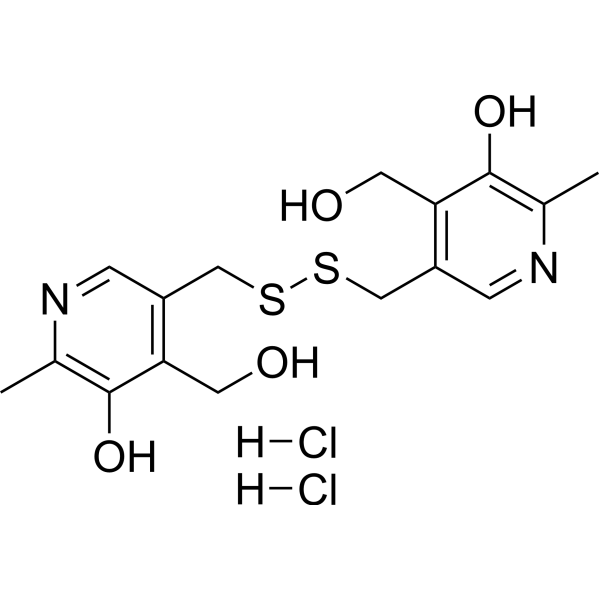
Cat. No.: HY-B0910A
CAS No.: 10049-83-9
Synonyms: Pyritinol dihydrochloride; Pyridoxine disulfide dihydrochloride; Vitamin B6 disulfide dihydrochloride
Pyrithioxin (Pyritinol) dihydrochloride is the dihydrochloride salt of Pyrithioxin (HY-B0910). Pyrithioxin (Pyritinol) is an orally active neurodynamic compound. Pyrithioxin can promote the metabolism of glucose and amino acids, increase carotid blood flow and improve cerebral blood flow. Pyrithioxin exhibits anti-inflammation, anti-tumor and neuroprotective effect. Pyrithioxin can be used for the researches of cancer, inflammation, immunology, metabolic and neurological disease such as cerebral infarct, epilepsy, fibrosarcomas and rheumatoid polyarthritis .
loading...
    loading...
2
2 Cited Publications
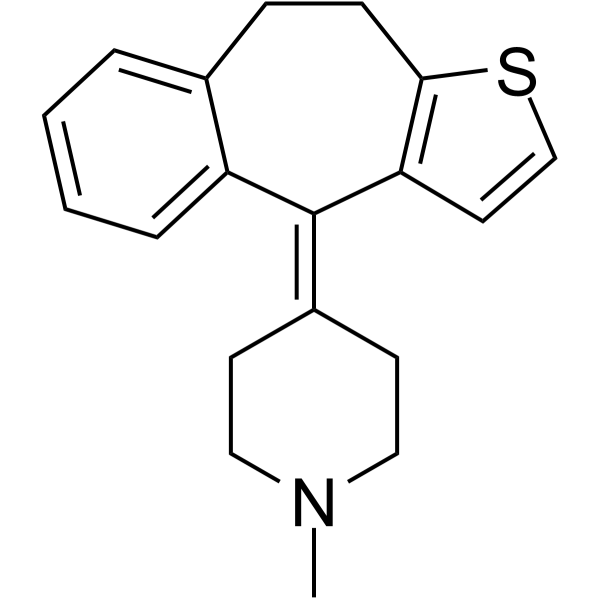
Cat. No.: HY-B0115
CAS No.: 15574-96-6
Synonyms: Pizotyline; BC-105
Pizotifen (Pizotyline) is a 5-HT2 receptor antagonist. Pizotifen inhibits the Wnt/β-catenin-EMT signaling pathway and induces mitochondria-mediated Apoptosis. Pizotifen causes transient ERK1/2 phosphorylation and restores ATP. Pizotifen blocks Serotonin (HY-B1473A)-mediated platelet activation, inhibits Serotonin-enhanced ADP-induced platelet aggregation, and prolongs carotid artery occlusion and tail bleeding time. Pizotifen exhibits anticancer activity against gastric cancer and colon cancer. Pizotifen exerts neuroprotective effects in the striatum of R6/2 mice. Pizotifen can be used for research on Huntington's disease, metastasis, and thromboembolic diseases .
loading...
    loading...
2
2 Cited Publications
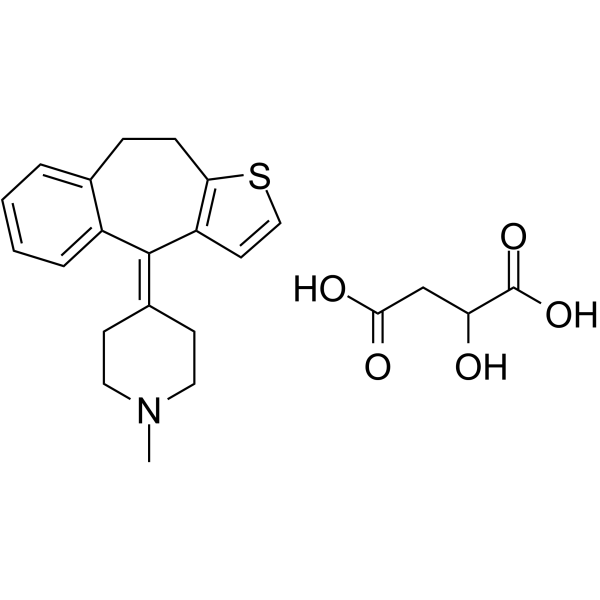
Cat. No.: HY-B0115A
CAS No.: 5189-11-7
Synonyms: Pizotyline malate; BC-105 malate
Pizotifen malate (Pizotyline malate) is a 5-HT2 receptor antagonist. Pizotifen malate inhibits the Wnt/β-catenin-EMT signaling pathway and induces mitochondria-mediated Apoptosis. Pizotifen malate causes transient ERK1/2 phosphorylation and restores ATP. Pizotifen malate blocks Serotonin (HY-B1473A)-mediated platelet activation, inhibits Serotonin-enhanced ADP-induced platelet aggregation, and prolongs carotid artery occlusion and tail bleeding time. Pizotifen malate exhibits anticancer activity against gastric cancer and colon cancer. Pizotifen malate exerts neuroprotective effects in the striatum of R6/2 mice. Pizotifen malate can be used for research on gastric cancer, colon cancer, Huntington's disease, metastasis, and thromboembolic diseases .
loading...
    loading...
2
2 Cited Publications
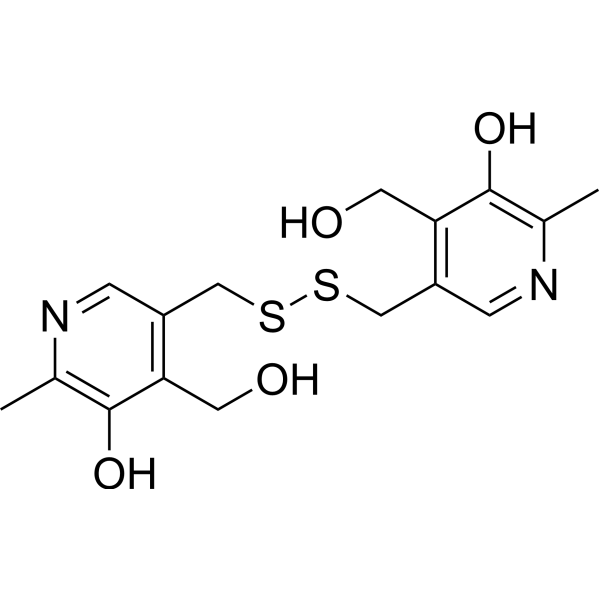
Cat. No.: HY-B0910
CAS No.: 1098-97-1
Synonyms: Pyritinol; Pyridoxine disulfide; Vitamin B6 disulfide
Pyrithioxin (Pyritinol) is an orally active neurodynamic compound. Pyrithioxin can promote the metabolism of glucose and amino acids, increase carotid blood flow and improve cerebral blood flow. Pyrithioxin exhibits anti-inflammation, anti-tumor and neuroprotective effect. Pyrithioxin can be used for the researches of cancer, inflammation, immunology, metabolic and neurological disease such as cerebral infarct, epilepsy, fibrosarcomas and rheumatoid polyarthritis .
loading...
    loading...
1
1 Cited Publications
Cat. No.: HY-B0551
CAS No.: 309-29-5
Target:  

Potassium Channel

Research Areas:  

Neurological Disease

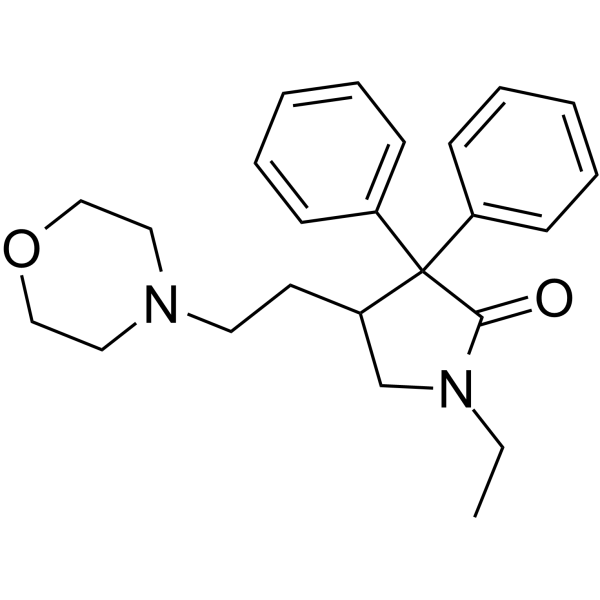
Doxapram is a respiratory stimulant. Doxapram increases breathing rate and depth by acting on the brain's respiratory centers and peripheral chemoreceptors. Doxapram inhibits TASK-1, TASK-3, TASK-1/TASK-3 heterodimeric channel function with EC50s of 410 nM, 37 μM, 9 μM, respectively. Doxapram inhibits the Ca²⁺-activated potassium current (IC50 ≈ 13 μM) and Ca²⁺-independent potassium current (IC50 ≈ 20 μM) in type I cells of the carotid body. Doxapram significantly prolongs the effective refractory period of the atrium and has an anti-arrhythmic effect. Doxapram can be used for the study of respiratory depression such as post-anesthesia respiratory depression, chronic obstructive pulmonary disease and apnea of prematurity .
loading...
    loading...
1
1 Cited Publications
Cat. No.: HY-B0551A
CAS No.: 7081-53-0
Target:  

Potassium Channel

Research Areas:  

Neurological Disease

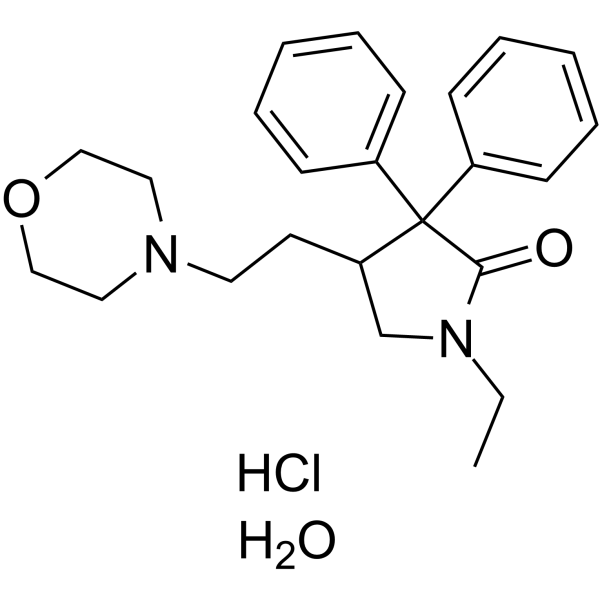
Doxapram hydrochloride hydrate is a respiratory stimulant. Doxapram hydrochloride hydrate increases breathing rate and depth by acting on the brain's respiratory centers and peripheral chemoreceptors. Doxapram hydrochloride hydrate inhibits TASK-1, TASK-3, TASK-1/TASK-3 heterodimeric channel function with EC50s of 410 nM, 37 μM, 9 μM, respectively. Doxapram hydrochloride hydrate inhibits the Ca²⁺-activated potassium current (IC50 ≈ 13 μM) and Ca²⁺-independent potassium current (IC50 ≈ 20 μM) in type I cells of the carotid body. Doxapram hydrochloride hydrate significantly prolongs the effective refractory period of the atrium and has an anti-arrhythmic effect. Doxapram hydrochloride hydrate can be used for the study of respiratory depression such as post-anesthesia respiratory depression, chronic obstructive pulmonary disease and apnea of prematurity .
loading...
    loading...
Cat. No.: HY-P99959
CAS No.: 2379805-59-9
Synonyms: MT-3921; rH116A3

Target:  

TGF-β Receptor

Research Areas:  

Neurological Disease

Unasnemab (MT-3921) is a humanised IgG1 monoclonal antibody that binds to repulsive guidance molecule A (RGMa). Unasnemab improves locomotor function and promotes neuroregeneration. Unasnemab exerts ameliorative effects on hippocampal neurogenesis impairment and cognitive decline in db/db mice, Streptozotocin (STZ) (HY-13753)-induced type 1 diabetic and bilateral common carotid artery stenosis (BCAS)-induced mice. Unasnemab can be used for the research of spinal cord injury, diabetes-induced neurological impairments .
loading...
    loading...
Cat. No.: HY-114511
CAS No.: 1004551-40-9
Purity:  99.90%
Target:  

Factor VIIa

Research Areas:  

Cardiovascular Disease

BMS-593214 is an active site-directed factor (F) VIIa inhibitor. BMS-593214 shows antithrombotic and antihaemostatic properties. BMS-593214 is a direct competitive inhibitor of human FVIIa and a non-competitive inhibitor of Viia-activated substrate FX. BMS-593214 prevents electroinduced carotid artery thrombosis (AT) and wire induced vena cava thrombosis (VT) .
loading...
    loading...
Cat. No.: HY-19210
CAS No.: 157659-79-5
Target:  

Endothelin Receptor

Research Areas:  

Cardiovascular Disease

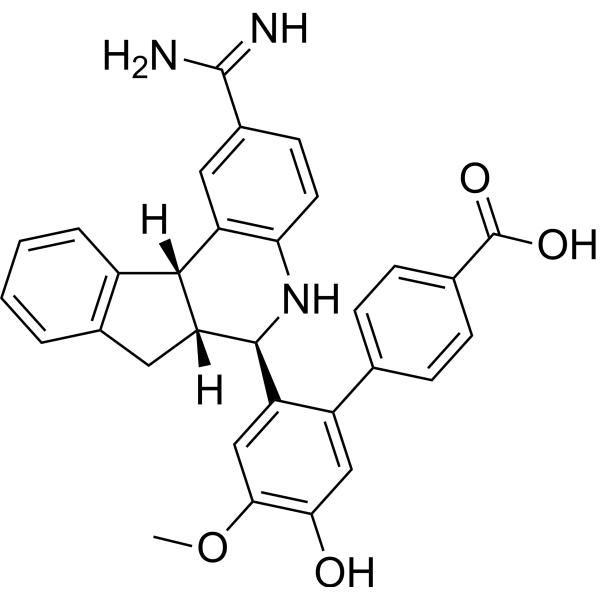
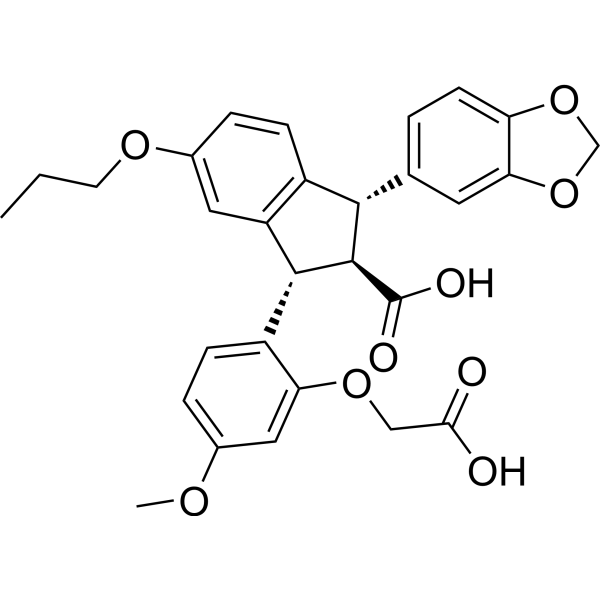
SB-209670 is an extremely potent and highly specific non-peptide, subnanomolar endothelin (ET) receptor antagonist. SB 209670 selectively inhibits binding of 125I-labeled ET-1 to cloned human ET receptor subtypes ETA and ETB (Ki=0.2 and 18 nM, respectively). SB 209670 produces a dose-dependent reduction in blood pressure in hypertensive rats, protects from ischemia-induced neuronal degeneration in a gerbil stroke model, and attenuates neointima formation following rat carotid artery balloon angioplasty .
loading...
    loading...
Cat. No.: HY-W051612
CAS No.: 16900-57-5
DL-Propargylglycine hydrochloride is an irreversible and selective CSE inhibitor that blocks the biosynthesis of endogenous hydrogen sulfide. DL-Propargylglycine hydrochloride induces ROS and TGF-β1 expression. DL-Propargylglycine hydrochloride downregulates carotid ACE2 and Ang-(1-7), and elevates Ang II. DL-Propargylglycine hydrochloride upregulates ICAM-1/LFA-1, exacerbating Aspirin (HY-14654)-induced gastric mucosal injury. DL-Propargylglycine hydrochloride is used in research on diabetes-induced liver injury, diabetic nephropathy, atherosclerosis, gastric mucosal injury, hemorrhagic shock, and Streptococcus agalactiae infection .
loading...
    loading...
Cat. No.: HY-P3973
CAS No.: 929555-19-1
Target:  

Bradykinin Receptor

Research Areas:  

Others

Thrombostatin cont-1 is an analogue of thrombostatin, which is a a bradykinin metabolite. Thrombostatin could decrease platelet activation in the canine carotid artery model of balloon angioplasty (BA) injury .
loading...
    loading...
Cat. No.: HY-122237
CAS No.: 219705-77-8
Target:  

Endothelin Receptor

Research Areas:  

Cardiovascular Disease

ATZ-1993 is an orally active, nonpeptide endothelin receptor subtype Aand endothelin receptor subtype B antagonist with pKi values of 8.69, 7.20, respectively. ATZ-1993 has the potential for the research of intimal hyperplasia after balloon denudation of the carotid artery .
loading...
    loading...
Cat. No.: HY-P3082
CAS No.: 126053-71-2
Target:  

Endogenous Metabolite

Research Areas:  

Cardiovascular Disease

SKF 106760 is a potent platelet fibrin receptor (glycoprotein IIb/IIIa) antagonist with significant antiplatelet and antithrombotic activities. SKF 106760 inhibits platelet aggregation in dogs in vitro and prevents thrombus formation in stenotic carotid arteries. SKF 106760 has also shown elimination effects against aspirin-resistant thrombi that develop in the setting of high-grade stenosis .
loading...
    loading...
Cat. No.: HY-119883
CAS No.: 750531-54-5
Target:  

Adrenergic Receptor

Research Areas:  

Neurological Disease

A-61603 free base is a potent adrenergic receptor agonist. A-61603 free base reduces carotid artery conductance in anesthetized pigs mediated by α1 and α2 adrenergic receptors (pEC50=7.25). A-61603 free base can be used as a probe to study adrenergic function .
loading...
    loading...
Cat. No.: HY-116262
CAS No.: 167298-74-0
SCH 51866 is a potent, selective and orally active inhibitor of PDE1 (IC50=70 nM) and PDE5 (IC50=60 nM). SCH 51866 inhibits collagen-induced aggregation of human washed platelets (IC50=10 μM), prevents neointimal formation in balloon catheter-injured carotid arteries of spontaneously hypertensive rats (SHR), and reduces blood pressure in SHR. SCH 51866 can be used in the study of hypertension .
loading...
    loading...
Cat. No.: HY-B0910AR
CAS No.: 10049-83-9
Synonyms: Pyritinol dihydrochloride (Standard); Pyridoxine disulfide dihydrochloride (Standard); Vitamin B6 disulfide dihydrochloride (Standard)
Pyrithioxin (Pyritinol) dihydrochloride (Standard) is the analytical standard of Pyrithioxin dihydrochloride (HY-B0910A). Pyrithioxin (Pyritinol) is an orally active neurodynamic compound. Pyrithioxin can promote the metabolism of glucose and amino acids, increase carotid blood flow and improve cerebral blood flow. Pyrithioxin exhibits anti-inflammation, anti-tumor and neuroprotective effect. Pyrithioxin can be used for the researches of cancer, inflammation, immunology, metabolic and neurological disease such as cerebral infarct, epilepsy, fibrosarcomas and rheumatoid polyarthritis .
loading...
    loading...
Cat. No.: HY-129146S
Purity:  ≥99.0%
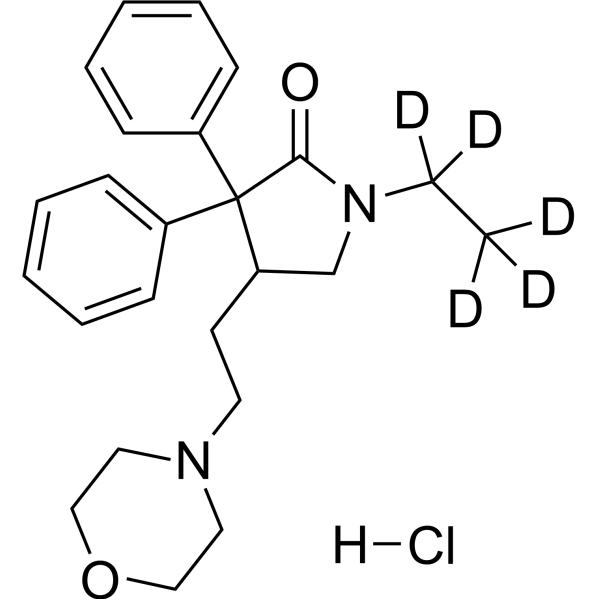
Doxapram-d5 hydrochloride is deuterium labeled Doxapram hydrochloride. Doxapram hydrochloride is a respiratory stimulant. Doxapram hydrochloride increases breathing rate and depth by acting on the brain's respiratory centers and peripheral chemoreceptors. Doxapram hydrochloride inhibits TASK-1, TASK-3, TASK-1/TASK-3 heterodimeric channel function with EC50s of 410 nM, 37 μM, 9 μM, respectively. Doxapram hydrochloride inhibits the Ca²⁺-activated potassium current (IC50 ≈ 13 μM) and Ca²⁺-independent potassium current (IC50 ≈ 20 μM) in type I cells of the carotid body. Doxapram hydrochloride significantly prolongs the effective refractory period of the atrium and has an anti-arrhythmic effect. Doxapram hydrochloride can be used for the study of respiratory depression such as post-anesthesia respiratory depression, chronic obstructive pulmonary disease and apnea of prematurity.
loading...
    loading...
Cat. No.: HY-B0551S
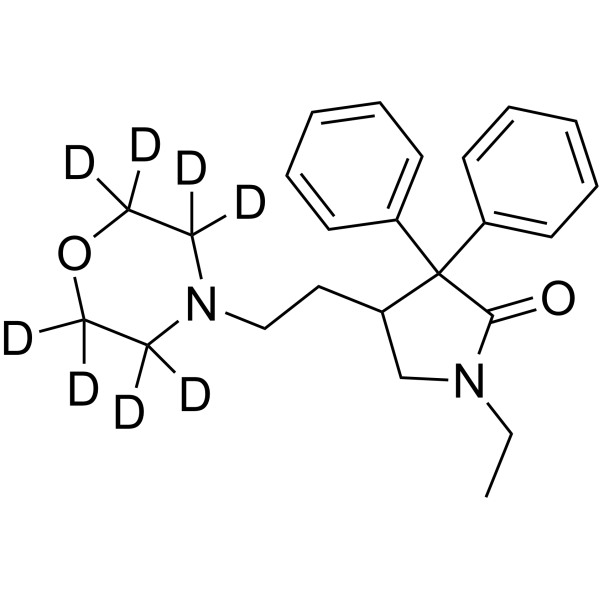
Doxapram-d8 is deuterated labeled Doxapram (HY-B0551). Doxapram is a respiratory stimulant. Doxapram increases breathing rate and depth by acting on the brain's respiratory centers and peripheral chemoreceptors. Doxapram inhibits TASK-1, TASK-3, TASK-1/TASK-3 heterodimeric channel function with EC50s of 410 nM, 37 μM, 9 μM, respectively. Doxapram inhibits the Ca²⁺-activated potassium current (IC50 ≈ 13 μM) and Ca²⁺-independent potassium current (IC50 ≈ 20 μM) in type I cells of the carotid body. Doxapram significantly prolongs the effective refractory period of the atrium and has an anti-arrhythmic effect. Doxapram can be used for the study of respiratory depression such as post-anesthesia respiratory depression, chronic obstructive pulmonary disease and apnea of prematurity.
loading...
    loading...
Cat. No.: HY-B0551AR
CAS No.: 7081-53-0
Doxapram hydrochloride hydrate (Standard) is the analytical standard of Doxapram hydrochloride hydrate (HY-B0551A). This product is intended for research and analytical applications. Doxapram hydrochloride hydrate is a respiratory stimulant. Doxapram hydrochloride hydrate increases breathing rate and depth by acting on the brain's respiratory centers and peripheral chemoreceptors. Doxapram hydrochloride hydrate inhibits TASK-1, TASK-3, TASK-1/TASK-3 heterodimeric channel function with EC50s of 410 nM, 37 μM, 9 μM, respectively. Doxapram hydrochloride hydrate inhibits the Ca²⁺-activated potassium current (IC50 ≈ 13 μM) and Ca²⁺-independent potassium current (IC50 ≈ 20 μM) in type I cells of the carotid body. Doxapram hydrochloride hydrate significantly prolongs the effective refractory period of the atrium and has an anti-arrhythmic effect. Doxapram hydrochloride hydrate can be used for the study of respiratory depression such as post-anesthesia respiratory depression, chronic obstructive pulmonary disease and apnea of prematurity.
loading...
    loading...
Cat. No.: HY-B0115R
CAS No.: 15574-96-6
Synonyms: Pizotyline (Standard); BC-105 (Standard)
Pizotifen (Standard) (Pizotyline (Standard)) is the analytical standard of Pizotifen (HY-B0115). This product is intended for research and analytical applications. Pizotifen (Pizotyline) is a 5-HT2 receptor antagonist. Pizotifen inhibits the Wnt/β-catenin-EMT signaling pathway and induces mitochondria-mediated Apoptosis. Pizotifen causes transient ERK1/2 phosphorylation and restores ATP. Pizotifen blocks Serotonin (HY-B1473A)-mediated platelet activation, inhibits Serotonin-enhanced ADP-induced platelet aggregation, and prolongs carotid artery occlusion and tail bleeding time. Pizotifen exhibits anticancer activity against gastric cancer and colon cancer. Pizotifen exerts neuroprotective effects in the striatum of R6/2 mice. Pizotifen can be used for research on gastric cancer, colon cancer, Huntington's disease, metastasis, and thromboembolic diseases .
loading...
    loading...

