59 Results for "

differentiation arrest

" in MedChemExpress (MCE) Product Catalog:
Products (59)

59 Results for "differentiation arrest" in MCE Product Catalog:

13
13 Publications Verification
Cat. No.: HY-15650
CAS No.: 1561178-17-3
Purity:  99.68%
Research Areas:  

Cancer

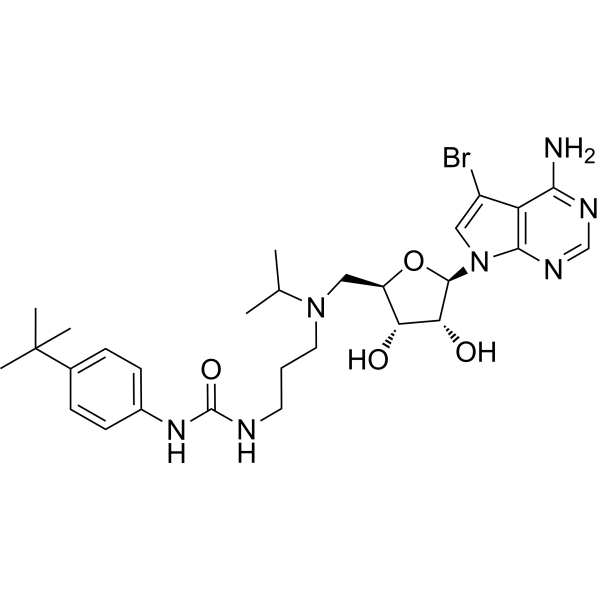
SGC0946 is a selective DOT1L inhibitor with an IC50 value of 0.3 nM. By inhibiting DOT1L, SGC0946 can induce G1 phase arrest, suppress cell self-renewal and metastatic potential, and induce cell differentiation in cancer cells. SGC0946 can be used in the research of tumors such as leukemia and breast cancer, and also serves as a probe to further investigate the cellular mechanisms of DOT1L in normal and diseased cells .
loading...
    loading...
11
11 Cited Publications
Cat. No.: HY-129241
CAS No.: 330834-54-3
Purity:  99.33%
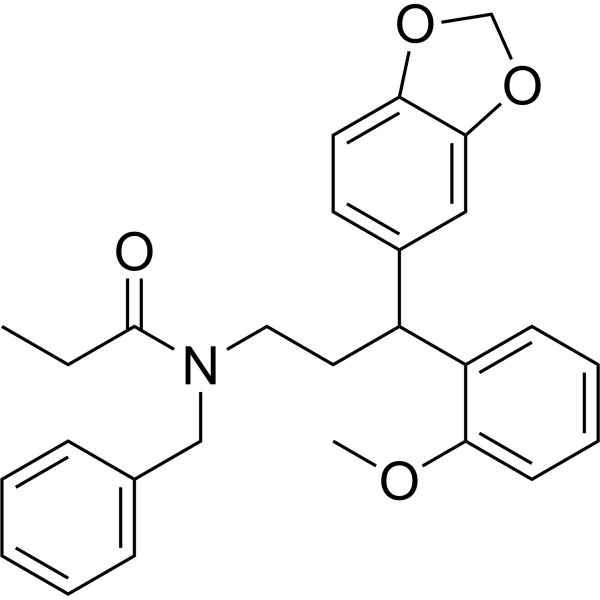
AGX51 is a pan-Id (inhibitors of DNA-binding/differentiation proteins) antagonist that disrupts ID-E protein interactions, thereby triggering ubiquitin-mediated proteasomal degradation of ID1, ID2, ID3 and ID4. AGX51 induces ROS production, G0/G1 cell cycle arrest, non-apoptotic cell death, and regulates EMT-related proteins. AGX51 reduces the proliferation, migration and myofibroblast differentiation of lung fibroblasts, alleviates pulmonary fibrosis, inhibits cancer cell viability and tumor growth, impairs neovascularization, and shows no obvious toxicity in mice. AGX51 can be used in research related to idiopathic pulmonary fibrosis, triple-negative breast cancer, breast cancer, pancreatic ductal adenocarcinoma, colorectal tumors, wet age-related macular degeneration and retinopathy of prematurity .
loading...
    loading...
1
1 Cited Publications
Cat. No.: HY-N7204
CAS No.: 55912-03-3
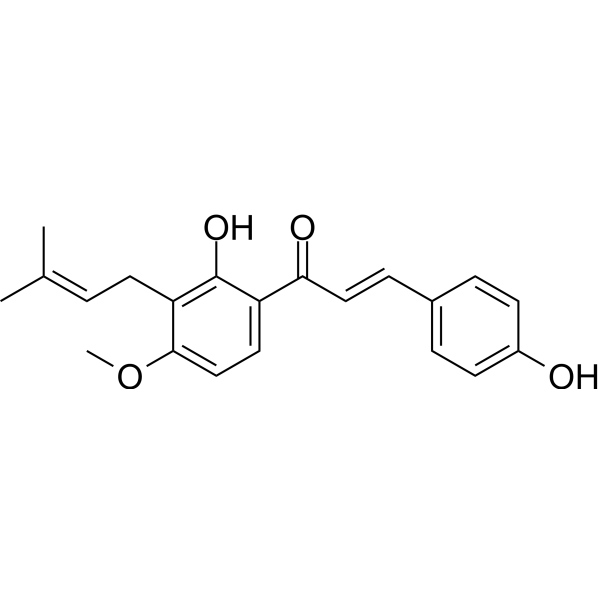
4-Hydroxyderricin, the major active ingredients of Angelica keiskei Koidzumi, is an orally active, potent selective MAO-B (Monoamine oxidase inhibitors) inhibitor with an IC50 of 3.43 μM. 4-Hydroxyderricin also mildly inhibits dopamine β (DBH)-hydroxylase activity. 4-Hydroxyderricin has antidepressant activity, anti-allergic, anti-diabetic, anti-oxidant, and antitumor effects. 4-Hydroxyderricin promotes apoptosis and cell cycle arrest through regulating PI3K/AKT/mTOR pathway in hepatocellular cells. 4-Hydroxyderricin inhibits osteoclast formation and accelerates osteoblast differentiation . 4-Hydroxyderricin is promising for research of inflammatory diseases .
loading...
    loading...
1
1 Cited Publications
Cat. No.: HY-N0559
CAS No.: 52659-56-0
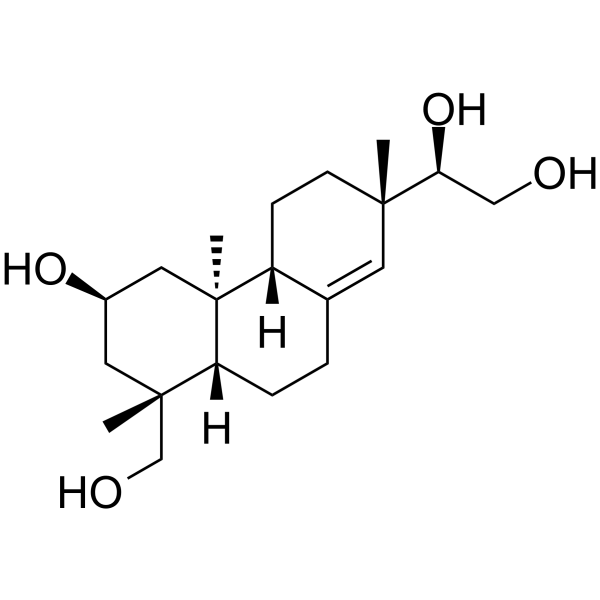
Kirenol is a diterpenoid compound, an orally active apoptosis inducer and signaling pathway regulator, with a Kd value of 5.47 μM against the target CK2. Kirenol promotes the cleavage of Bid into tBid, regulates the protein levels/phosphorylation of Bax, Bcl-2, p53 and p21, and induces caspase-independent apoptosis, S-phase cell cycle arrest, ROS accumulation and cytotoxicity in cancer cells. Kirenol activates the CK2/AKT and AMPK-mTOR-ULK1 pathways, inhibits the signaling of NF-κB, TGF-β/Smads and NLRP3 inflammasome, and regulates the GSK3β, BMP and Wnt/β-catenin pathways. Kirenol induces autophagy, mitophagy and osteoblast differentiation, promotes mitochondrial fusion, and exerts antioxidant, anti-inflammatory, antifibrotic, renoprotective, cardioprotective, neuroprotective and analgesic effects. Kirenol is applicable to research related to chronic myeloid leukemia, ischemic stroke, diabetic nephropathy, heart failure, acute lung injury and osteoporosis .
loading...
    loading...
1
1 Cited Publications
Cat. No.: HY-15611
CAS No.: 1333151-73-7
Purity:  98.21%
Target:  

CRM1

Research Areas:  

Cancer

KPT-185 is an orally bioavailable and selective inhibitor of CRM1 and displays potent antiproliferative properties at submicromolar concentrations (IC50=100-500 nM), induces apoptosis, cell-cycle arrest, and myeloid differentiation in AML cell lines and patient blasts .
loading...
    loading...
1
1 Cited Publications
Cat. No.: HY-172158
CAS No.: 140481-05-6
Research Areas:  

Cancer

ALKBH5-IN-5 is a highly selective ALKBH5 (IC50 = 0.62 μM, Kd = 804 nM). ALKBH5-IN-5 disrupts ALKBH5 binding to m 6A-RNA and 6mA-DNA substrates. ALKBH5-IN-5 promotes differentiation, induces apoptosis, cause G2-M phase arrest and exerts strong antiproliferative effects in cancer cells. ALKBH5-IN-5 reduces TACC3 and MYC protein levels and increases cleaved caspase-3 levels. ALKBH5-IN-5 exerts antitumor activity in tumor xenograft mice models. ALKBH5-IN-5 can be used for the research of acute myeloid leukemia .
loading...
    loading...
1
1 Cited Publications
Cat. No.: HY-19554A
CAS No.: 1442106-11-7
Target:  

WDR5 Apoptosis

Research Areas:  

Cancer

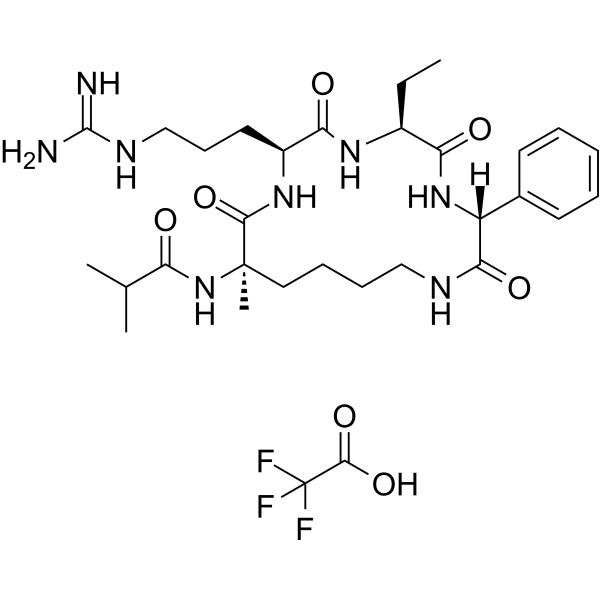
MM-401 (TFA) is a MLL1 H3K4 methyltransferase inhibitor. MM-401 inhibits MLL1 activity (IC50 = 0.32 μM) by blocking MLL1-WDR5 interaction. MM-401 can induce cell cycle arrest, apoptosis and differentiation. MM-401 can be used for the research of MLL leukemia .
loading...
    loading...
1
1 Cited Publications
Cat. No.: HY-110280
CAS No.: 1776116-74-5
Purity:  99.20%
Target:  

HDAC Apoptosis

Research Areas:  

Cancer

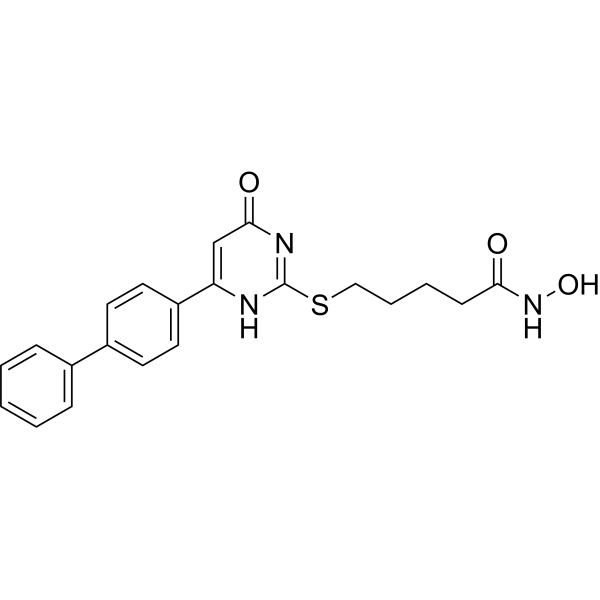
MC1742 is a potent HDAC inhibitor, with IC50s of 0.1 μM, 0.11 μM, 0.02 μM, 0.007 μM, 0.61 μM, 0.04 μM and 0.1 μM for HDAC1, HDAC2, HDAC3, HDAC6, HDAC8, HDAC10 and HDAC11, respectively. MC1742 can increase acetyl-H3 and acetyl-tubulin levels and inhibits cancer stem cells growth. MC1742 can induce growth arrest, apoptosis, and differentiation in sarcoma CSC .
loading...
    loading...
1
1 Cited Publications
Cat. No.: HY-169067
CAS No.: 86293-40-5
Synonyms: Mtx-C
Research Areas:  

Infection Cancer

10-Methoxy-canthin-6-one (Mtx-C) is analkaloid derivative. 10-Methoxy-canthin-6-one can induce DNA damage by intercalating into DNA. 10-Methoxy-canthin-6-one can inhibit cancer cells proliferation, cause G2/M phase arrest and induce myeloid differentiation. T10-Methoxy-canthin-6-one can upregulate the expression of myeloperoxidase, CD15, CD11b, and CD14, as well as activation of p38 MAPK. 10-Methoxy-canthin-6-one also exhibits anti-bacterial activity. 10-Methoxy-canthin-6-one can be used for the researches of cancer and infection, such as acute myeloid leukemias (AML) .
loading...
    loading...
1
1 Cited Publications
Cat. No.: HY-117720A
Research Areas:  

Cancer

OSU-2S TFA is a non-immunosuppressive derivative of Fingolimod hydrochloride (FTY720) (HY-12005). It is an orally active, blood-brain barrier-permeable allosteric activator of PP2A that also activates PKCδ; it restores PP2A activity by displacing the inhibitory protein SET, thereby inducing ROS-PKCδ-caspase-3-dependent apoptosis, c-Myc degradation, cell cycle arrest, and differentiation. OSU-2S TFA is used in research on diseases such as leukemia, liver cancer, lymphoma, and lung cancer .
loading...
    loading...
Cat. No.: HY-N6588
CAS No.: 86632-03-3
Synonyms: 3,4,5-triCQA
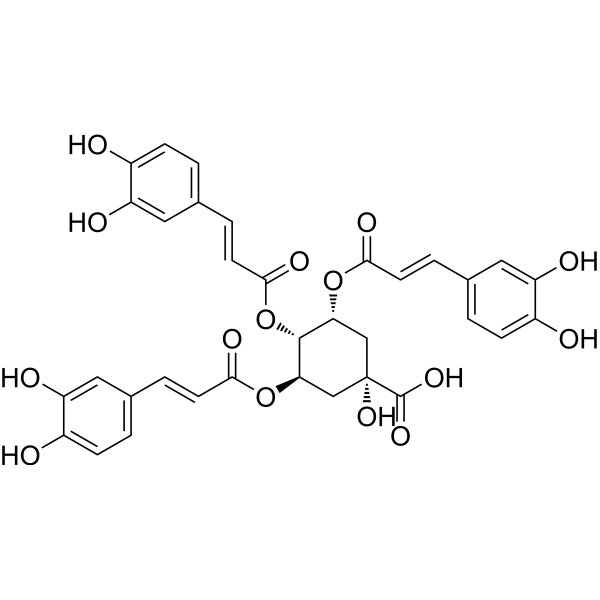
3,4,5-Tricaffeoylquinic acid (3,4,5-triCQA) inhibits tumor necrosis factor-α-stimulated production of inflammatory mediators in keratinocytes via suppression of Akt- and NF-κB-pathways. 3,4,5-Tricaffeoylquinic acid induces cell cycle arrest at G0/G1, actin cytoskeleton organization, chromatin remodeling, neuronal differentiation, and bone morphogenetic protein signaling in human neural stem cells. 3,4,5-Tricaffeoylquinic acid has the potential for the research of aging-associated diseases .
loading...
    loading...
Cat. No.: HY-174979
CAS No.: 3084407-00-8
Dac590 is an orally active and selective obesity-associated protein (FTO) inhibitor with an IC50 of 6.06 nM. Dac590 shows highly selective over ALKBH5 and ALKBH3. Dac590 suppresses oncogenic FTO signaling, induces myeloid differentiation, G1-phase cell cycle arrest, and apoptosis in acute myeloid leukemia (AML) cells. Dac590 inhibits xenograft tumor growth and prolongs survival in acute myeloid leukemia mouse models with no observed toxicity. Dac590 can be used for the research of AML .
loading...
    loading...
Cat. No.: HY-N2110
CAS No.: 2543-94-4
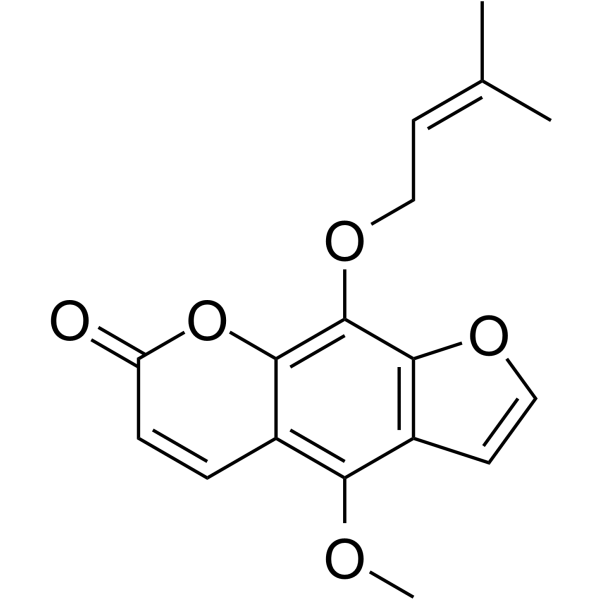
Phellopterin, an orally active furocoumarin with multiple biological activities. Phellopterin is a partial agonist of the central benzodiazepine receptors. Phellopterin exerts anti-inflammatory effects by upregulating SIRT1, downregulating ICAM-1 (reducing chronic inflammation, aiding diabetic ulcer healing), inhibiting STAT3 phosphorylation (easing atopic dermatitis inflammation), regulating Akt/PKC pathways (lowering TNF-α-induced VCAM-1 to block monocyte adhesion), and inhibiting TLR4/NF-κB pathway and macrophage M2 polarization (alleviating colitis-related cancers). Phellopterin suppresses ovarian cancer progression via inhibiting the PU.1/CLEC5A/PI3K-AKT loop (inducing cell cycle arrest, apoptosis, DNA damage). Phellopterin alleviates murine diabetes by promoting adipocyte differentiation and increasing PPARγ. Phellopterin also has anti-HSV-1 activity. Phellopterin can be used for studying anti-inflammation, anti-cancer (e.g., ovarian cancer, colitis cancer), blood glucose lowering, anti-diabetes, and anti-virus .
loading...
    loading...
Cat. No.: HY-125677
CAS No.: 361483-66-1
Purity:  99.70%
Research Areas:  

Cancer

SHetA2 is a derivative of heteroarotinoid, that exhibits cytotoxicity in cancer cells with IC50 of 0.37–4.6 μM. SHetA2 regulates cancer cells differentiation, induces apoptosis through the intrinsic mitochondrial pathway, and arrest cell cycle at G2 phase. SHetA2 exhibits good pharmacokinetic characteristics and antitumor efficacy in mice. SHetA2 is orally active .
loading...
    loading...
Cat. No.: HY-148369
CAS No.: 3094177-94-0
Purity:  99.68%
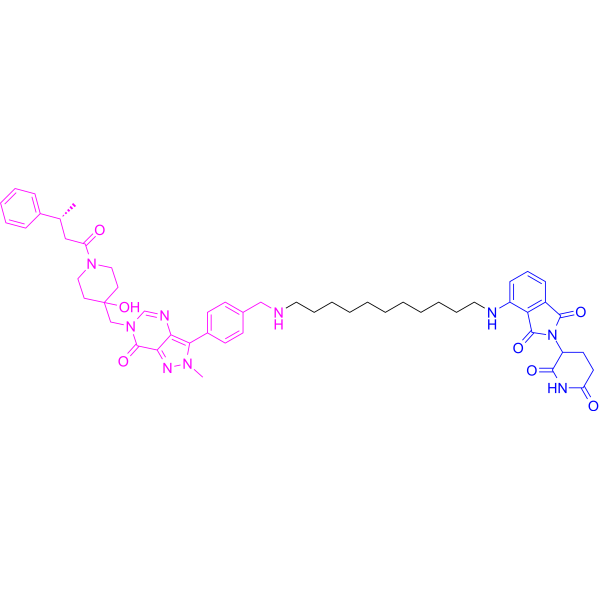
U7D-1 is a USP7 PROTAC degrader that induces selective proteasomal degradation of USP7. U7D-1 destabilizes and downregulates the expression of variant PRC1 complex subunits PCGF1, RING1A and PCGF6, and also slightly reduces the protein level of KDM2B. U7D-1 decreases cell viability, arrests neuroblastoma cells at the G0/G1 cell cycle phase, and downregulates the expression of target genes of PAX3::FOXO1 in FP-RMS cells. U7D-1 increases the level of cleaved PARP in FP-RMS cells, induces cell apoptosis, and upregulates the expression of muscle differentiation markers MYH1 and MYF5. U7D-1 inhibits the growth and proliferation of p53 wild-type and mutant cancer cells, and regulates the apoptosis pathway and E2F pathway. U7D-1 is applicable to studies on neuroblastoma, fusion-positive rhabdomyosarcoma, p53-mutant cancers and cancer-related research .
loading...
    loading...
Cat. No.: HY-B1883
CAS No.: 23950-58-5
Synonyms: Kerb; RH 315
Propyzamide (Kerb) is an orally active inhibitor of β-tubulin and AHR signaling pathways. Propyzamide binds β-tubulin at the intradimer interface, disrupting microtubule assembly, leading to mitotic arrest and multipolar spindle formation. Propyzamide enhances C/EBPβ and NF-κB signaling, promoting colitogenic helper T cell differentiation and interleukin-17/interferon gamma-expressing colonic T cells. Propyzamide can be used in research on colitis, inflammatory bowel disease, and liver cancer .
loading...
    loading...
Cat. No.: HY-N4053
CAS No.: 2880-49-1
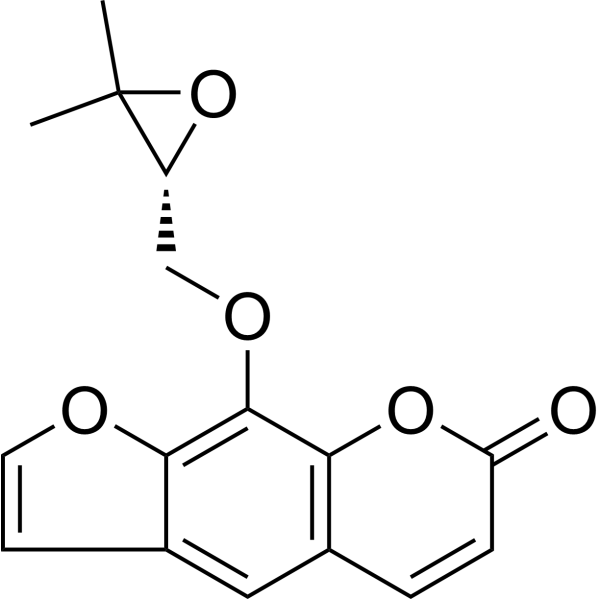
Heraclenin is a linear furanocoumarin natural product. Heraclenin binds to the type III effector protein XopQ and chitin deacetylase, exhibits antibacterial activity against Xanthomonas oryzae pv. oryzae, and displays antifungal activity against Colletotrichum lindemuthianum. Heraclenin stimulates Runx2 mRNA expression, induces osteoblast differentiation and mineralization. Heraclenin induces Chk1 phosphorylation, G2/M cell cycle arrest, DNA fragmentation, apoptosis, chromosomal aberrations, sister chromatid exchange, and inhibits proliferation. Heraclenin can be used for research on osteoporosis, melanoma, T-cell lymphoma, and leukemia .
loading...
    loading...
Cat. No.: HY-134333
CAS No.: 2041072-41-5
Purity:  99.43%
Target:  

Apoptosis

Research Areas:  

Cancer

ICCB280 is a potent inducer of C/EBPα. ICCB280 exhibits anti-leukemic properties including terminal differentiation, proliferation arrest, and apoptosis through activation of C/EBPα and affecting its downstream targets (such as C/EBPε, G-CSFR and c-Myc) .
loading...
    loading...
Cat. No.: HY-19554
CAS No.: 1442106-10-6
Target:  

WDR5 Apoptosis

Research Areas:  

Cancer

MM-401 is a MLL1 H3K4 methyltransferase inhibitor. MM-401 inhibits MLL1 activity (IC50 = 0.32 μM) by blocking MLL1-WDR5 interaction. MM-401 can induce cell cycle arrest, apoptosis and differentiation. MM-401 can be used for the research of MLL leukemia .
loading...
    loading...
Cat. No.: HY-149132
CAS No.: 1191043-85-2
Purity:  96.7%
Synonyms: DDA
Dendrogenin A (DDA) is a ligand for liver X receptor (LXR), that induces the expression of sodium/iodine symporter, and increases iodine uptake. Dendrogenin A induces cell differentiation of MCF-7, and reactivates the function of lactating cells. Dendrogenin A induces the expressions of the TSH receptor, thyroid peroxidase, and thyroglobulin, and affects thyroid hormone generation. Dendrogenin A exhibits cytotoxicity in cancer cell B-CPAP and 8505c with IC50 of 4.1 and 6.2 µM. Dendrogenin A arrests the cell cycle at G0/G1 phase .
loading...
    loading...

