32 Results for "

electrophysiological

" in MedChemExpress (MCE) Product Catalog:
Products (32)

32 Results for "electrophysiological" in MCE Product Catalog:

7
7 Publications Verification
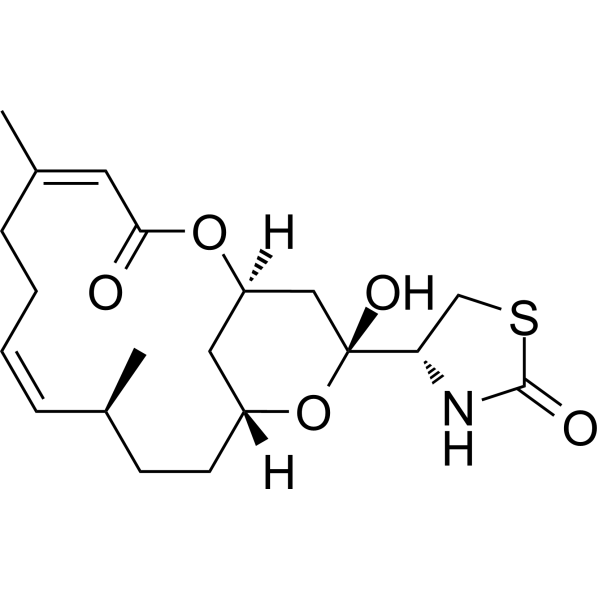
Cat. No.: HY-101848
CAS No.: 76343-94-7
Purity:  ≥98.0%
Latrunculin B, an antimicrobial marine alkaloid, is an actin polymerization inhibitor. Latrunculin B regulates pulmonary vein electrophysiological characteristics and attenuates stretch-induced arrhythmogenesis. Antifungal and antiprotozoal activity .
loading...
    loading...
7
7 Publications Verification
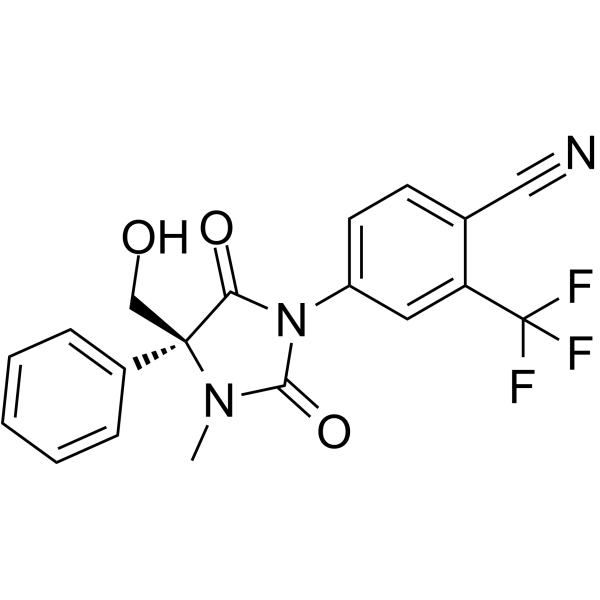
Cat. No.: HY-18102
CAS No.: 1215085-92-9
Target:  

Androgen Receptor

Research Areas:  

Neurological Disease

GLPG0492 is an orally active, non-steroidal selective androgen receptor modulator. GLPG0492 exerts functional transactivation by binding to the ligand-binding domain of the receptor, exhibiting preferential partial agonist activity in muscle and bone tissues with low activity in reproductive tissues. GLPG0492 effectively counteracts muscle atrophy-related pathways, significantly enhances muscle strength, maintains motor ability, reduces fibrosis and improves electrophysiological parameters. GLPG0492 prevents immobilization-induced muscle atrophy and regulates muscle mass homeostasis, serving as a valuable tool compound for studies on Duchenne muscular dystrophy, muscle loss and various types of disuse musculoskeletal atrophy .
loading...
    loading...
1
1 Cited Publications
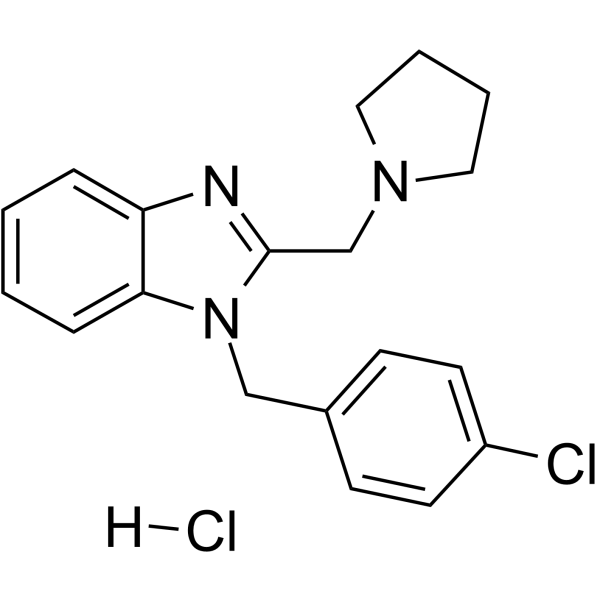
Cat. No.: HY-30234A
CAS No.: 1163-36-6
Target:  

TRP Channel Apoptosis

Clemizole hydrochloride is an orally active, blood-brain barrier permeable TRPC5 inhibitor, with an IC50 value of 1.05-1.34 μM against mouse TRPC5. Clemizole hydrochloride blocks TRPC1:TRPC5, TRPC3, TRPC4, TRPC6, TRPC7, hERG, hKCNQ1/hKCNE1 and hKv1.5 channels, and activates TRPA1; it modulates 5HT-2B and HTR2A receptors; it inhibits HCV RNA replication, CrtN enzymatic activity, oxidative stress, neuroinflammation, cell apoptosis and bacterial virulence; it maintains blood-brain barrier (BBB) integrity; it enhances DNA repair capacity; it improves cell viability; and it alters cardiac electrophysiological properties. Clemizole hydrochloride can be used in the research of Dravet syndrome, hepatitis C virus infection, Staphylococcus aureus skin infection, Cisplatin (HY-17394)-induced nephrotoxicity, STXBP1-related diseases, traumatic brain injury and xeroderma pigmentosum type C .
loading...
    loading...
1
1 Cited Publications
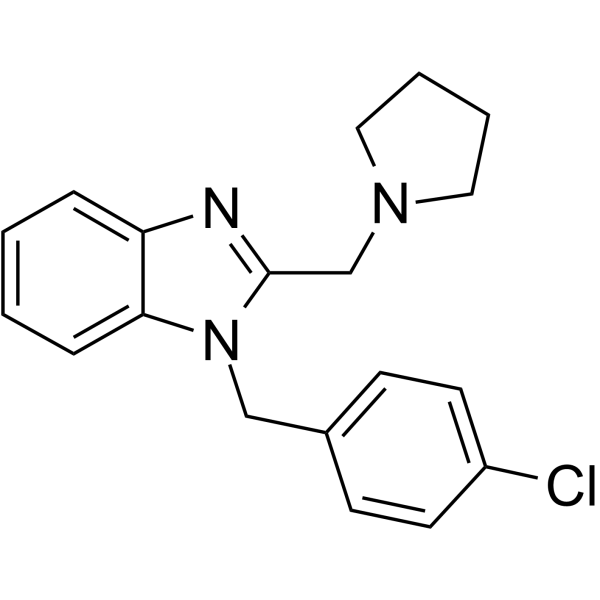
Cat. No.: HY-30234
CAS No.: 442-52-4
Target:  

TRP Channel Apoptosis

Clemizole is an orally active, blood-brain barrier permeable TRPC5 inhibitor, with an IC50 value of 1.05-1.34 μM against mouse TRPC5. Clemizole blocks TRPC1:TRPC5, TRPC3, TRPC4, TRPC6, TRPC7, hERG, hKCNQ1/hKCNE1 and hKv1.5 channels, and activates TRPA1; it modulates 5HT-2B and HTR2A receptors; it inhibits HCV RNA replication, CrtN enzymatic activity, oxidative stress, neuroinflammation, cell apoptosis and bacterial virulence; it maintains blood-brain barrier (BBB) integrity; it enhances DNA repair capacity; it improves cell viability; and it alters cardiac electrophysiological properties. Clemizole can be used in the research of Dravet syndrome, hepatitis C virus infection, Staphylococcus aureus skin infection, Cisplatin (HY-17394)-induced nephrotoxicity, STXBP1-related diseases, traumatic brain injury and xeroderma pigmentosum type C .
loading...
    loading...
Cat. No.: HY-128454
CAS No.: 3658-80-8
Purity:  ≥98.0%
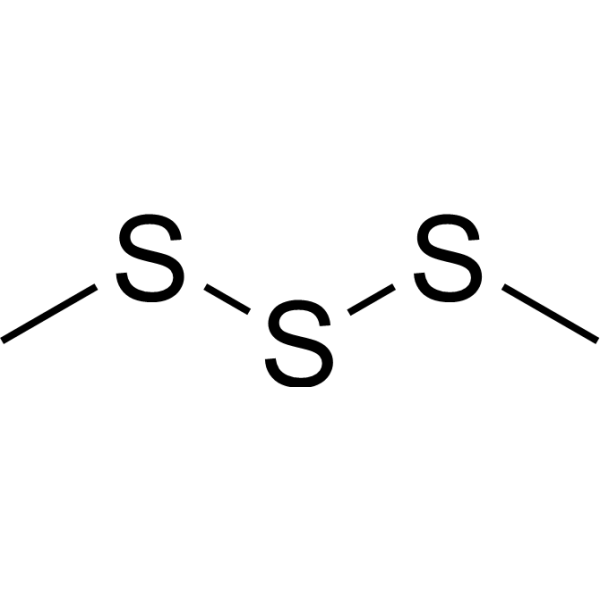
Dimethyl trisulfide is a cyanide scavenger. Dimethyl trisulfide can be isolated from garlic, onions, broccoli and similar plants. Dimethyl trisulfide converts cyanide into thiocyanate. Dimethyl trisulfide is used by saprophagous insects to locate breeding sites (decaying organic matter), and is also used by deceptive flowers in brood sites to attract such insects. Dimethyl trisulfide induces electrophysiological responses in houseflies .
loading...
    loading...
Cat. No.: HY-W073501
CAS No.: 628-48-8
Synonyms: trans-2-Pentenedioic acid
trans-Glutaconic acid (trans-2-Pentenedioic acid) is the trans isomer of Glutaconic acid (HY-W073501A). trans-Glutaconic acid is a neurotoxic metabolite. trans-Glutaconic acid induces weak neurotoxicity in cultured cerebral neocortical neurons. trans-Glutaconic acid elicits significant electrophysiological responses in rat neocortical wedge preparations at high concentrations. trans-Glutaconic acid can be used in studies related to glutaric acidemia type 1 .
loading...
    loading...
Cat. No.: HY-103129
CAS No.: 143797-62-0
Purity:  99.89%
Target:  

5-HT Receptor

Research Areas:  

Neurological Disease

SB-200646A is the first selective 5-HT2B/2C over 5-HT2A receptor antagonist with pKi values of 7.5, 6.9 and 5.2 for 5-HT2B, 5-HT2C and 5-HT2A, respectively. SB-200646A is orally active and has electrophysiological and anxiolytic properties in vivo .
loading...
    loading...
Cat. No.: HY-110168
CAS No.: 913830-15-6
Purity:  98.36%
Target:  

nAChR

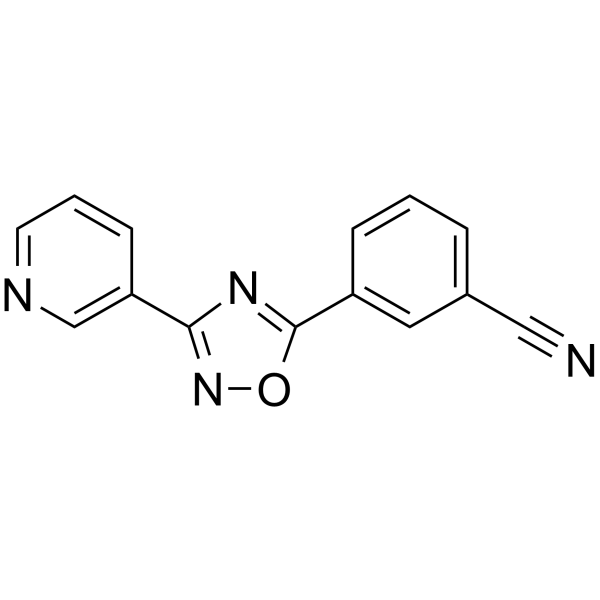
NS 9283 (A-969933) is a α4β2 nicotinic acetylcholine receptor (α4β2 nAChR) positive allosteric modulator that preferentially targets the (α4)3 (β2)2 stoichiometric conformation. NS 9283 increases the potency of ACh-induced currents without enhancing the maximal effect of ACh. NS 9283 also enhances prefrontal glutamate release, modulates attention-related electrophysiological responses, and potentiates the antinociceptive effects associated with α4β2 nAChR agonists. NS 9283 can be used in research related to inflammatory pain, postoperative pain, osteoarthritis pain, and Parkinson's disease .
loading...
    loading...
Cat. No.: HY-110168R
CAS No.: 913830-15-6
NS 9283 (Standard) is the analytical standard of NS 9283 (HY-110168). This product is intended for research and analytical applications. NS 9283 (A-969933) is a α4β2 nicotinic acetylcholine receptor (α4β2 nAChR) positive allosteric modulator that preferentially targets the (α4)3 (β2)2 stoichiometric conformation. NS 9283 increases the potency of ACh-induced currents without enhancing the maximal effect of ACh. NS 9283 also enhances prefrontal glutamate release, modulates attention-related electrophysiological responses, and potentiates the antinociceptive effects associated with α4β2 nAChR agonists. NS 9283 can be used in research related to inflammatory pain, postoperative pain, osteoarthritis pain, and Parkinson's disease .
loading...
    loading...
Cat. No.: HY-101839
CAS No.: 1623481-80-0
Purity:  99.87%
Synonyms: VU0488130
Target:  

mAChR

Research Areas:  

Neurological Disease

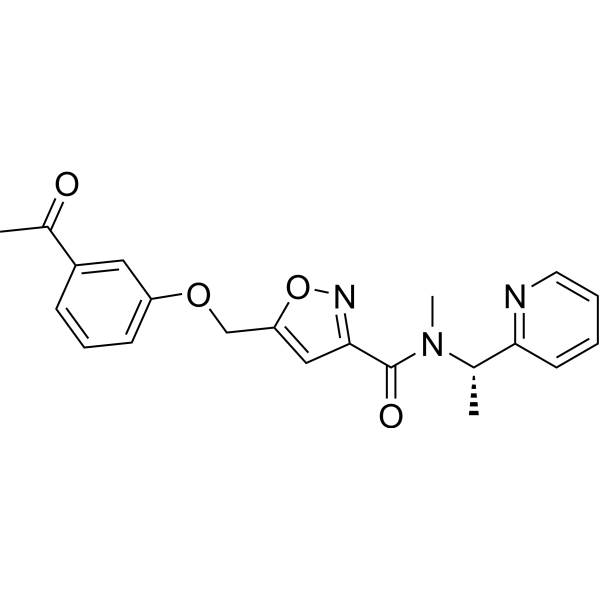
ML381 (VU0488130) is a highly selective, central nervous system penetrant mAChR M5 orthogonal antagonist (IC50 = 450 nM; Ki = 340 nM). ML381 is unstable in rat plasma and can be mainly used as a molecular probe for in vitro and electrophysiological studies .
loading...
    loading...
Cat. No.: HY-124304
CAS No.: 149759-26-2
Purity:  99.09%
Synonyms: LOE-908
Target:  

TRP Channel SARS-CoV

Research Areas:  

Neurological Disease

Pinokalant is a broad-spectrum and non-selectivecation channel inhibitor. Pinokalant significantly reduces cortical infarct volume. Pinokalant o improves the metabolic and electrophysiologic status of the ischemic penumbra. Pinokalant reduces lesion size on magnetic resonance images in the acute phase following middle cerebral artery occlusion in rats. Pinokalant has the potential for the research of stroke. Pinokalant also shows anti-SARS-CoV-2 activity .
loading...
    loading...
Cat. No.: HY-P3095
CAS No.: 65988-34-3
Synonyms: α-LTX
Target:  

Endogenous Metabolite

Research Areas:  

Neurological Disease

α‑Latrotoxin (α-LTX) is a neurotoxin found in the genus Latrodectus. α-Latrotoxin binds to presynaptic receptors such as neurexin and latrophilin-1, inserts into the cell membrane to form non-selective cation channels, and induces massive exocytosis of neurotransmitters and hormones through dual mechanisms of receptor dependence and pore formation, triggering calcium signaling disturbances and electrophysiological alterations. α-Latrotoxin can be used in research related to synaptic vesicle exocytosis and neurotransmitter release .
loading...
    loading...
Cat. No.: HY-103129A
CAS No.: 143797-63-1
Target:  

5-HT Receptor

Research Areas:  

Neurological Disease

SB-200646 is the first selective 5-HT2B/2C over 5-HT2A receptor antagonist with pKi values of 7.5, 6.9 and 5.2 for 5-HT2B, 5-HT2C and 5-HT2A, respectively. SB-200646 is orally active and has electrophysiological and anxiolytic properties in vivo .
loading...
    loading...
Cat. No.: HY-101164
CAS No.: 157381-42-5
Target:  

mGluR

Research Areas:  

Neurological Disease

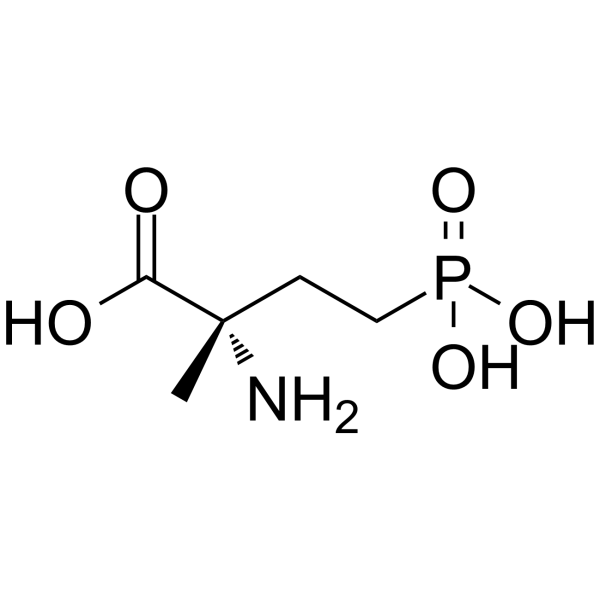
MAP4 is a selective group III mGluR antagonist in some electrophysiological systems .
loading...
    loading...
Cat. No.: HY-19679
CAS No.: 86073-85-0
Synonyms: PK 10139
Target:  

Sodium Channel

Research Areas:  

Cardiovascular Disease

Quinacainol (PK 10139) is an inhibitor for sodium current with an EC50 of 95 µM. Quinacainol exhibits antiarrhythmic activity by affecting the electrophysiological properties of the heart .
loading...
    loading...
Cat. No.: HY-120926
CAS No.: 118587-22-7
Target:  

Calcium Channel

Research Areas:  

Others

BBR 2160 is a compound with cardiac electrophysiological effects and is a dihydropyridine calcium antagonist that can reduce myocardial contractility and action potential duration and has calcium antagonist properties.
loading...
    loading...
Cat. No.: HY-19679A
CAS No.: 83255-74-7
Synonyms: PK 10139 dihydrochloride
Target:  

Sodium Channel

Research Areas:  

Cardiovascular Disease

Quinacainol dihydrochloride (PK 10139 dihydrochloride) is the dihydrochloride salt form of Quinacainol (HY-19679). Quinacainol dihydrochloride is an inhibitor for sodium current with an EC50 of 95 µM. Quinacainol dihydrochloride exhibits antiarrhythmic activity by affecting the electrophysiological properties of the heart .
loading...
    loading...
Cat. No.: HY-126749
CAS No.: 2223027-70-9
Target:  

Histamine Receptor

Research Areas:  

Others

VUF14738 (compound 28) is a bidirectional photoswitch antagonist that can rapidly and reversibly photoisomerize at the histamine H3 receptor, with binding affinity increased or decreased upon illumination, and can be used in real-time electrophysiological experiments to study the activity of dynamic light modulation of receptor activation.
loading...
    loading...
Cat. No.: HY-118050
CAS No.: 1431-30-7
Synonyms: L-420
L589420-0-2 (L-420) is a sodium pump inhibitor with inhibitory activity in human erythrocytes. L589420-0-2 can regulate the concentration of intracellular sodium ions, thereby affecting the electrophysiological properties of cells. L589420-0-2 may also play an important role in the inhibition of cardiovascular diseases .
loading...
    loading...
Cat. No.: HY-126424
CAS No.: 2230617-93-1
Research Areas:  

Others

OptoDArG is a photoswitchable diacylglycerol analog that serves as an optical lipid clamp probe. OptoDArG undergoes rapid trans-cis photoisomerization under UV/blue light, with the trans form being inactive, and can be delivered directly to the cell membrane without genetic modification. Cis-OptoDArG regulates the activity of channels such as TRPC3, TRPC6, and TRPL by altering the properties of the cell membrane lipid bilayer, thereby triggering sodium channel-dependent action potentials, PKCα translocation, mechanically sensitive currents, and various other downstream electrophysiological and cellular effects. OptoDArG has activity in identifying lipid-gated pores by controlling TRPC3 channels, and can serve as a tool for studying the lipid-sensing mechanisms of TRPC channels .
loading...
    loading...

