11 Results for "

non-target cells

" in MedChemExpress (MCE) Product Catalog:
Products (11)

11 Results for "non-target cells" in MCE Product Catalog:

1
1 Cited Publications
Cat. No.: HY-119737
CAS No.: 64902-72-3
Purity:  99.95%
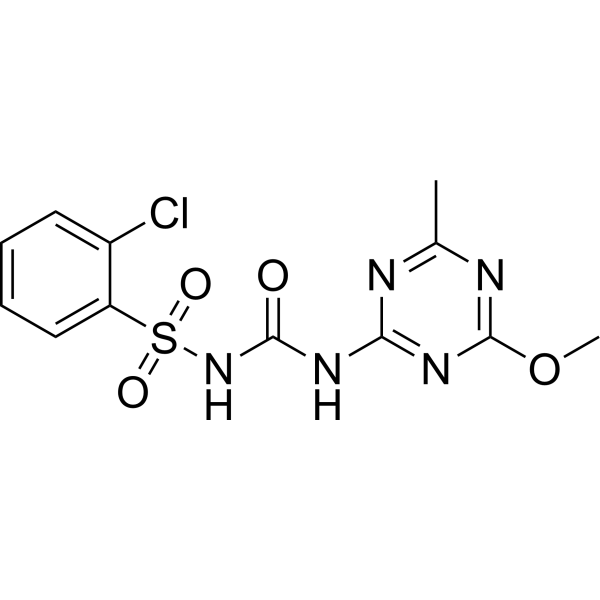
Chlorsulfuron is an acetolactate synthase inhibitor and selective systemic herbicide. Chlorsulfuron blocks the synthesis of branched-chain amino acids (valine and isoleucine), thereby inhibiting protein synthesis, cell growth, and cell division. Chlorsulfuron blocks G1 and G2 phase cell cycle progression in plant root tip cells without directly interfering with mitosis or DNA synthesis. Chlorsulfuron completely inhibits germination of non-target terrestrial plants and is highly toxic to aquatic macrophytes. Chlorsulfuron has low toxicity to mammals, birds and bees, and moderate toxicity to fish and aquatic invertebrates. Chlorsulfuron can be used in studies related to herbicides, plant cell cycles and ecotoxicology .
loading...
    loading...
Cat. No.: HY-163099
CAS No.: 2928571-43-9
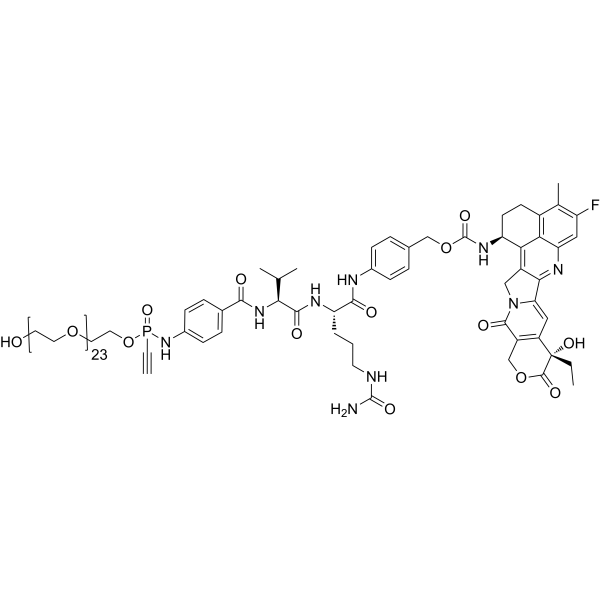
P5 (PEG24)-VC-PAB-Exatecan is a TOP1 inhibitor payload with antibody-conjugation-dependent activity. Conjugation of P5 (PEG24)-VC-PAB-Exatecan with Trastuzumab (HY-P9907) generates a DAR8 antibody-drug conjugate (ADCs) with antibody-like pharmacokinetic properties. P5 (PEG24)-VC-PAB-Exatecan induces S-phase and G2-M-phase cell cycle arrest, DNA damage and apoptosis in target-positive tumor cells, and releases damage-associated molecular patterns (DAMP) related to immunogenic cell death (ICD). The ADCs prepared from it exert bystander killing effects on non-target tumor cells. ADCs based on P5 (PEG24)-VC-PAB-Exatecan exhibit linker stability in vitro and in vivo, show in vivo efficacy, and can be used in research related to HER2-positive cancers .
loading...
    loading...
Cat. No.: HY-119737R
CAS No.: 64902-72-3
Chlorsulfuron (Standard) is the analytical standard of Chlorsulfuron (HY-119737). This product is intended for research and analytical applications. Chlorsulfuron is an acetolactate synthase inhibitor and selective systemic herbicide. Chlorsulfuron blocks the synthesis of branched-chain amino acids (valine and isoleucine), thereby inhibiting protein synthesis, cell growth, and cell division. Chlorsulfuron blocks G1 and G2 phase cell cycle progression in plant root tip cells without directly interfering with mitosis or DNA synthesis. Chlorsulfuron completely inhibits germination of non-target terrestrial plants and is highly toxic to aquatic macrophytes. Chlorsulfuron has low toxicity to mammals, birds and bees, and moderate toxicity to fish and aquatic invertebrates. Chlorsulfuron can be used in studies related to herbicides, plant cell cycles and ecotoxicology .
loading...
    loading...
Cat. No.: HY-K0359

MCE Human Neutrophil Negative Selection Kit can isolate neutrophils from fresh peripheral blood. The principle involves using biotin-labeled monoclonal antibodies to label non-target cells, followed by the removal of these non-target cells through streptavidin-labeled magnetic beads, achieving the selective isolation of human neutrophils.

loading...
    loading...
Cat. No.: HY-K0361

MCE Mouse Pan B Cell Negative Selection Kit enables the efficient isolation of total B cells from mouse spleen, lymph nodes, bone marrow, or peritoneal lavage fluid. The principle involves using biotin-labeled monoclonal antibodies to label non-target cells (non-B cells), followed by the removal of these non-target cells through streptavidin-labeled magnetic beads, achieving the selective isolation of mouse B Cells.

loading...
    loading...
Cat. No.: HY-K0357

MCE Mouse Mature B Cell Negative Selection Kit enables the efficient isolation of mature B cells from single-cell suspensions prepared from mouse spleen, lymph nodes, or bone marrow. The principle involves using biotin-labeled monoclonal antibodies to label non-target cells (non-B cells), followed by the removal of these non-target cells through streptavidin-labeled magnetic beads, achieving the selective isolation of mouse mature B cells.

loading...
    loading...
Cat. No.: HY-181295
CAS No.: 3093642-21-5
Research Areas:  

Cancer

PROTAC EZH2 Degrader-14 is an EZH2 PROTAC degrader, with an IC50 of 18.21 μM against diffuse large B-cell lymphoma cells, and exhibits no antiproliferative activity against non-target cells at concentrations up to 30.00 μM. PROTAC EZH2 Degrader-14 can be used in studies related to diffuse large B-cell lymphoma .
loading...
    loading...
Cat. No.: HY-K0360

MCE Mouse CD4+ CD25+ Regulatory T Cell Positive Selection Kit is designed for the isolation of CD4+ CD25+ regulatory T cells (Tregs) from mouse splenic single-cell suspensions. The kit utilizes a two-step isolation strategy. First, CD4 Enrichment Beads are used to deplete non-target cells and enrich CD4+ T cells. Subsequently, CD25 Capture Antibody specifically binds to CD25+ cells, which are then captured by Releasable Magnetic Beads. Following isolation, the magnetic beads are gently detached from the cell surface using Magnetic Beads Release Buffer, yielding label-free CD4+ CD25+ regulatory T cells with no residual magnetic beads.

loading...
    loading...
Cat. No.: HY-P11590
Target:  

EGFR

Research Areas:  

Cancer

WGYRGFYC (WC8) is a selective HER2-targeting peptide that binds specifically to HER2 by mimicking the antigen-binding site of trastuzumab. The DOTA precursor of WGYRGFYC has a KD of 61.20 nM for HER2. WGYRGFYC enables specific and highly sensitive detection of HER2 expression in HER2-positive breast cancer cells and tumor tissues, and monitors the dynamic downregulation of HER2 expression. WGYRGFYC rapidly distributes to target tissues and is efficiently cleared from non-target tissues via the kidneys, generating an ideal tumor-to-background ratio in imaging; it is a component of the PET radiotracer Ga-DOTA-WC8. WGYRGFYC exhibits no significant cytotoxicity in breast cancer cells, and can be used for non-invasive imaging diagnosis and therapeutic efficacy evaluation of HER2-positive breast cancer .
loading...
    loading...
Cat. No.: HY-189740
CAS No.: 3127776-54-6
Research Areas:  

Infection

nAChR-IN-3 is an nAChR α6 subunit inhibitor and broad-spectrum insecticide against Acyrthosiphon pisum, Nilaparvata lugens, and Bemisia tabaci. nAChR-IN-3 acts through the nicotinic acetylcholine receptor α6 subunit; α6 silencing increases aphid tolerance and α6-null Drosophila show high-level resistance. nAChR-IN-3 disrupts ionic homeostasis and cholinergic signaling in nerve cells. nAChR-IN-3 induces mitochondrial electron transport chain disruption and reactive oxygen species burst. nAChR-IN-3 inhibits ATP synthesis and collapses energy metabolism. nAChR-IN-3 shows low toxicity to non-target honeybees, zebrafish, and earthworms and no inhibition of crop seed germination or seedling development. nAChR-IN-3 displays cytotoxicity in human keratinocytes and renal cells .
loading...
    loading...
Cat. No.: HY-P11858
Research Areas:  

Cancer

DP1 peptide is a high-affinity ROR1-binding peptide with a Kd value of 74.9 nM. When labeled with 68Ga, DP1 peptide serves as a PET imaging agent, which features rapid tumor uptake, favorable target-to-nontarget ratios in various tumor models, and renal clearance, enabling non-invasive quantitative visualization of ROR1 expression. DP1 peptide can be used in research related to melanoma, hepatocellular carcinoma, colorectal cancer, and non-small cell lung cancer .
loading...
    loading...
  • 1

