13 Results for "

righting reflex

" in MedChemExpress (MCE) Product Catalog:
Products (13)

13 Results for "righting reflex" in MCE Product Catalog:

1
1 Cited Publications
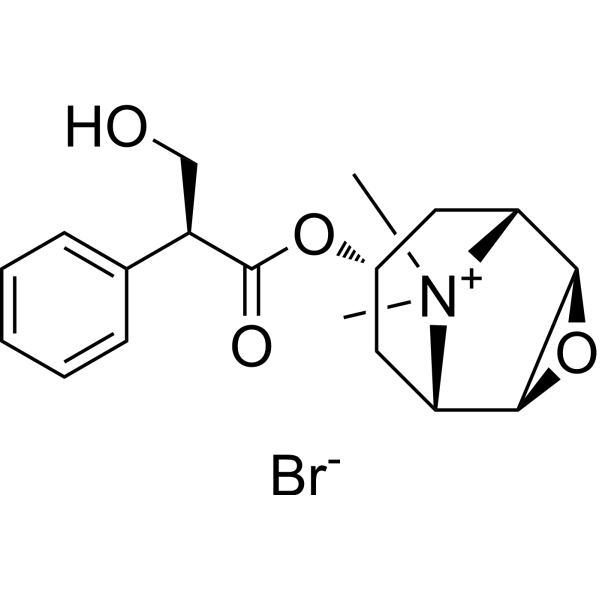
Cat. No.: HY-B0344
CAS No.: 155-41-9
Synonyms: (-)-Scopolamine methyl bromide; Hyoscine methyl bromide
Target:  

mAChR

Research Areas:  

Neurological Disease

Methscopolamine bromide ((-)-Scopolamine methyl bromide; Hyoscine methyl bromide) is a peripherally acting muscarinic receptor (mAChR) antagonist that cannot cross the blood-brain barrier. Methscopolamine bromide blocks the muscarinic negative feedback regulation of acetylcholine release from striatal cholinergic terminals, thereby increasing acetylcholine release in the striatum of freely moving rats. Methscopolamine bromide does not induce motor excitation in freely moving rats, nor does it alter the duration of ethanol-induced loss of righting reflex in mice. Methscopolamine bromide fails to antagonize the arecoline-mediated reduction in the duration of ethanol-induced loss of righting reflex in mice .
loading...
    loading...
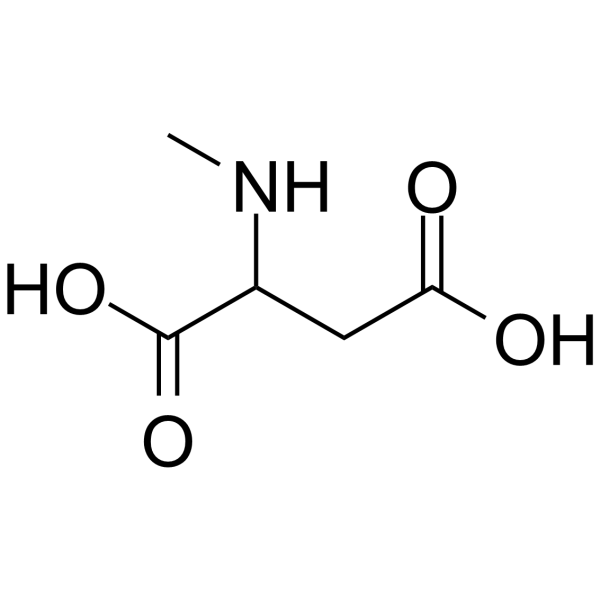
Cat. No.: HY-W017500
CAS No.: 17833-53-3
N-Methyl-DL-aspartic acid acts as an agonist for N-methyl-D-aspartic acid receptors and D-isomer-specific aspartate receptors. N-Methyl-DL-aspartic acid activates hypothalamic neurons that regulate gonadotropin-releasing hormone secretion, and stimulates prepubertal male rhesus monkeys to produce sustained intermittent gonadotropin-releasing hormone secretion and pulsatile luteinizing hormone secretion. N-Methyl-DL-aspartic acid activates excitatory effects mediated by N-methyl-D-aspartic acid receptors. N-Methyl-DL-aspartic acid exhibits convulsant effects, inducing clonic convulsions with loss of righting reflex, generalized tonic-clonic seizures or persistent clonic seizures. N-Methyl-DL-aspartic acid causes precocious puberty. N-Methyl-DL-aspartic acid can be used in studies related to convulsions and seizures .
loading...
    loading...
Cat. No.: HY-N15001
CAS No.: 59556-18-2
Gabaculine is an amino acid neurotoxin and blood-brain barrier-permeable GABA transaminase inhibitor, with an IC50 of 1 μM in beef and Pseudomonas ovalis. Gabaculine elevates endogenous synaptic and brain GABA levels and enhances GABA activity. Gabaculine induces sedation, hypothermia, loss of righting reflex, and prevents convulsions in mice. Gabaculine is applicable to research related to neurological disorders .
loading...
    loading...
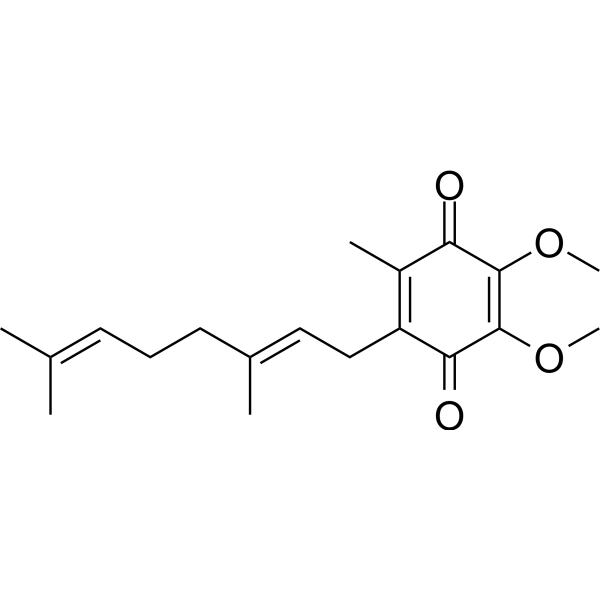
Cat. No.: HY-118075
CAS No.: 606-06-4
Coenzyme Q2 is a benzoquinone electron carrier in the mitochondrial electron transport chain and a p53-dependent apoptosis inducer. Coenzyme Q2 induces p53 phosphorylation at Ser15, promoting p53 accumulation and functional activation. Coenzyme Q2 induces ROS generation, caspase-3 activation, DNA fragmentation, phosphatidylserine externalization, mitochondrial permeability transition pore opening, and oxidative phosphorylation uncoupling. Coenzyme Q2 inhibits Complex I, Complex III, and Complex IV activities, disrupting electron transport and membrane potential generation. Coenzyme Q2 induces excessive mitochondrial proton leak in forebrain mitochondria. Coenzyme Q2 causes loss of righting reflex in mice, accompanied by slow-wave delta EEG activity and reversible loss of wakefulness. Coenzyme Q2 inhibits lipid peroxidation and scavenges superoxide radicals. Coenzyme Q2 is used in research on leukemia, myocardial ischemia-reperfusion injury, and mitochondrial encephalomyopathy .
loading...
    loading...
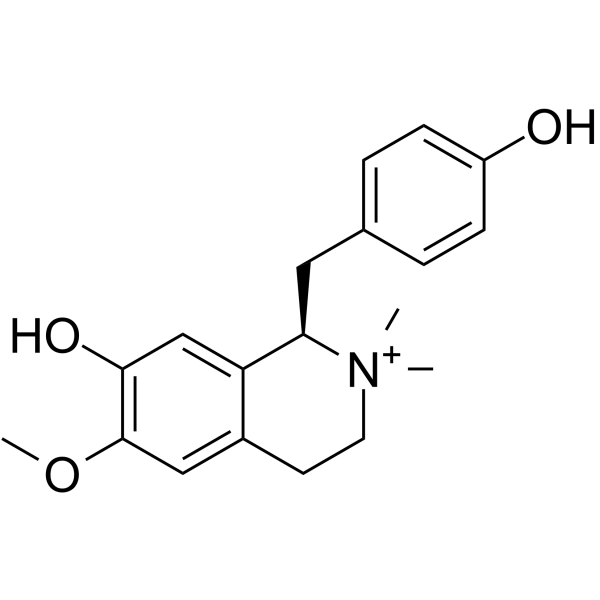
Cat. No.: HY-N6609
CAS No.: 6801-40-7
Magnocurarine is a neuromuscular junction blocker that inhibits muscle contraction by functionally blocking signal transmission without directly damaging nerve or muscle tissues. In frog, mouse and rabbit models, Magnocurarine exerts a dose-dependent paralytic effect, which progresses gradually from limb weakness and loss of righting reflex to respiratory depression and even cardiac arrest. Although high doses cause complete cessation of movement, Magnocurarine does not affect the spinal multineuronal reflex in frogs. Magnocurarine exhibits biological activity similar to that of tubocurarine (HY-125901) in various animal models .
loading...
    loading...
Cat. No.: HY-121670
CAS No.: 2455-84-7
Target:  

Others

Research Areas:  

Neurological Disease

Ambenoxan is a central nervous system-acting skeletal muscle relaxant that is effective in mice, rats, rabbits, dogs, and monkeys without loss of the righting reflex. It has no peripheral neuromuscular blocking effects and significantly reduces or eliminates decerebrate rigidity in rabbits, but does not antagonize the effects of strychnine, leptazol, or tremorine. Like other central nervous system depressants, ambenoxan prolongs sleep duration with hexobarbitone, but it has no local anesthetic effects. In anesthetized cats, the agent lowers blood pressure and reduces the pressor response to epinephrine, but has no effect on norepinephrine.
loading...
    loading...
Cat. No.: HY-121670A
CAS No.: 1617-99-8
Target:  

Adrenergic Receptor

Research Areas:  

Neurological Disease

Ambenoxan hydrochloride is a central nervous system-acting skeletal muscle relaxant that is effective in mice, rats, rabbits, dogs, and monkeys without loss of the righting reflex. It has no peripheral neuromuscular blocking effects and significantly reduces or eliminates decerebrate rigidity in rabbits, but does not antagonize the effects of strychnine, leptazol, or tremorine. Like other central nervous system depressants, ambenoxan prolongs sleep duration with hexobarbitone, but it has no local anesthetic effects. In anesthetized cats, the agent lowers blood pressure and reduces the pressor response to epinephrine, but has no effect on norepinephrine.
loading...
    loading...
Cat. No.: HY-112074A
CAS No.: 51274-83-0
Synonyms: HOE 440 hydrochloride
Research Areas:  

Cardiovascular Disease

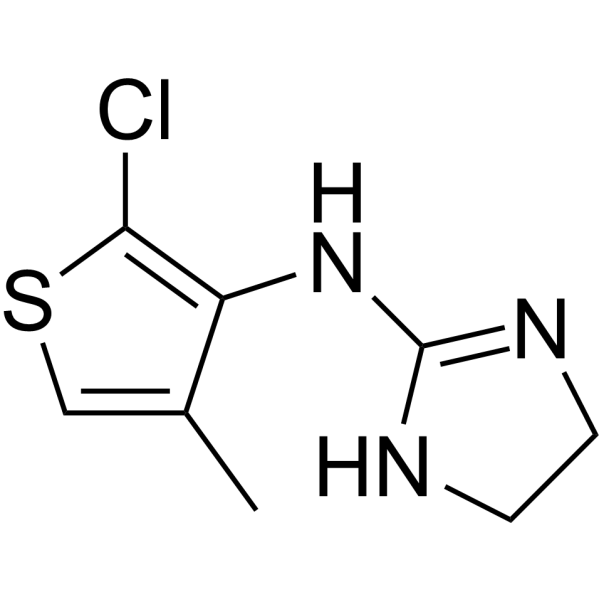
Tiamenidine hydrochloride (HOE 440 hydrochloride) is an orally active α-2 adrenoceptor agonist. Tiamenidine hydrochloride stimulates peripheral α-adrenergic receptors, causing a transient increase in blood pressure, and activates central adrenergic receptors, inhibiting sympathetic nerve activity. Tiamenidine hydrochloride lowers blood pressure in hypertensive rats and inhibits plasma renin activity. Tiamenidine hydrochloride reduces ethanol preference and intake in ethanol-preferring rats. Tiamenidine hydrochloride attenuates Xylazine-induced loss of righting reflex. Tiamenidine hydrochloride can be used in research on hypertension .
loading...
    loading...
Cat. No.: HY-112074
CAS No.: 31428-61-2
Synonyms: HOE 440
Research Areas:  

Cardiovascular Disease

Tiamenidine (HOE 440) is an orally active α-2 adrenoceptor agonist. Tiamenidine stimulates peripheral α-adrenergic receptors, causing a transient increase in blood pressure, and activates central adrenergic receptors, inhibiting sympathetic nerve activity. Tiamenidine lowers blood pressure in hypertensive rats and inhibits plasma renin activity. Tiamenidine reduces ethanol preference and intake in ethanol-preferring rats. Tiamenidine attenuates Xylazine-induced loss of righting reflex. Tiamenidine can be used in research on hypertension .
loading...
    loading...
Cat. No.: HY-123525
CAS No.: 550310-04-8
Target:  

GABA Receptor

Research Areas:  

Neurological Disease

COR628 is a positive allosteric modulator of GABA(B) receptors with the activity of enhancing GABA-induced GTPγS stimulation. COR628 showed significant activity in in vitro studies but did not exhibit endogenous agonist activity. COR628 has shown efficacy in experiments in mice by enhancing the sedation/hypnosis induced by baclofen, shortening the onset time and extending the duration of loss of righting reflex when combined with non-sedating doses of baclofen . The cytotoxic effect of COR628 is comparable to or higher than that of GS39783 or BHF177 in concentration .
loading...
    loading...
Cat. No.: HY-117979
CAS No.: 14107-37-0
Synonyms: Alfadolone
Target:  

GABA Receptor Fungal

Research Areas:  

Infection Neurological Disease

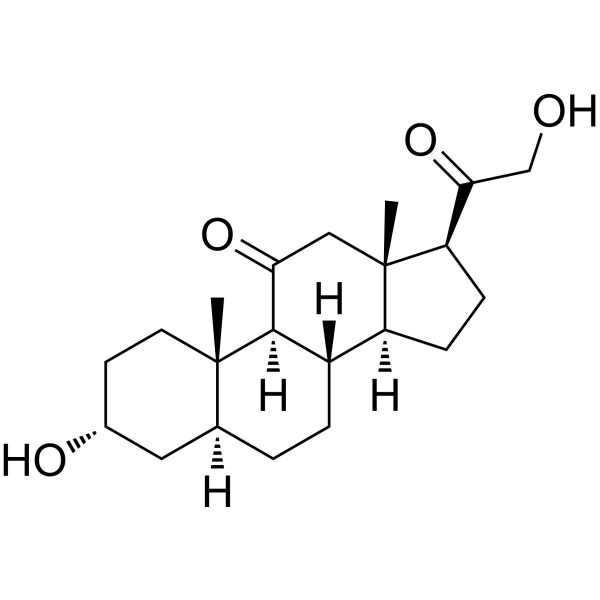
Alphadolone (Alfadolone) is a GABAA positive allosteric modulator with antinociceptive activity. Alphadolone produces GABAA-mediated antinociception and analgesia, and can induce anesthesia, loss of righting reflex, and deep sedation. Alphadolone blocks calcium channels and downstream cascades of calcium influx, and inhibits histamine release from mast cells. Alphadolone enhances the antinociceptive effects of opioids. Alphadolone promotes Candida albicans yeast/hyphal growth, increases lipid and oxygen uptake, alters sterol composition, and enhances tolerance to polyene antifungals . Alphadolone can be used in pain-related research .
loading...
    loading...
Cat. No.: HY-162620
CAS No.: 2971825-58-6
Target:  

Adrenergic Receptor

Research Areas:  

Cancer

α2A-AR agonist 1 (Compound B9) is a selective agonist for α2-adrenergic receptor (α2A-AR) with EC50 of 0.23 nM. α2A-AR agonist 1 exhibits a hypnotic effect, with ED50 of 0.138 mg/kg in the loss of righting reflex (LORR) experiment. α2A-AR agonist 1 exhibits metabolic stability in mouse liver microsomes .
loading...
    loading...
Cat. No.: HY-N6609B
CAS No.: 75413-87-5
Magnocurarine chloride is a neuromuscular junction blocker that inhibits muscle contraction by functionally blocking signal transmission without directly damaging nerve or muscle tissues. In frog, mouse and rabbit models, Magnocurarine chloride exerts a dose-dependent paralytic effect, which progresses gradually from limb weakness and loss of righting reflex to respiratory depression and even cardiac arrest. Although high doses cause complete cessation of movement, Magnocurarine chloride does not affect the spinal multineuronal reflex in frogs. Magnocurarine chloride exhibits biological activity similar to that of tubocurarine (HY-125901) in various animal models .
loading...
    loading...
  • 1

