15 Results for "

splice sites

" in MedChemExpress (MCE) Product Catalog:
Products (15)

15 Results for "splice sites" in MCE Product Catalog:

1
1 Cited Publications
Cat. No.: HY-N6973
CAS No.: 476-70-0
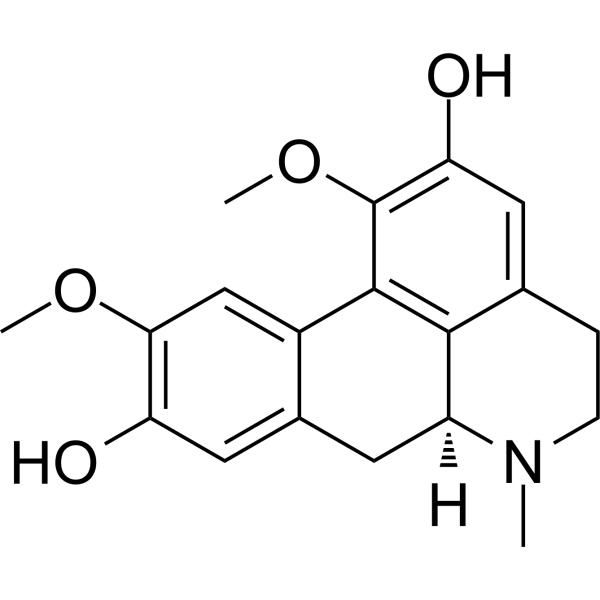
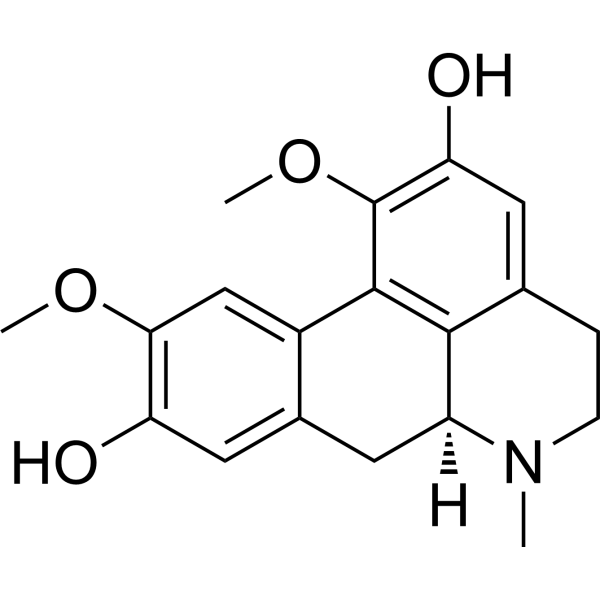
Boldine is an aporphine alkaloid telomerase (telomerase) inhibitor (IC50 of 0.17 μM for TERT) and a pannexin/connexin hemichannel blocker, with oral activity and blood-brain barrier permeability. Boldine inhibits telomerase activity through direct interaction with the telomerase ribonucleoprotein and non-competitive binding near the TERT active site, and downregulates hTERT mRNA while shifting alternative splicing toward non-functional transcripts. Boldine blocks Panx1, Cx43, Cx26, and Cx30 hemichannels as well as P2X7 receptor-mediated calcium influx. Boldine exhibits antioxidant, anti-inflammatory, antiproliferative, and cytotoxic activities by scavenging ROS, inhibiting NFκB, dephosphorylating SGK1, and reducing TNF-alpha levels. Boldine can be used in research on breast cancer, Alzheimer's disease, glioblastoma, diabetes, and spinal cord injury .
loading...
    loading...
Cat. No.: HY-P3522
CAS No.: 107978-83-6
Target:  

Integrin

Research Areas:  

Cardiovascular Disease

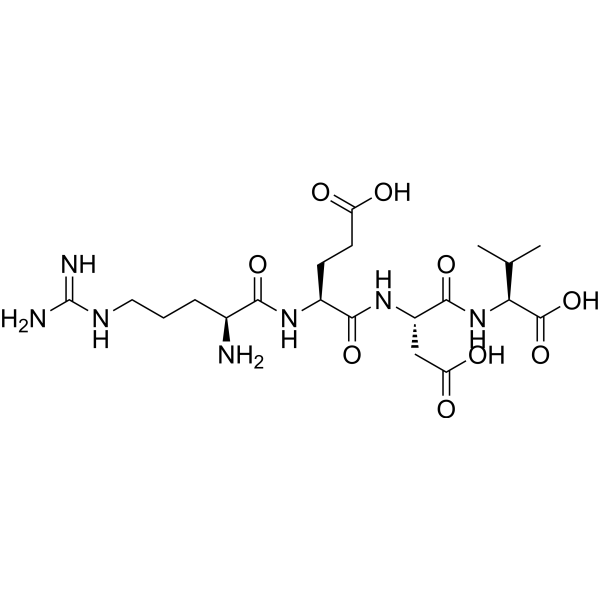
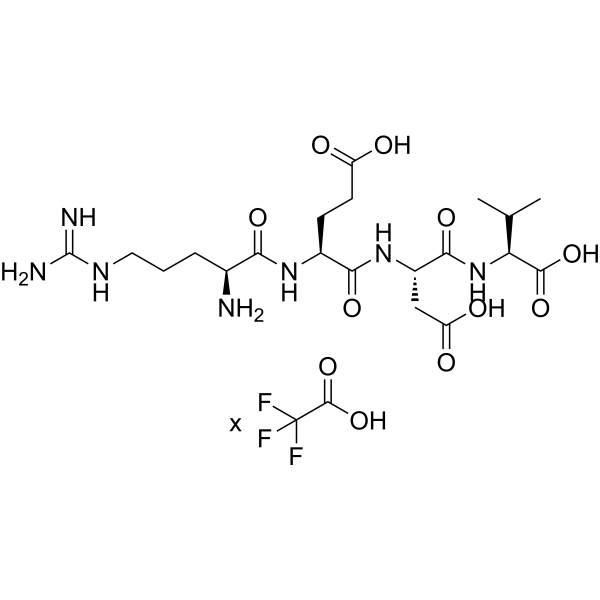
REDV is the minimal active sequence within the CS5 site of the alternatively spliced type III connecting segment (IIICS) region of fibronectin. REDV can mediate adhesion to the IIICS region of plasma fibronectin by binding the integrin alpha 4 beta 1(α4β1). REDV can be used for the research of cell adhesion. REDV is used to study the effects of gene vectors containing REDV on cells .
loading...
    loading...
Cat. No.: HY-P5960
Synonyms: PTBP1 α3-helix derived peptide P6 TFA
Target:  

DNA/RNA Synthesis

Research Areas:  

Cancer

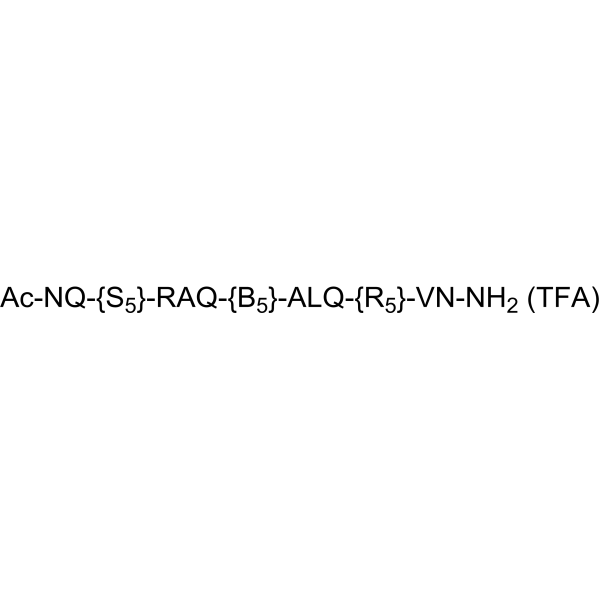
PTBP1-RNA-binding inhibitor (PTBP1 α3-helix derived peptide) P6 TFA is a cell-permeable PTBP1 inhibitor. PTBP1-RNA-binding inhibitor P6 TFA binds to the α3 helix binding site of the PTBP1 RRM1 domain, and disrupts the synergistic RNA-binding effect of the RRM1 and RRM2 domains of PTBP1. PTBP1-RNA-binding inhibitor P6 (TFA) regulates the regulatory pattern of PTBP1-related alternative splicing events, and thus exhibits anticancer potential .
loading...
    loading...
Cat. No.: HY-153736
CAS No.: 90379-42-3
Purity:  98.40%
Target:  

DNA/RNA Synthesis

Research Areas:  

Cancer

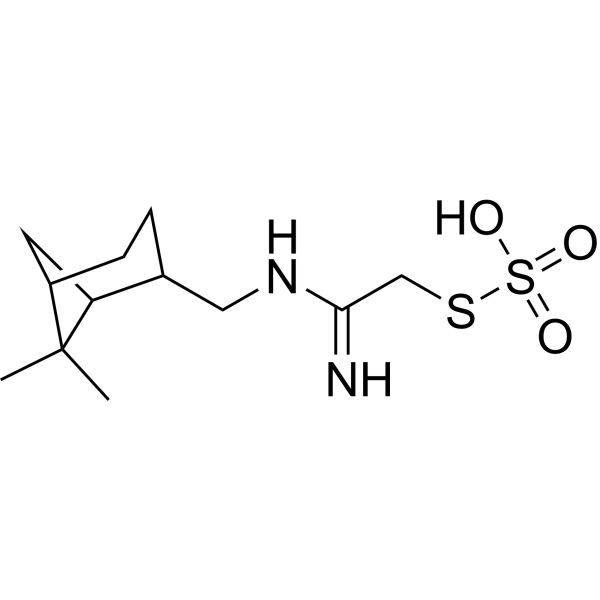
NSC 194308, a U2AF2-RNA complexes enhancer, increases association of the U2AF1-U2AF2-SF1-splice site RNA complex by binding a site between the U2AF2 RNA recognition motifs (RRM1 and RRM2). NSC 194308 inhibits pre-mRNA splicing by stalling spliceosome assembly at the point where U2AF helps recruit U2 snRNP to the branchpoint. NSC 194308 enhances the binding of pre-mRNA to U2AF2, selectively triggering cell death in leukemia cell lines containing spliceosome mutations .
loading...
    loading...
Cat. No.: HY-145425
CAS No.: 2771006-54-1
Target:  

IRE1 Apoptosis FGFR

Research Areas:  

Inflammation/Immunology

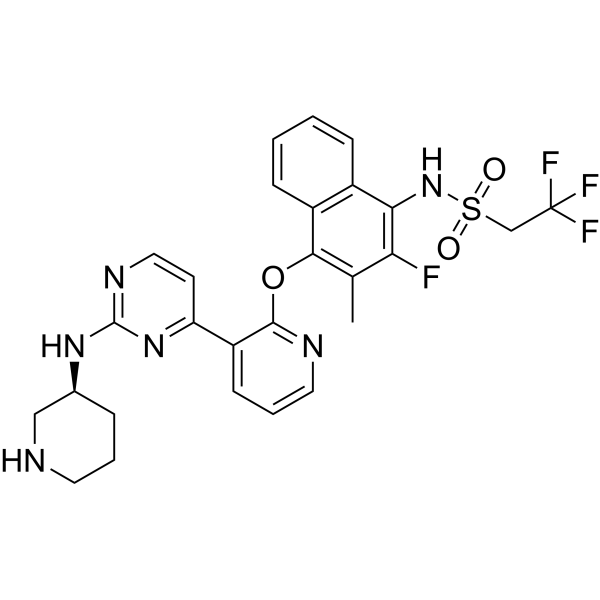
PAIR2 is a highly selective inhibitor targeting the kinase domain of human IRE1α, with a Ki value of 8.8 nM against human IRE1α. PAIR2 fully occupies the ATP-binding site of the IRE1α kinase domain, partially antagonizes the ribonuclease activity of IRE1α, specifically inhibits regulated IRE1α-dependent decay (RIDD) and its mediated substrate cleavage, while preserving the splicing function of Xbp1 mRNA. PAIR2 also promotes the differentiation of B cells into plasma cells, blocks IRE1α-induced cell apoptosis, and restores the expression of Fgfr2 mRNA in AT2 cells. PAIR2 effectively reaches a steady-state concentration in the lung tissues of Mus musculus, and serves as an important tool for investigating the function of the IRE1α signaling pathway in diseases such as pulmonary fibrosis .
loading...
    loading...
Cat. No.: HY-N6973R
CAS No.: 476-70-0
Boldine (Standard) is the analytical standard of Boldine (HY-N6973). This product is intended for research and analytical applications. Boldine is an aporphine alkaloid telomerase (telomerase) inhibitor (IC50 of 0.17 μM for TERT) and a pannexin/connexin hemichannel blocker, with oral activity and blood-brain barrier permeability. Boldine inhibits telomerase activity through direct interaction with the telomerase ribonucleoprotein and non-competitive binding near the TERT active site, and downregulates hTERT mRNA while shifting alternative splicing toward non-functional transcripts. Boldine blocks Panx1, Cx43, Cx26, and Cx30 hemichannels as well as P2X7 receptor-mediated calcium influx. Boldine exhibits antioxidant, anti-inflammatory, antiproliferative, and cytotoxic activities by scavenging ROS, inhibiting NFκB, dephosphorylating SGK1, and reducing TNF-alpha levels. Boldine can be used in research on breast cancer, Alzheimer's disease, glioblastoma, diabetes, and spinal cord injury .
loading...
    loading...
Cat. No.: HY-180907
Target:  

PROTACs Deubiquitinase

Research Areas:  

Cancer

PROTAC USP39 Degrader-1 is a USP39 PROTAC degrader with Kd values of 136 nM and 232 nM, and a DC50 value of 1.06 nM (24 h). PROTAC USP39 Degrader-1 binds to the VHL E3 ubiquitin ligase, forms a ternary complex with USP39, mediates USP39 ubiquitination and proteasomal degradation dependent on VHL recruitment, modulates splicing activity and induces 5' splice site-specific splicing patterns. PROTAC USP39 Degrader-1 can be used in the research of cervical cancer .
loading...
    loading...
Cat. No.: HY-P3522A
Target:  

Integrin

Research Areas:  

Cancer

REDV TFA is the minimal active sequence within the CS5 site of the alternatively spliced type III connecting segment (IIICS) region of fibronectin. REDV TFA can mediate adhesion to the IIICS region of plasma fibronectin by binding the integrin alpha 4 beta 1(α4β1). REDV TFA can be used for the research of cell adhesion .
loading...
    loading...
Cat. No.: HY-189604
CAS No.: 2927390-43-8
Target:  

DNA/RNA Synthesis

Research Areas:  

Cancer

RNA splicing modulator 7 is an RNA splicing modulator. RNA splicing modulator 7 modulates mRNA splicing by targeting cis-elements of primary RNA transcripts (such as splice sites, branch points, splicing enhancers, or splicing silencers). RNA splicing modulator 7 has anticancer activity against leukemia .
loading...
    loading...
Cat. No.: HY-153269
CAS No.: 2248691-80-5
Target:  

DNA/RNA Synthesis

Research Areas:  

Neurological Disease

9-Methyl-SMN-C5 is a SMN2 pre-mRNA splicing modifier that corrects exon 7 splicing. 9-Methyl-SMN-C5 binds to ESE2 and the 5'-splice site of exon 7, and stabilizes the RNP complex. 9-Methyl-SMN-C5 induces chemical shift perturbations at the 5'-splice site of the exon 7-U1 snRNA duplex. 9-Methyl-SMN-C5 partially blocks the binding of hnRNP G to ESE2. 9-Methyl-SMN-C5 can be used for research on spinal muscular atrophy (SMA) .
loading...
    loading...
Cat. No.: HY-133895
CAS No.: 1449592-94-2
Target:  

DNA/RNA Synthesis

Research Areas:  

Neurological Disease

SMN-C5 is an inducer of SMN2 exon 7 inclusion. SMN-C5 binds to the SMN2 exon 7 5′-splice site/U1 snRNA helix (Kd = 28 μM) and positively allosterically modulates SMN2 splicing correction. SMN-C5 binds to SMN2 exon 7 ESE2 and partially displaces hnRNP G, enhances the affinity of U1 snRNP for the weak splice site, binds to a bulged adenine in the major groove and forms hydrogen bonds, while not affecting the interaction of Tra2-β1 with ESE2 RNA. SMN-C5 can be used for research on spinal muscular atrophy .
loading...
    loading...
Cat. No.: HY-108190
CAS No.: 33103-21-8
Target:  

Antibiotic Bacterial

Research Areas:  

Infection

Tuberactinomycin A is a basic cyclic peptide antibiotic and a group I intron RNA splicing inhibitor, with an IC50 of 10 μM against the G-binding site of bacteriophage T4 group I intron RNA. Tuberactinomycin A exerts antibacterial effects by acting on the initiation and elongation steps of bacterial bacteria ribosomes to inhibit prokaryotic protein synthesis. Tuberactinomycin A competes with guanosine cofactors for binding to the G-binding site of group I intron RNA, forms electrostatic interactions with the RNA backbone, and inhibits the self-splicing of bacteriophage T4 td and sunY group I introns, and its inhibitory activity depends on Mg 2+ concentration. Tuberactinomycin A can be used in studies related to bacterial infections .
loading...
    loading...
Cat. No.: HY-D3639
CAS No.: 3020765-74-3
Target:  

DNA/RNA Synthesis

Research Areas:  

Cancer

WX-02-33 is a TOE1 inhibitor that covalently binds TOE1 and allosterically inhibits its 3′ RNA exonuclease activity. WX-02-33 promotes the binding of TOE1 to spliceosome-associated protein complexes involved in pre-mRNA splicing in a site-specific and stereoselective manner. WX-02-33 exhibits good proteome selectivity in cancer cells, binding only TOE1_C80 and a few other cysteines. WX-02-33 can be used for research on Merkel cell carcinoma .
loading...
    loading...
Cat. No.: HY-187810
Synonyms: LC-04-118
Research Areas:  

Cancer

dWBP4-1 (LC-04-118) is a CRBN-dependent molecular glue degrader targeting WBP4. dWBP4-1 binds to the IMiD site of CRBN via its glutarimide ring, induces the formation of the CRBN-WBP4 ternary complex (EC50 = 224 nM), and mediates the rapid degradation of WBP4 through the G-loop dependent ubiquitin-proteasome pathway, a process that can be rescued by MLN4924 (HY-70062), Lenalidomide (HY-A0003) or Bortezomib (HY-10227). dWBP4-1 causes almost no perturbation at the transcriptome and alternative splicing levels, exhibits no obvious cytotoxicity, and produces no hook effect. dWBP4-1 can be used for the construction of chemical genetic protein degradation platforms and research related to acute T-lymphoblastic leukemia .
loading...
    loading...
Cat. No.: HY-W683756
CAS No.: 16625-69-7
Boldine hydrochloride is an aporphine alkaloid telomerase (telomerase) inhibitor (IC50 of 0.17 μM for TERT) and a pannexin/connexin hemichannel blocker, with oral activity and blood-brain barrier permeability. Boldine hydrochloride inhibits telomerase activity through direct interaction with the telomerase ribonucleoprotein and non-competitive binding near the TERT active site, and downregulates hTERT mRNA while shifting alternative splicing toward non-functional transcripts. Boldine hydrochloride blocks Panx1, Cx43, Cx26, and Cx30 hemichannels as well as P2X7 receptor-mediated calcium influx. Boldine hydrochloride exhibits antioxidant, anti-inflammatory, antiproliferative, and cytotoxic activities by scavenging ROS, inhibiting NFκB, dephosphorylating SGK1, and reducing TNF-alpha levels. Boldine hydrochloride can be used in research on breast cancer, Alzheimer's disease, glioblastoma, diabetes, and spinal cord injury .
loading...
    loading...
  • 1

