20 Results for "

DNA leakage

" in MedChemExpress (MCE) Product Catalog:
Products (20)

20 Results for "DNA leakage" in MCE Product Catalog:

13
13 Publications Verification
Cat. No.: HY-15594A
CAS No.: 929895-45-4
Purity:  98.99%
Synonyms: Phen-DC3 Triflate
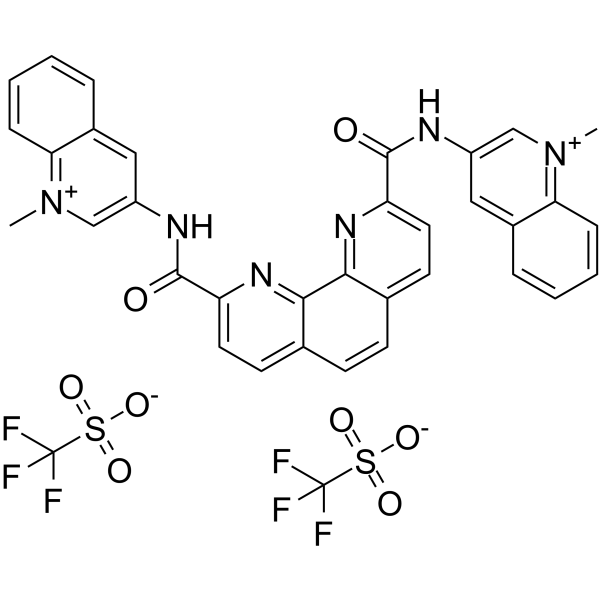
Phen-DC3 Trifluoromethanesulfonate is a bisquinolinium G-quadruplex (G4) ligand. Phen-DC3 Trifluoromethanesulfonate selectively binds to and stabilizes the hybrid quadruplex-duplex hybrid (QDH) derived from the PIM1 promoter. Phen-DC3 Trifluoromethanesulfonate also binds to the c-myc promoter Pu24T G4 via extensive π-stacking, and induces polymerase stalling at α-synuclein DNA and RNA G4 sequences. Phen-DC3 Trifluoromethanesulfonate downregulates LPS (HY-D1056)-induced TNFRSF21, RIPK3 and p-MLKL in VECs, and ameliorates CLP-induced pulmonary vascular leakage in septic rats. Phen-DC3 Trifluoromethanesulfonate can be used in studies related to neurodegenerative diseases and sepsis-associated vascular injury .
loading...
    loading...
1
1 Cited Publications
Cat. No.: HY-W105970
CAS No.: 7758-16-9
Synonyms: Disodium pyrophosphate; Sodium acid pyrophosphate; SAPP
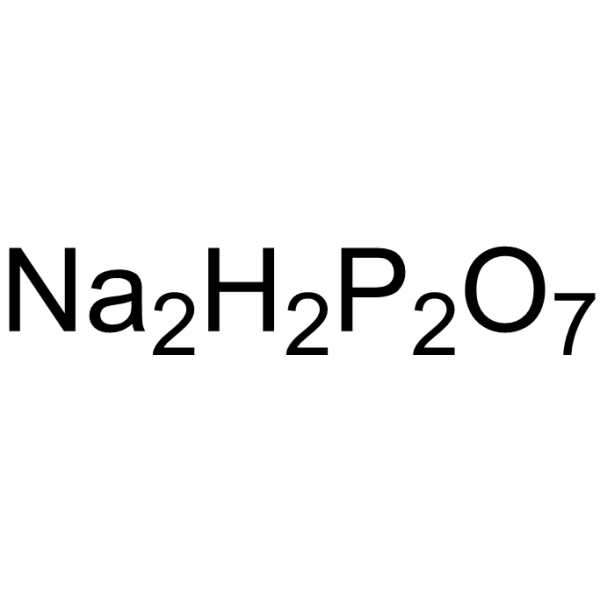
Sodium pyrophosphate (Disodium pyrophosphate) is an orally active reverse transcriptase ribonuclease H inhibitor. Sodium pyrophosphate forms soluble complexes with iron from ferric pyrophosphate to promote intestinal iron absorption. Sodium pyrophosphate increases the β-sheet content of oxidatively damaged myofibrillar protein gels and enhances the gastric digestibility and antioxidant activity of their digestion products. Sodium pyrophosphate prevents the degradation of RNA-DNA hybrids, inhibits antisense complementary DNA synthesis, induces phage DNA leakage, and causes random mutations in temperate phages .
loading...
    loading...
Cat. No.: HY-W099729
CAS No.: 70445-33-9
Target:  

Bacterial

Research Areas:  

Infection Inflammation/Immunology

Ethylhexylglycerin is an antibacterial agent. Ethylhexylglycerin can induce allergic contact dermatitis. Ethylhexylglycerin inhibits the growth of various bacteria, disrupts the integrity of bacterial cell membranes, and causes proton leakage, reduced ATP levels, morphological abnormalities, and DNA aggregation. Ethylhexylglycerin serves as a skin conditioning agent, deodorant active ingredient, and preservative synergist. Ethylhexylglycerin is applicable to research related to contact dermatitis and bacterial infections .
loading...
    loading...
Cat. No.: HY-15594
CAS No.: 942936-75-6
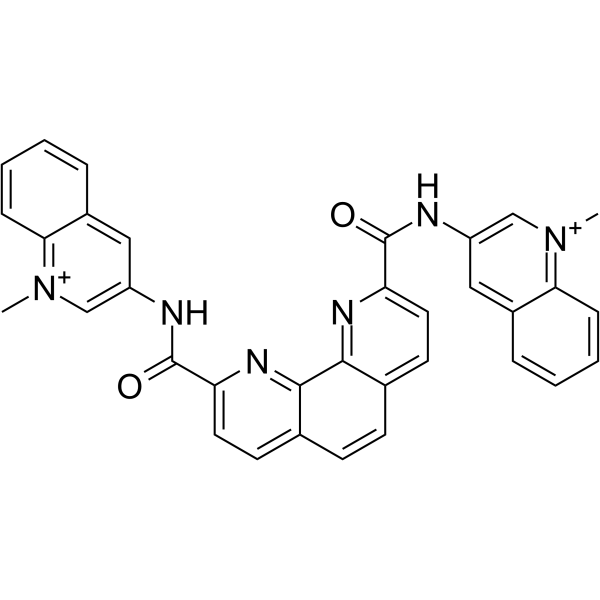
Phen-DC3 is a bisquinolinium G-quadruplex (G4) ligand. Phen-DC3 selectively binds to and stabilizes the hybrid quadruplex-duplex hybrid (QDH) derived from the PIM1 promoter. Phen-DC3 also binds to the c-myc promoter Pu24T G4 via extensive π-stacking, and induces polymerase stalling at α-synuclein DNA and RNA G4 sequences. Phen-DC3 Trifluoromethanesulfonate (HY-15594A) downregulates LPS (HY-D1056)-induced TNFRSF21, RIPK3 and p-MLKL in VECs, and ameliorates CLP-induced pulmonary vascular leakage in septic rats. Phen-DC3 can be used in studies related to neurodegenerative diseases and sepsis-associated vascular injury .
loading...
    loading...
Cat. No.: HY-176266
Research Areas:  

Neurological Disease

KIT-13 is an orally active plasmalogen derivative to inhibit neuroinflammation and mitochondrial DNA leakage associated with Mecp2 deficiency. KIT-13 significantly reduce neurological symptoms and improves the life span of the Rett Syndrome (RTT) model mice. KIT-13 can be used for the study of RTT and other neuroinflammation-related diseases.
loading...
    loading...
Cat. No.: HY-P5286
CAS No.: 184870-30-2
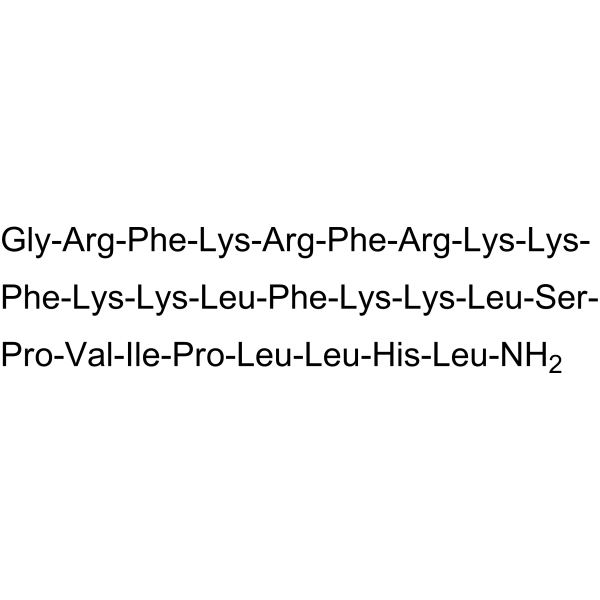
BMAP-27 is a cationic amphipathic α-helical antimicrobial peptide with anticancer activity. BMAP-27 disrupts the integrity and permeability of cell membranes, leading to the leakage of intracellular DNA, proteins and alkaline phosphatase. BMAP-27 increases intracellular ROS levels and reduces plasma endotoxin and TNF-α concentrations. BMAP-27 can be used in studies related to Salmonella infection, breast cancer, lung cancer and obstructive jaundice .
loading...
    loading...
Cat. No.: HY-178476
CAS No.: 3096122-10-7
Research Areas:  

Infection

Anti-MRSA agent 36 (Compound III13) is an antibacterial agent with strong anti MRSA activity (MIC = 1 μg/mL). Anti-MRSA agent 36 targets phosphatidylglycerol (PG) on bacterial membranes, disrupting membrane integrity, leading to DNA leakage and increased ROS. Anti-MRSA agent 36 has advantages such as low cytotoxicity, low hemolysis, difficulty in inducing drug resistance, and good plasma stability. Anti-MRSA agent 36 can be used for the study of skin abscess and systemic infection models .
loading...
    loading...
Cat. No.: HY-P10362
CAS No.: 2755770-50-2
Target:  

Bacterial

Research Areas:  

Infection

Temporin-GHd exhibits antibacterial activity against Streptococcus mutans (MIC=13.1 μM; MBC=26 μM). Temporin-GHd increases the permeability of the bacterial cell membrane, causing membrane damage and leakage of cellular contents. Temporin-GHd disrupts preformed biofilms at high concentrations. Temporin-GHd can bind to bacterial DNA, inhibiting DNA migration .
loading...
    loading...
Cat. No.: HY-169160
Target:  

Bacterial

Research Areas:  

Infection

Anti-MRSA agent 18 (E17) is an inhibitor of MRSA with MIC values of 2 μg/mL for S. aureus and 4 μg/mL for MRSA, respectively. Anti-MRSA agent 18 interacts with bacterial cell membrane phosphatidylglycerol and cardiolipin, causing changes in cell membrane permeability and polarization, increased intracellular ROS, and DNA and protein leakage, thereby accelerating bacterial death .
loading...
    loading...
Cat. No.: HY-173239
Target:  

Bacterial

Research Areas:  

Infection

Antibacterial agent 274 (Compound 18b) is a membrane-targeting antibacterial agent that demonstrates a MIC of 8 μg/mL against Acinetobacter baumannii ATCC 17978. By disrupting bacterial membrane integrity, it induces intracellular ROS accumulation and causes leakage of DNA and proteins, thereby exhibiting potent antibacterial activity. This compound is suitable for research applications targeting Gram-negative bacterial infections .
loading...
    loading...
Cat. No.: HY-162923
Target:  

Bacterial Antibiotic

Research Areas:  

Infection

Antibacterial agent 244 is an orally active compound with broad-spectrum antibacterial activity, primarily targeting Gram-positive bacteria, with a MIC value of 1–4 μg/mL and low hemolytic toxicity (HC50 of 111.6 μg/mL). Antibacterial agent 244 disrupts bacterial transmembrane potential, increases membrane permeability, leading to leakage of cellular contents such as DNA and proteins, ultimately causing bacterial death. Antibacterial agent 244 can be used in research related to Gram-positive bacterial infections .
loading...
    loading...
Cat. No.: HY-161364
Target:  

Bacterial

Research Areas:  

Inflammation/Immunology

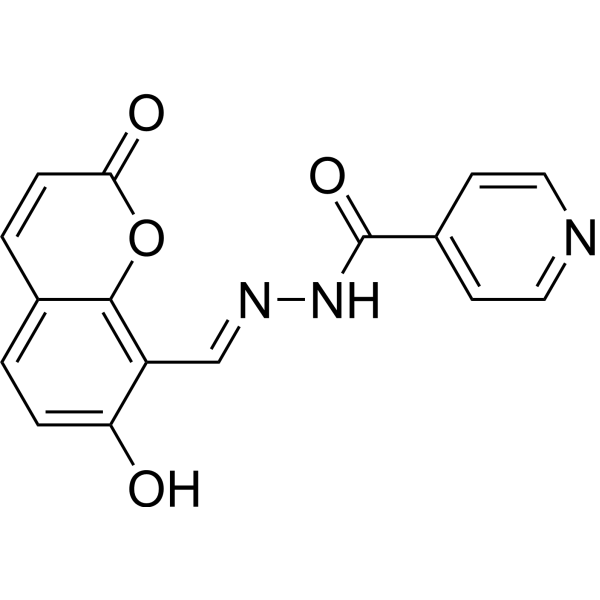
Antibacterial agent 200 (pyridyl HH 7), a unique hydrazyl hydroxycoumarin (HH), has strong antibacterial efficacy and broad antibacterial spectrum with MIC values ranging from 0.5 to 32 μg/mL for Gram-positive and Gram-negative bacteria. Antibacterial agent 200 exhibits a good inhibition against Pseudomonas aeruginosa 27853 with a low MIC value of 0.5 μg/mL. Antibacterial agent 200 can eradicate the integrity of bacterial membrane, result in the leakage of intracellular proteins, and interact with bacterial DNA gyrase via non-covalent binding .
loading...
    loading...
Cat. No.: HY-168258
Target:  

Bacterial

Research Areas:  

Infection

Antibiofilm agent-13 (compound 14b) is a potent antibacterial agent that displays a broad-spectrum antimicrobial activity. Antibiofilm agent-13 could disintegrate the integrity of bacterial cell membranes by destroying transmembrane potential and enhancing membrane permeability, and causing the generation of intracellular ROS and the leakage of DNA and proteins, ultimately leading to bacterial death. Antibiofilm agent-13 inhibits both Gram-positive bacteria (MIC of 0.5-1 μg/mL) and Gram-negative bacteria (MIC of 1-32 μg/mL) .
loading...
    loading...
Cat. No.: HY-184296
Research Areas:  

Infection

CPO 4 is a DNA-targeting antibacterial agent. CPO 4 intercalates into DNA to form a CPO 4-DNA complex, thereby blocking DNA replication. CPO 4 disrupts the metabolic activity of bacteria. CPO 4 induces intracellular protein leakage in bacteria. CPO 4 can be used for the research of drug-resistant bacterial infections .
loading...
    loading...
Cat. No.: HY-182027
CAS No.: 3031427-16-1
Antibacterial agent 330 is an antibacterial agent. Antibacterial agent 330 triggers ROS accumulation, forms DNA supramolecular complex by intercalation to block DNA replication and inhibits LDH to
disturb metabolism, and further prompts bacterial cell rupture to induce the leakage of intracellular content, ultimately causing bacterial death. Antibacterial agent 330 displays antibacterial activity and promotes wound healing in both G. Mellonella larval and murine wound infection models. Antibacterial agent 330 can be used for the research of bacterial infections .
loading...
    loading...
Cat. No.: HY-P5286A
BMAP-27 acetate is a cationic amphipathic α-helical antimicrobial peptide with anticancer activity. BMAP-27 acetate disrupts the integrity and permeability of cell membranes, leading to the leakage of intracellular DNA, proteins and alkaline phosphatase. BMAP-27 acetate increases intracellular ROS levels and reduces plasma endotoxin and TNF-α concentrations. BMAP-27 acetate can be used in studies related to Salmonella infection, breast cancer, lung cancer and obstructive jaundice .
loading...
    loading...
Cat. No.: HY-P11398
Research Areas:  

Infection Cancer

Tachyplesin II is a broad-spectrum cationic antimicrobial peptide. Tachyplesin II has significant inhibitory effects on Gram-positive bacteria, Gram-negative bacteria, and some fungi. Tachyplesin II binds to bacterial membrane lipopolysaccharides through its positive charge, disrupting membrane integrity and causing leakage of cellular contents. Tachyplesin II can bind to DNA grooves, inhibiting microbial replication, and also suppressing HIV-1 replication and the proliferation of liver cancer cells .
loading...
    loading...
Cat. No.: HY-183291
Antibacterial agent 343 (Compound 47) is an Antibacterial agent. Antibacterial agent 343 binds to the allosteric site of PBP2a to open its active site. Antibacterial agent 343 disrupts bacterial cell membranes, leading to protein leakage. Antibacterial agent 343 interacts with DNA and inhibits replication and transcription. Antibacterial agent 343 induces ROS accumulation. Antibacterial agent 343 exhibits antibacterial activity against MRSA, Staphylococcus aureus, and Enterococcus faecalis. Antibacterial agent 343 can be used for the research of methicillin-resistant Staphylococcus aureus infections .
loading...
    loading...
Cat. No.: HY-P5289A
Target:  

Drug Intermediate

pre-BMAP-27 TFA is a precursor to BMAP-27 (HY-P5286). BMAP-27 is a cationic amphipathic α-helical antimicrobial peptide with anticancer activity. BMAP-27 disrupts the integrity and permeability of cell membranes, leading to the leakage of intracellular DNA, proteins and alkaline phosphatase. BMAP-27 increases intracellular ROS levels and reduces plasma endotoxin and TNF-α concentrations. BMAP-27 can be used in studies related to Salmonella infection, breast cancer, lung cancer and obstructive jaundice .
loading...
    loading...
Cat. No.: HY-189732
CAS No.: 2883235-38-7
Research Areas:  

Infection

Anti-MRSA agent 46 is a Methicillin-resistant Staphylococcus aureus (MRSA) membrane-disrupting agent. Anti-MRSA agent 46 disrupts bacterial membrane integrity and morphology, dissipates membrane potential, increases membrane permeability, and perturbs glycerophospholipid metabolism. Anti-MRSA agent 46 induces intracellular DNA and protein leakage, reduces intracellular ATP levels, and induces reactive oxygen species (ROS) production. Anti-MRSA agent 46 disrupts MRSA biofilms, reduces bacterial burden, exhibits a low propensity for resistance, and retains antibacterial activity after plasma exposure, and improves survival in a mouse sepsis infection model. Anti-MRSA agent 46 can be used for research related to MRSA infection .
loading...
    loading...
  • 1

