9 Results for "

MyD88-dependent

" in MedChemExpress (MCE) Product Catalog:
Products (9)

9 Results for "MyD88-dependent" in MCE Product Catalog:

16
16 Publications Verification
Cat. No.: HY-19744
CAS No.: 2437475-16-4
Target:  

MyD88

Research Areas:  

Inflammation/Immunology

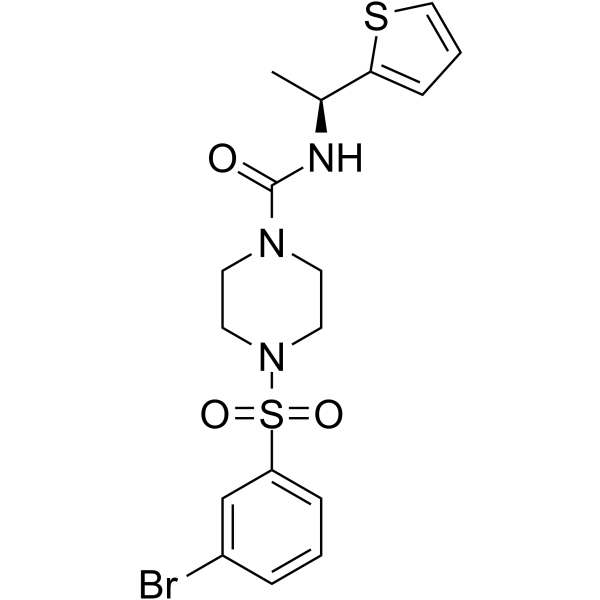
T6167923 is a selective inhibitor of MyD88-dependent signaling pathways. T6167923 directly binds to Toll/IL1 receptor (TIR) domain of MyD88 and disrupts MyD88 homodimeric formation. T6167923 inhibits NF-κB driven Staphylococcus enterotoxin AP (SEAP) activity, and improves anti-inflammatory activity with IC50s of 2.7 μM, 2.9 μM, 2.66 μM and 2.66 μM for IFN-γ, IL-1β, IL-6 and TNF-α, respectively .
loading...
    loading...
3
3 Cited Publications
Cat. No.: HY-117066
CAS No.: 256922-53-9
Purity:  99.18%
Synonyms: 3M002
Research Areas:  

Inflammation/Immunology

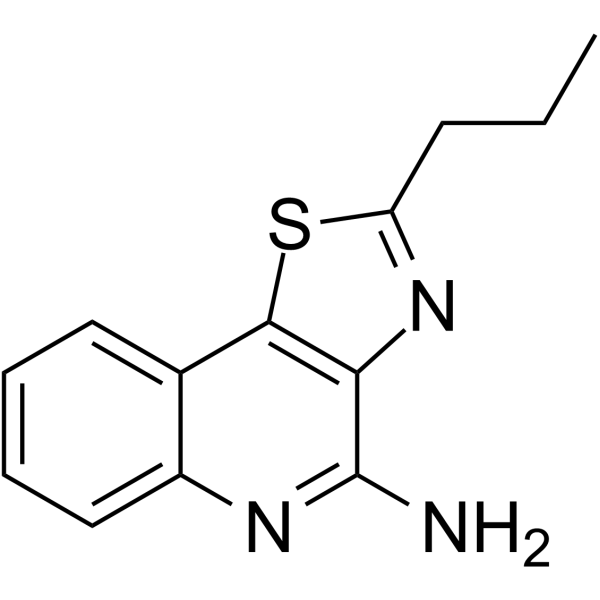
CL075 (3M002) is a selective TLR8 agonist with immunomodulating properties. CL075 triggers a MyD88-dependent signaling pathway to elicit production of inflammatory cytokines and type I interferons (IFNs) via activation of NF-κB and IRF7, respectively .
loading...
    loading...
Cat. No.: HY-112137
CAS No.: 66758-35-8
Purity:  99.92%
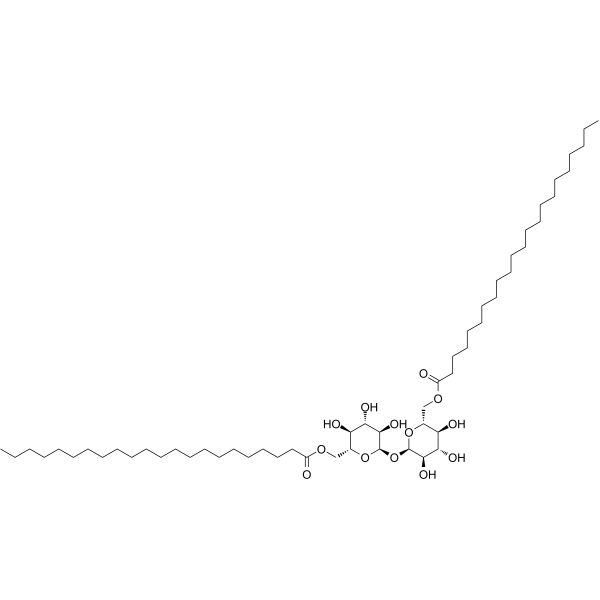
Trehalose-6,6'-dibehenate is an orally active glycolipid. Trehalose-6,6'-dibehenate activates Mincle and inflammasome, inducing IL-1β secretion in a caspase activity-dependent manner. Trehalose-6,6'-dibehenate exerts a Myd88-dependent adjuvant activity. Trehalose-6,6'-dibehenate induces Th-1/Th-17 immune responses .
loading...
    loading...
Cat. No.: HY-155801
CAS No.: 216014-14-1
CRX 527 is a TLR4 agonist. CRX 527 activates the MyD88-dependent, TRIF-dependent, and TRAF6/NF-κB signaling pathways downstream of TLR4, mimics lipid A, and regulates antigen processing and presentation by dendritic cells. CRX 527 stimulates innate immune responses and enhances vaccine efficacy. CRX 527 maintains the structural integrity of hematopoietic tissues, spleen and intestine, alleviates radiation-induced damage, preserves intestinal homeostasis, and inhibits apoptosis, inflammatory responses, oxidative stress and DNA damage. CRX 527 can be used in the research of acute radiation syndrome, melanoma, HPV-related tumors and intracerebral hemorrhage .
loading...
    loading...
Cat. No.: HY-124995
CAS No.: 1610017-20-3
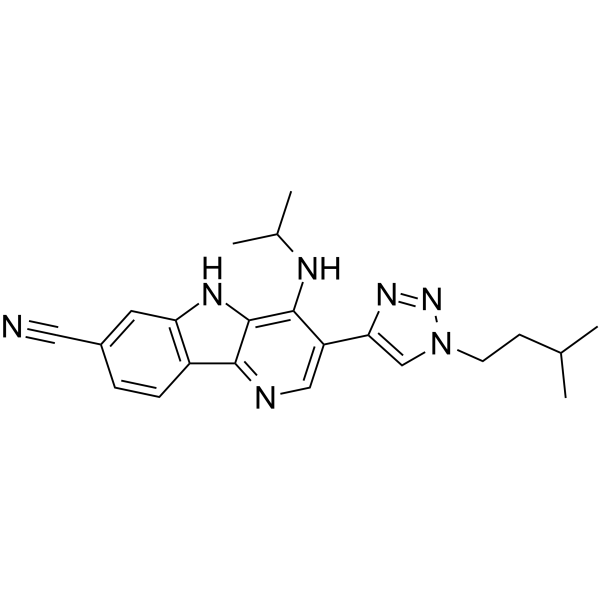
BMS-986126 is a potent, selective, and orally active IRAK4 inhibitor (IC50 = 5.3 nM). BMS-986126 broadly inhibits MyD88-dependent signaling pathways. BMS-986126 demonstrates robust activity in the MRL/lpr and NZB/NZW murine models of lupus, inhibiting multiple pathogenic responses. BMS-986126 can be used for autoimmune diseases research, such as lupus erythematosus (SLE) .
loading...
    loading...
Cat. No.: HY-143485
CAS No.: 2681278-07-7
Target:  

IRAK

Research Areas:  

Inflammation/Immunology Cancer

IRAK4-IN-9 (compound 73) is a potent IRAK4 inhibitor with an IC50 of 1.5 nM. IRAK4-IN-9 blocks MyD88 dependent signaling. IRAK4-IN-9 has the potential for the research of inflammatory diseases, autoimmune diseases, and cancer .
loading...
    loading...
Cat. No.: HY-143486
CAS No.: 2681278-09-9
Target:  

IRAK

Research Areas:  

Inflammation/Immunology Cancer

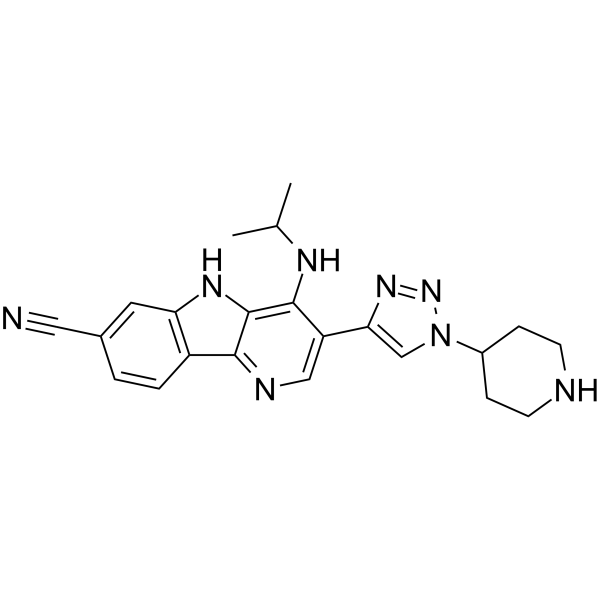
IRAK4-IN-10 (compound 75) is a potent IRAK4 inhibitor with an IC50 of 1.5 nM. IRAK4-IN-10 blocks MyD88 dependent signaling. IRAK4-IN-9 has the potential for the research of inflammatory diseases, autoimmune diseases, and cancer .
loading...
    loading...
Cat. No.: HY-189658
CAS No.: 2410782-67-9
SMU-H1 is a TLR2 agonist with a KD of 12.1 nM for mouse TLR2 and an EC50 of 5.14 nM in HEK-Blue hTLR2 cells. SMU-H1 binds TLR2 and activates MyD88-dependent signaling. SMU-H1 activates the NF-κB and MAPK signaling pathways. SMU-H1 induces proinflammatory cytokine production. SMU-H1 promotes M1 macrophage polarization and dendritic cell activation. SMU-H1 can be used for research on Lewis lung cancer .
loading...
    loading...
Cat. No.: HY-19744A
CAS No.: 1090528-71-4
Target:  

MyD88

Research Areas:  

Infection Inflammation/Immunology

(Rac)-T6167923 is the racemic form of T6167923 (HY-19744) and acts as a MyD88 inhibitor. (Rac)-T6167923 disrupts MyD88 homodimer formation and blocks MyD88-dependent signaling, thereby inhibiting TLR2/MyD88 downstream NF-κB activation and pro-inflammatory cytokine production. (Rac)-T6167923 modulates macrophage inflammatory responses and polarization states, and reduces the survival rate of Mycobacterium avium subsp. paratuberculosis (MAP) within infected macrophages. (Rac)-T6167923 can be used for research related to inflammatory responses and mycobacterial infections .
loading...
    loading...

