7 Results for "

earthworms

" in MedChemExpress (MCE) Product Catalog:
Products (7)

7 Results for "earthworms" in MCE Product Catalog:

4
4 Cited Publications
Cat. No.: HY-B0827
CAS No.: 165252-70-0
Synonyms: MTI-446
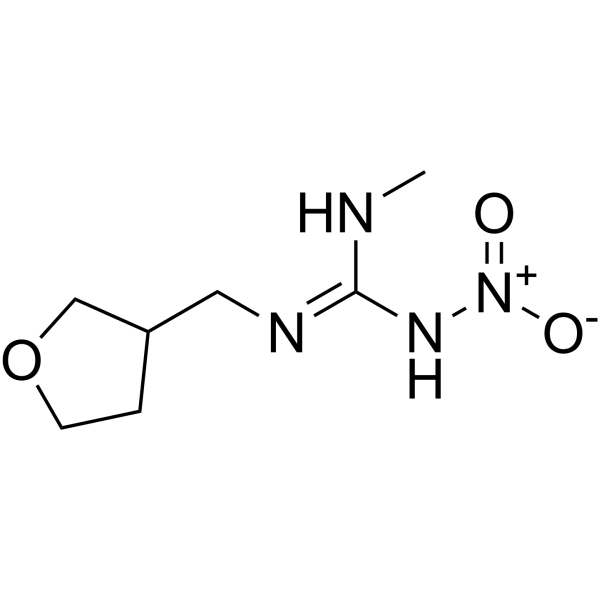
Dinotefuran is an orally active and competitive inhibitor and insecticide targeting insect nicotinic acetylcholine receptors (nAChRs). Dinotefuran blocks neural signaling and induces neural dysfunction in insects. Dinotefuran binds to [ 3H]epibatidine in the neural cord membrane of American cockroach with an IC50 of 890 nM and to [ 3H]α-bungarotoxin with an IC50 of 36.1 μM. Dinotefuran exhibits knockdown activity (KD50=0.351 nmol/g) and lethal activity (LD50=0.173 nmol/g) against German cockroach. Dinotefuran is mainly used for agricultural pest control, such as field control of piercing-sucking and chewing insects (e.g., aphids, planthoppers), while its environmental toxicological effects (e.g., oxidative stress and reproductive neurotoxicity on earthworms) are also a research focus to assess ecological risks .
loading...
    loading...
Cat. No.: HY-W674169
CAS No.: 30334-69-1
Synonyms: FBSA
Perfluorobutanesulfonamide (FBSA) is a per- and polyfluoroalkyl substance (PFAS) and bovine carbonic anhydrase inhibitor with an IC50 of 1.486 µM. Perfluorobutanesulfonamide can be found as a contaminant in wastewater. Perfluorobutanesulfonamide inhibits the reversible CO2 hydration reaction catalyzed by zinc metalloenzymes. Perfluorobutanesulfonamide bioaccumulates in earthworms, is lethal to earthworms, and impairs avoidance of light. Perfluorobutanesulfonamide exhibits developmental toxicity in zebrafish embryos. Perfluorobutanesulfonamide can be used in research related to PFAS environmental chemistry and ecotoxicology .
loading...
    loading...
Cat. No.: HY-125644
CAS No.: 18416-85-8
Research Areas:  

Others

L-Lombricine is a D-configuration amino acid, which can be isolated from Lumbricus terrestris. L-Lombricine is related to the energy storage in earthworms .
loading...
    loading...
Cat. No.: HY-W795031
CAS No.: 64436-13-1
Target:  

Bacterial

Research Areas:  

Infection

Arsenobetaine is an organoarsenical and a compatible solute that has been found in various marine animals, such as lobsters and crabs, as well as terrestrial organisms, including earthworms and lichens. Arsenobetaine is protective against B. subtilis cell death induced by high osmolarity or extreme temperatures when used at a concentration of 1 mM .
loading...
    loading...
Cat. No.: HY-N20582
Synonyms: Earthworm extract
Category:  

Extract

Target:  

Others

Pheretima extract (Earthworm extract) is an extract from the earthworm (Pheretima) and is used to study various inflammatory diseases, such as asthma.
loading...
    loading...
Cat. No.: HY-182364
CAS No.: 2231764-36-4
Target:  

Bacterial

Research Areas:  

Others

T3SS-IN-6 is a thiazolidin-2-cyanamide derivative and type III secretion system (T3SS) inhibitor targeting Xanthomonas oryzae pv. oryzae (Xoo). T3SS-IN-6 exhibits no effect on Xoo growth. T3SS-IN-6 shows no measurable acute toxicity to silkworms and earthworms .
loading...
    loading...
Cat. No.: HY-189740
CAS No.: 3127776-54-6
Research Areas:  

Infection

nAChR-IN-3 is an nAChR α6 subunit inhibitor and broad-spectrum insecticide against Acyrthosiphon pisum, Nilaparvata lugens, and Bemisia tabaci. nAChR-IN-3 acts through the nicotinic acetylcholine receptor α6 subunit; α6 silencing increases aphid tolerance and α6-null Drosophila show high-level resistance. nAChR-IN-3 disrupts ionic homeostasis and cholinergic signaling in nerve cells. nAChR-IN-3 induces mitochondrial electron transport chain disruption and reactive oxygen species burst. nAChR-IN-3 inhibits ATP synthesis and collapses energy metabolism. nAChR-IN-3 shows low toxicity to non-target honeybees, zebrafish, and earthworms and no inhibition of crop seed germination or seedling development. nAChR-IN-3 displays cytotoxicity in human keratinocytes and renal cells .
loading...
    loading...

