
18 Results for "

fluorescence lifetime

" in MedChemExpress (MCE) Product Catalog:
Products (18)

18 Results for "fluorescence lifetime" in MCE Product Catalog:

1
1 Cited Publications
Cat. No.: HY-D0823
CAS No.: 146368-16-3
Synonyms: Sulfo-Cy3 NHS ester; Sulfo Cyanine3 NHS ester
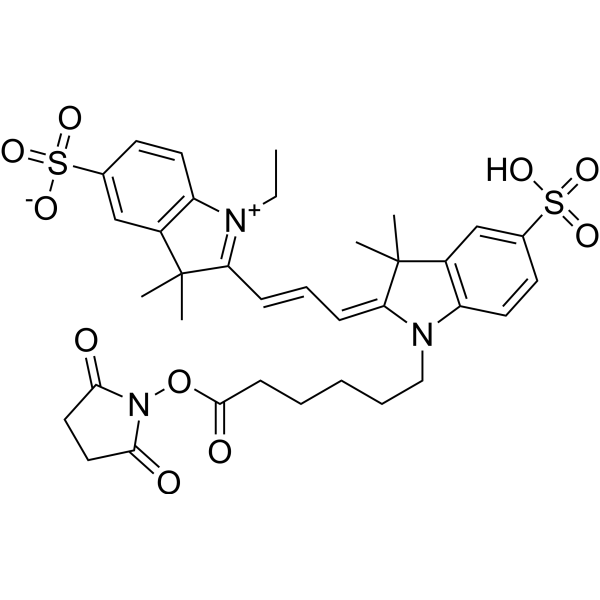
Cy3-SE (Sulfo-Cy3 NHS ester; Sulfo Cyanine3 NHS ester) is a sulfonated cyanine dye-derived fluorescent labeling reagent with λex of about 515 nm and λem of about 568 nm. Cy3-SE can interact with the π-π stacking of biomolecules (e.g., nucleoside monophosphates, proteins), inhibiting the photoisomerization process and increasing the fluorescence quantum yield and lifetime .
loading...
    loading...
1
1 Cited Publications
Cat. No.: HY-W089353
CAS No.: 194235-40-0
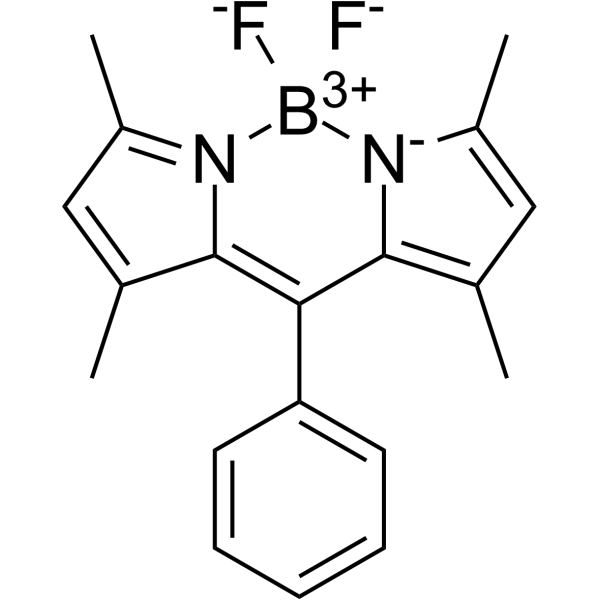
8-Phenyl-BODIPY 505/515 is a molecular rotor based on the BODIPY scaffold, specifically used as a microviscosity probe. The working principle of 8-Phenyl-BODIPY 505/515 is based on the restriction of molecular motion by viscosity: in a high-viscosity environment, the rotational freedom of its chemical bonds is inhibited, which leads to a significant extension of fluorescence lifetime. This property makes 8-Phenyl-BODIPY 505/515 an effective tool for monitoring changes in the viscosity of intracellular microenvironments via fluorescence lifetime imaging (FLIM) technology .
loading...
    loading...
Cat. No.: HY-D2017
CAS No.: 1251752-59-6
Target:  

Fluorescent Dye

Research Areas:  

Others

ATTO 550 is a fluorescent dye in the orange spectral range, commonly used as a fluorescent probe for the labeling and detection of biomolecules. ATTO 550 can be used to label nucleic acids, proteins, and small molecules, and is widely applied in super-resolution imaging, flow cytometry, fluorescence lifetime imaging (FLIM), fluorescence resonance energy transfer (FRET), and fluorescence intensity-based cell uptake and binding assays. The excitation/emission wavelengths of ATTO 550 are approximately Ex/Em = 554/576 nm .
loading...
    loading...
Cat. No.: HY-W103047
CAS No.: 3443-45-6
Research Areas:  

Others

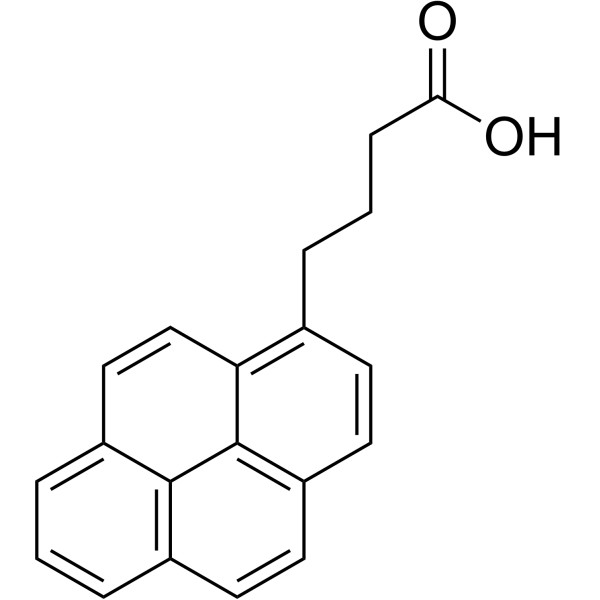
1-Pyrenebutyric acid is a pyrene-based fluorescent probe compound. The fluorescence lifetime of 1-Pyrenebutyric acid is quenched by molecular oxygen and intracellular ROS, thus it serves as a fluorescent probe for detecting ROS and oxygen concentration through fluorescence lifetime measurements. 1-Pyrenebutyric acid undergoes electrostatic interactions with arginine-rich peptides, increasing their net hydrophobicity, promoting their direct translocation across lipid bilayers, and enhancing cytosolic delivery. 1-Pyrenebutyric acid is used for intracellular reactive oxygen species detection and research related to arginine-rich peptide-mediated cytosolic delivery .
loading...
    loading...
Cat. No.: HY-D2817
Target:  

Fluorescent Dye

Research Areas:  

Others

FITC-PLL is a fluorescently labeled polycationic polypeptide probe composed of polylysine (PLL) and FITC (HY-66019), with a typical Ex/Em of 495/520 nm. The fluorescence intensity and lifetime of FITC-PLL are sensitive to pH and FITC density. FITC-PLL can be used for quantifying hapten receptor binding and endocytosis kinetics in macrophages, as a patternable substrate for neuron guidance, for negatively charged phospholipid membrane binding and transmembrane transport, and for live-cell imaging of starch nanoparticle conjugates and lysosome labeling .
loading...
    loading...
Cat. No.: HY-149028
Target:  

Fluorescent Dye

Research Areas:  

Others

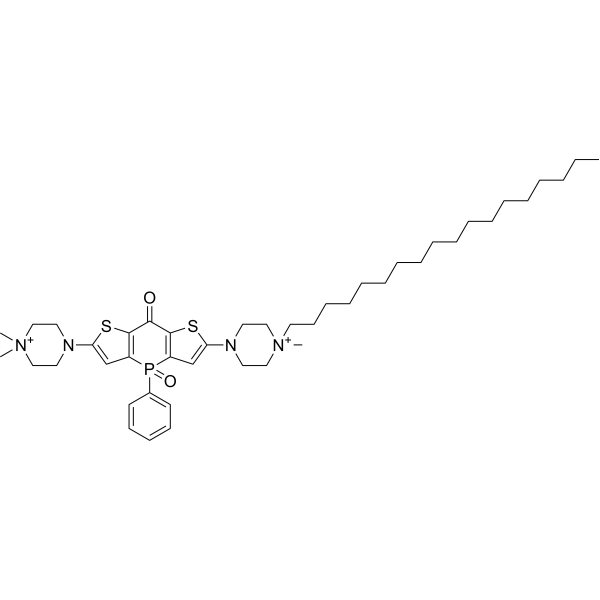
Mem-C1C18 is a polarity-sensitive fluorescent probe with excellent plasma membrane anchoring, high brightness and a sensitive response to environmental polarity by altering the fluorescence lifetime. Mem-C1C18 can be used to quantify changes in the polarity of the plasma membrane during iron death .
loading...
    loading...
Cat. No.: HY-D1419
Target:  

Fluorescent Dye

Research Areas:  

Others

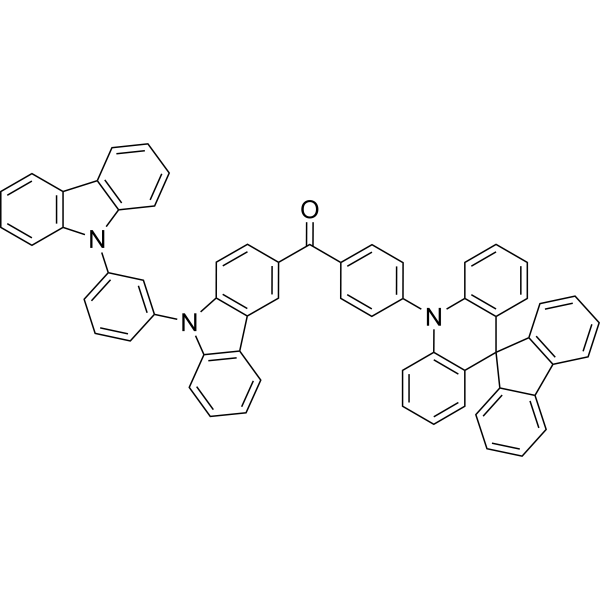
mCP-BP-SFAC is a luminogenic molecule. mCP-BP-SFAC exhibits strong sky-blue delayed fluorescence in neat films, with photoluminescence (PL) peaks at ~483 nm and delayed fluorescence lifetimes of 5.4 to 5.7 μs .
loading...
    loading...
Cat. No.: HY-D1420
Target:  

Fluorescent Dye

Research Areas:  

Others

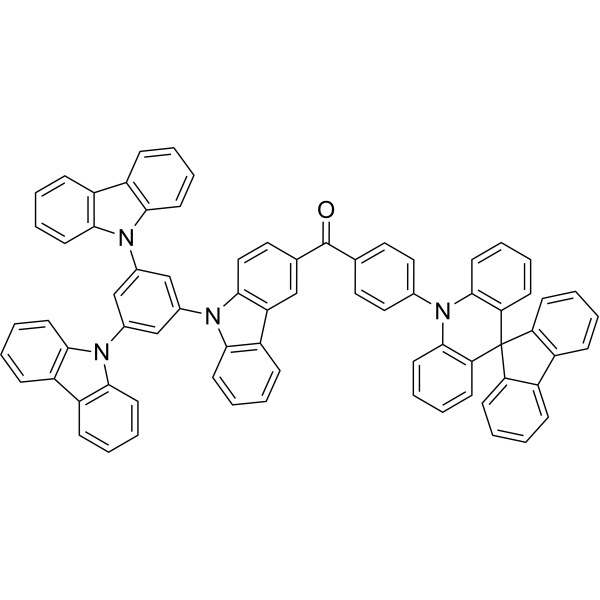
TCP-BP-SFAC is a luminogenic molecule. TCP-BP-SFAC exhibits strong sky-blue delayed fluorescence in neat films, with photoluminescence (PL) peaks at ~483 nm and delayed fluorescence lifetimes of 5.4 to 5.7 μs .
loading...
    loading...
Cat. No.: HY-172508
CAS No.: 908117-78-2
Research Areas:  

Others

Perylene dU phosphoramidite is a bright and extremely photostable fluorescent polycyclic aromatic hydrocarbon (PAH) label with a quantum yield approaching quantitative. Due to the low lifetime of fluorescence, this probe does not form excimers.With this phosphoramidite, perylene can be introduced into DNA by automated oligonucleotide synthesis.
loading...
    loading...
Cat. No.: HY-147181
CAS No.: 97325-55-8
Target:  

Fluorescent Dye

Research Areas:  

Others

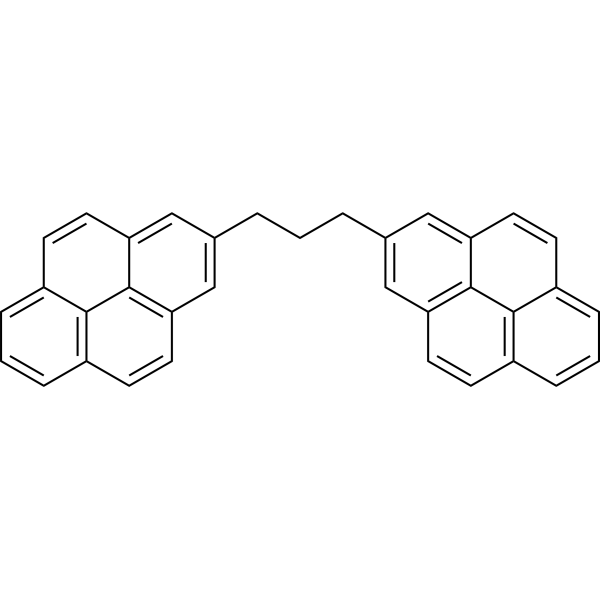
1,3-Di-(2-pyrenyl)propane is a fluorescent indicator. 1,3-Di-(2-pyrenyl)propane can be used in fluidity of bacterial membrane lipids monitored by intramolecular excimerization. 1,3-Di-(2-pyrenyl)propane shows temperature dependence of fluorescence lifetime distributions .
loading...
    loading...
Cat. No.: HY-D2047
CAS No.: 1632109-97-7
Target:  

Fluorescent Dye

Research Areas:  

Others

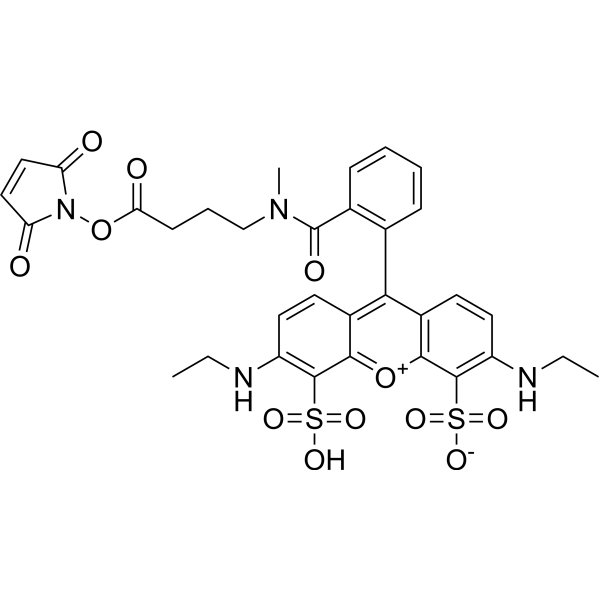
ATTO 532 maleimide is a thiol-reactive Fluorescent dye. ATTO 532 maleimide enables site-specific labeling of proteins via maleimide-cysteine chemistry and can be used for single-molecule detection of GroEL EL315C binding/complex formation and single-molecule FRET, and can label surface cysteine substrates, Prothymosin α, Frataxin, and GB1. ATTO 532 maleimide covalently labels Tau, serves as a fluorescence lifetime sensor of amyloid aggregate structural density, and exhibits self-quenching .
loading...
    loading...
Cat. No.: HY-203233
CAS No.: 126111-99-7
Rhodamine-DHPE is a fluorescently labeled phosphatidylethanolamine lipid that labels phospholipid bilayers. Rhodamine-DHPE serves as a fluorescence quenching substrate and membrane stain. The fluorescence lifetime of Rhodamine-DHPE decreases significantly in the presence of Cu 2+-PS complexes. Rhodamine-DHPE effectively stains the membranes of human red blood cells and mouse fibroblasts, and supports lifetime-resolved imaging via pump-probe fluorescence microscopy .
loading...
    loading...
Cat. No.: HY-D3088
Research Areas:  

Others

CQPP is a Fluorescent probe designed for monitoring polarity changes in the cellular microenvironment, including polarity tracking of lipid droplets/nuclei during ferroptosis. CQPP exhibits ratiometric fluorescence emission and fluorescence lifetime variations in response to polarity changes; a nonpolar environment stimulates fluorescence from the locally excited (LE) state, while a polar environment drives solvation relaxation to the intramolecular charge transfer (ICT) state, which attenuates the LE emission at ~470 nm and simultaneously enhances the ICT emission at ~670 nm. CQPP binds to intranuclear DNA through electrostatic interactions and hydrogen bonds in the DNA minor groove, which enhances its emission at ~670 nm and prolongs its fluorescence lifetime. CQPP can simultaneously target lipid droplets (green LE fluorescence) and the nucleus (red ICT fluorescence). The detection wavelengths of CQPP are Ex/Em = 405/470 nm and Ex/Em = 405/670 nm, and it also supports fluorescence lifetime imaging via 810 nm two-photon excitation .
loading...
    loading...
Cat. No.: HY-D3012
CAS No.: 30536-60-8
12-AS is a 9-anthracenoxy fatty acid probe. 12-AS’s fluorescence decay is not a single index, and its lifetime increases with the red shift of the emission wavelength .
loading...
    loading...
Cat. No.: HY-D3118
CAS No.: 2989973-69-3
Target:  

Fluorescent Dye

Research Areas:  

Others

Biotin-V is a fluorescent probe targeting the biotin receptor (BiR), which can be used to detect changes in intracellular viscosity in cancer cells and tumor tissues. Biotin-V consists of a viscosity-responsive TICT (twisted internal charge transfer) fluorophore and a biotin-targeting moiety. In a high-viscosity environment, intramolecular rotation is restricted, which reduces non-radiative transitions and enhances fluorescence intensity and fluorescence lifetime. Biotin-V enters BiR-positive cancer cells via biotin receptor-mediated uptake, and mainly localizes to mitochondria, enabling dual-modal viscosity imaging (fluorescence intensity imaging and fluorescence lifetime imaging) (Ex/Em = 540/608 nm; cell imaging Ex/Em = 561/570-620 nm) .
loading...
    loading...
Cat. No.: HY-D3404
CAS No.: 169454-13-1
BODi-1 is a fluorescent modulator targeting dsDNA, which binds to dsDNA via a bis-intercalation mechanism (Ex=465 nm, Em=490 nm). BODi-1 exhibits a fluorescence enhancement effect upon binding to nucleic acids, but its fluorescence intensity, anisotropy and average lifetime decrease at higher dye/DNA ratios. When BODi-1 binds to DNA in liposome complexes, it also shows red-shifted emission spectra, along with reduced quantum yield and average lifetime. BODi-1 does not induce significant DNA conformational changes when the dye/DNA ratio is below 0.01. BODi-1 can be used as a fluorescent probe for the characterization of liposome complexes and FRET studies at this ratio .
loading...
    loading...
Cat. No.: HY-D3106
CAS No.: 2659241-66-2
Target:  

Fluorescent Dye

Research Areas:  

Others

Lys-VBOD is a Fluorescent probe for lysosomal viscosity monitoring and live cell imaging. Its detection mechanism depends on viscosity: increased viscosity restricts the twisting of the double bond between the indole and BODIPY fluorophore, as well as the rotation of the single bond between quinoline and BODIPY, which reduces non-radiative decay and leads to enhanced fluorescence intensity in high viscosity environments; it also features a morpholine group that provides lysosome-targeting properties, allowing it to localize to lysosomes for viscosity detection. The probe has excitation/emission wavelengths of Ex/Em = 602/637 nm, and its fluorescence intensity shows a good linear relationship with log-transformed viscosity values. Lys-VBOD is stable across a wide pH range of 5.35 to 10.74, is not affected by macromolecules and proteins like BSA, has a fluorescence lifetime that increases with viscosity, and can visualize real-time lysosomal viscosity changes in live cells under Dexamethasone (HY-14648) stimulation[1].
loading...
    loading...
Cat. No.: HY-D3415
CAS No.: 3030070-69-7
TOR-G4 is a Fluorescent probe that binds to G-quadruplex (G4) nucleic acid structures. TOR-G4 exhibits a unique fluorescence lifetime when bound to G4 compared to other structures, enabling sensitive discrimination between G4-bound and non-G4-bound states. TOR-G4 mainly colocalizes with RNA in the cytoplasm and nucleolus. TOR-G4 can be used to investigate the roles of RNA G4 in cells. TOR-G4 shows cytotoxicity against osteosarcoma cells .
loading...
    loading...
  • 1

