30 Results for "

fluorescent sensor

" in MedChemExpress (MCE) Product Catalog:
Products (30)

30 Results for "fluorescent sensor" in MCE Product Catalog:

1
1 Cited Publications
Cat. No.: HY-D2775
CAS No.: 3047612-66-5
Cobalt(II) ions probe 1 (Compound L) is a fluorescent sensor for Co 2+ detecting in biological environments. Cobalt(II) ions probe 1 can selectively bind with Co 2+ in the presence of other metal ions (Ex: 380 nm) .
loading...
    loading...
Cat. No.: HY-120972
CAS No.: 728912-45-6
Purity:  98.30%
Target:  

Fluorescent Dye

Research Areas:  

Others

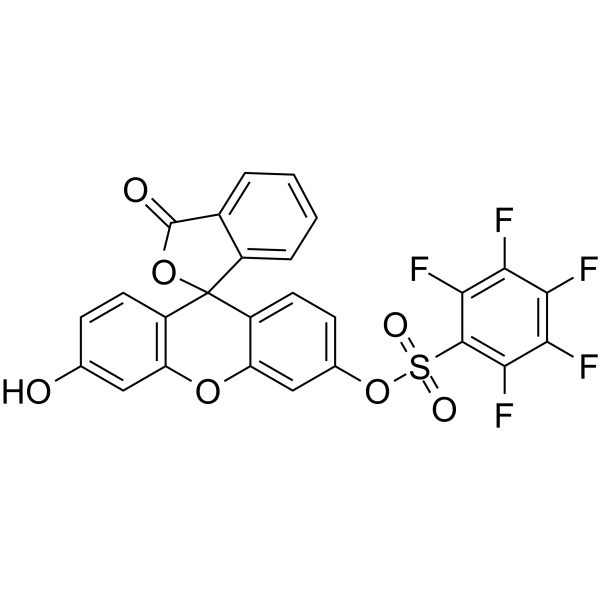
Pentafluorobenzenesulfonyl fluorescein is a H2O2-selective sensor that can be used to detect H2O2 levels in cells. Pentafluorobenzenesulfonyl fluorescein is generally non-fluorescent, but emits fluorescence when its sulfonyl bond undergoes perhydrolysis by H2O2 . Pentafluorobenzenesulfonyl fluorescein undergoes slight cleavage of its sulfonate ester bond by [Cu (phen)2] 2+, and can detect hydrogen peroxide around the ablation sites of fin tissues and keratinocytes in zebrafish larvae .
loading...
    loading...
Cat. No.: HY-D2335
SERTlight is a fluorescent agent that can specifically label serotonergic neuronal cell bodies, dendrites, and axonal projections as fluorescent substrates of the serotonin transporter (SERT). SERTlight is orthogonal to various genetically encoded sensors in terms of optics, pharmacology, and operation, enabling multiple imaging. SERTlight allows the use of GRAB5HT sensors to label distal 5HT axonal projections and simultaneously image the release of endogenous 5HT, providing a new multifunctional molecular tool for studying serotonergic systems .
loading...
    loading...
Cat. No.: HY-D0303A
CAS No.: 532-82-1
Synonyms: Solvent Orange 3 hydrochloride; Basic Orange 2; Chrysoidine Y
Research Areas:  

Others

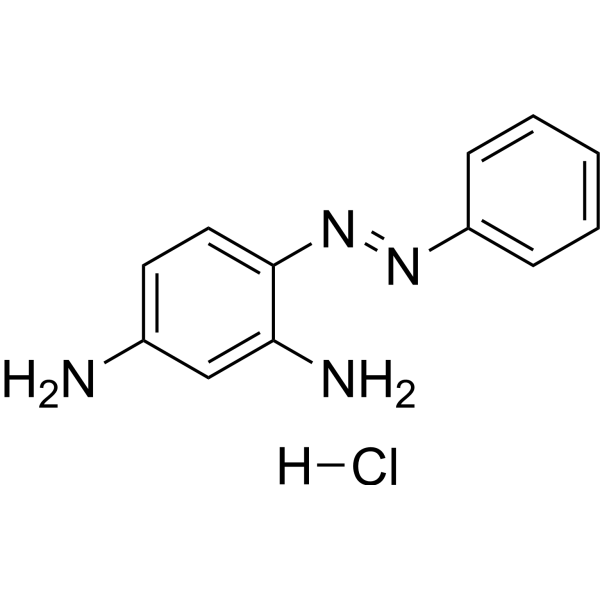
Chrysoidine G (Solvent Orange 3 hydrochloride; Basic Orange 2) is an industrial azo dye. Chrysoidine G is used in most textile dyeing, absorption fluorescent probes, and colorimetric sensors. Chrysoidine G can chemically complex with Co 2+, or bind with Cs + to inhibit the intramolecular charge transfer process, thereby triggering a red shift in the absorption spectrum and producing a significant color change. Chrysoidine G can induce DNA damage, and has moderate toxicity and carcinogenicity .
loading...
    loading...
Cat. No.: HY-D1677
CAS No.: 128724-35-6
Target:  

Fluorescent Dye

Research Areas:  

Others

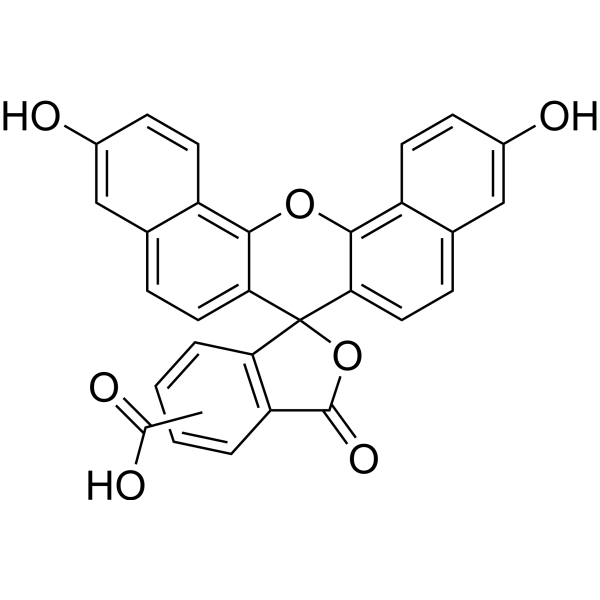
5(6)-Carboxynaphthofluorescein is a pH-dependent fluorophore. 5(6)-Carboxynaphthofluorescein shows good sensitivity in an alkaline pH range and it can be exploited in the construction of fiber-optic pH sensors. 5(6)-Carboxynaphthofluorescein can be used as a fluorescent pH indicator (Ex/Em=593/668 nm) .
loading...
    loading...
Cat. No.: HY-131007
CAS No.: 2341841-05-0
Purity:  ≥99.0%
Target:  

Adrenergic Receptor

Research Areas:  

Metabolic Disease

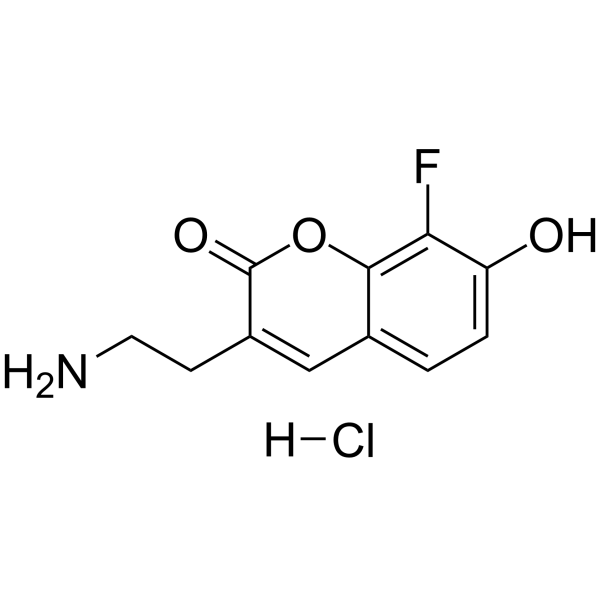
FFN270 hydrochloride, a fluorescent tracer of norepinephrine, is a fluorescent substrate of the norepinephrine and vesicular monoamine transporters. FFN270 hydrochloride exhibits two resolved absorption/excitation maxima depending on solvent pH (FFN270 ex: 320 nm or 365 nm, em: 475 nm) and can function as ratiometric fluorescent pH-sensors .
loading...
    loading...
Cat. No.: HY-W008168
CAS No.: 5470-96-2
Synonyms: 2-Quinolinecarboxaldehyde
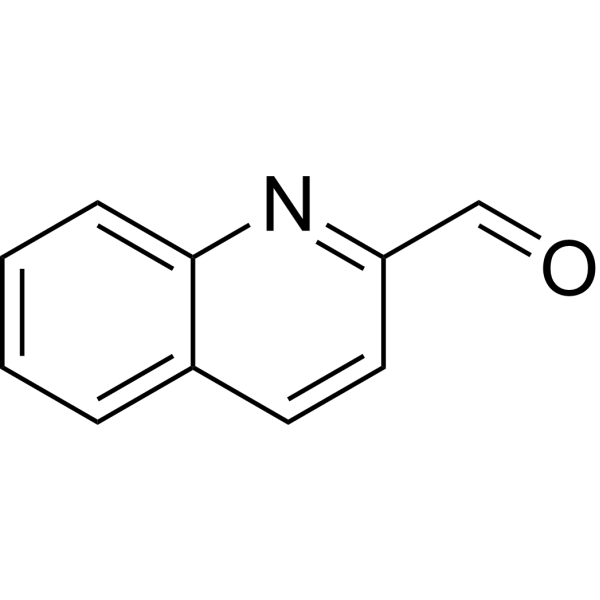
Quinoline-2-carboxaldehyde (2-Quinolinecarboxaldehyde) is a quinoline derivative that serves as a synthetic precursor for Schiff base copper complexes. Quinoline-2-carboxaldehyde is applicable to research related to the synthetic design of biomaterials or organic compounds, such as fluorescent sensors .
loading...
    loading...
Cat. No.: HY-59343
CAS No.: 61296-22-8
Research Areas:  

Others

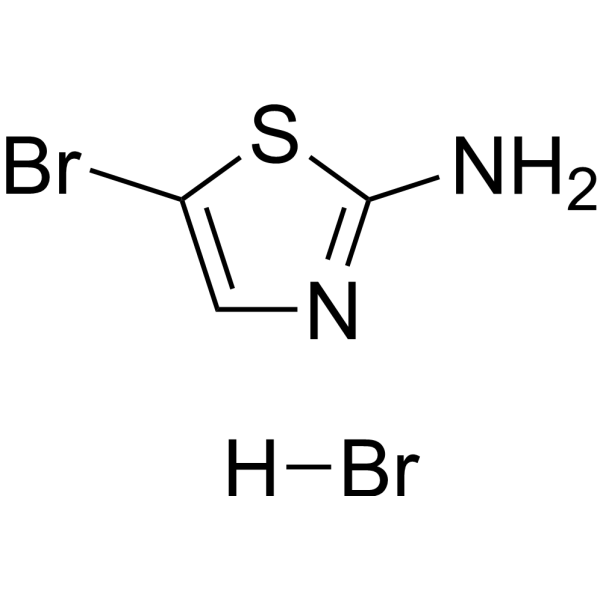
2-Amino-5-bromothiazole hydrobromide is an aminothiazole and brominated thiazole derivative. 2-Amino-5-bromothiazole hydrobromide induces base-pair substitutions in bacterial test organisms. 2-Amino-5-bromothiazole hydrobromide exhibits mutagenic activity in Klebsiella pneumoniae and Salmonella typhimurium. 2-Amino-5-bromothiazole hydrobromide acts as a Hg 2+-binding moiety in rhodamine-based fluorescent chemical sensors .
loading...
    loading...
Cat. No.: HY-D0140
CAS No.: 125829-24-5
Synonyms: ETH 5294
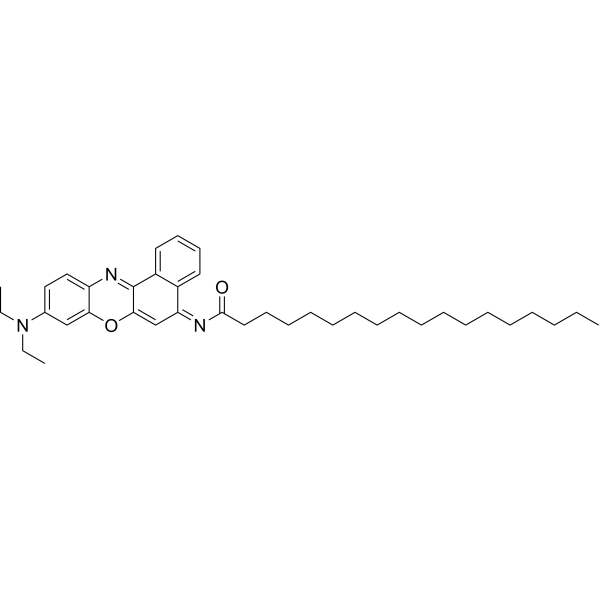
Chromoionophore I (ETH 5294) is a hydrophobic pH indicator. Chromoionophore I is used as a transmissive or fluorescent probe molecule in many types of hydrophobic sensor membranes. Chromoionophore I is oil-soluble .
loading...
    loading...
Cat. No.: HY-W015012
CAS No.: 90421-78-6
Target:  

Fluorescent Dye

Research Areas:  

Others

NBD-Hydrazine is an aldehyde- and ketone-reactive fluorescent probe. NBD-Hydrazine has excitation/emission maxima of 468/535 nm in the presence of aldehydes or ketones. NBD-Hydrazine can be used as a starting material to synthesize malondialdehyde-reactive fluorescent probes. NBD-Hydrazine is a synthetic intermediate in the synthesis of cupric and chronic ion colorimetric sensors .
loading...
    loading...
Cat. No.: HY-D1264
CAS No.: 1263820-18-3
Synonyms: Zn-green
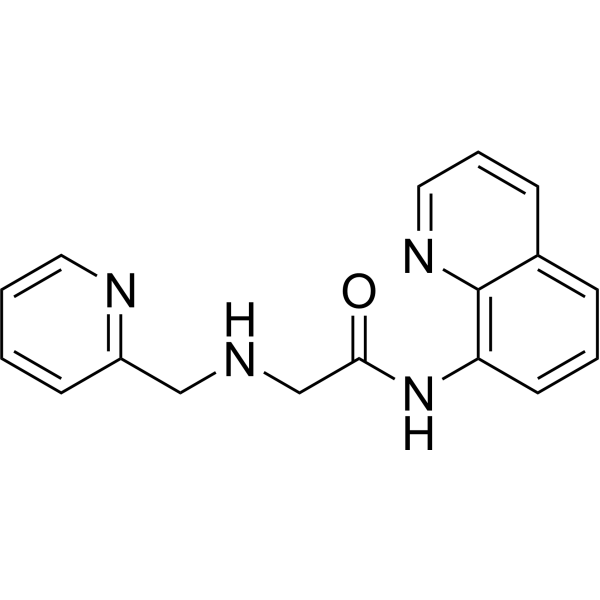
PMQA (Zn-green), an 8-aminoquinoline-based ratiometric fluorescent sensor, demonstrates the Zn 2+-induced redshift of emission (85 nm). PMQA (Zn-green) is a cell membrane-permeable probe and suitable for imaging Zn 2+ in living cells .
loading...
    loading...
Cat. No.: HY-D1065
CAS No.: 1392488-04-8
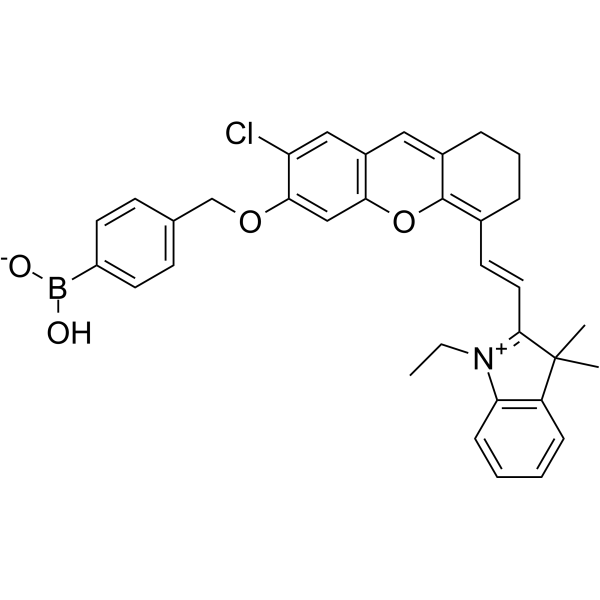
NIR-H2O2 is a cell-permeable near-infrared (NIR) fluorescent turn-on sensor. NIR-H2O2 has both absorption and emission in the NIR region. NIR-H2O2 responds to H2O2 with a large turn-on NIR fluorescence signal upon excitation in the NIR region. NIR-H2O2 is capable of imaging endogenously produced H2O2 in living cells and mice .
loading...
    loading...
Cat. No.: HY-W008709
CAS No.: 1752-94-9
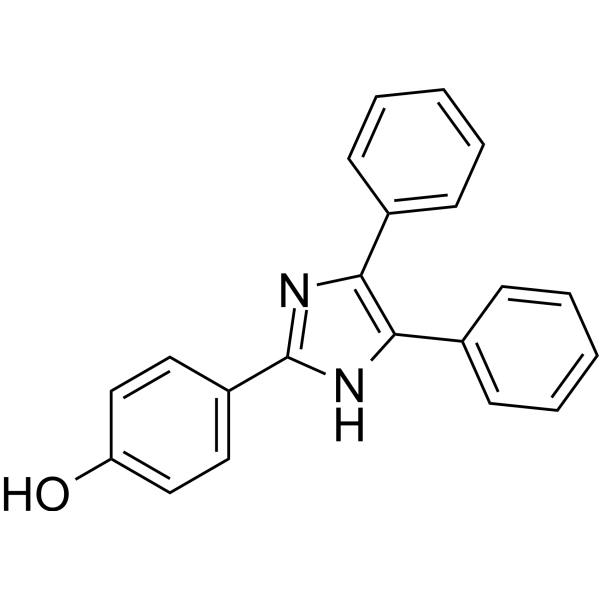
4-(4,5-Diphenyl-1H-imidazol-2-yl)phenol is an organic compound commonly used in fluorescent dyes and catalysts. It can be used to prepare some organic light-emitting diodes (OLEDs) and organic solar cells, and is widely used in chemical sensors and analytical instruments. In addition, this compound is used as a catalyst or buffer in certain chemical reactions.
loading...
    loading...
Cat. No.: HY-D2477
CAS No.: 1974271-78-7
Target:  

Fluorescent Dye

Research Areas:  

Cancer

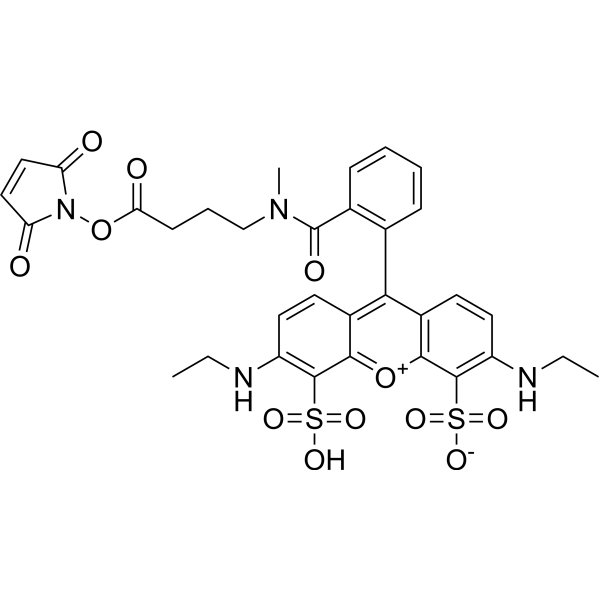
Sulfo-QSY21-NHS is an N-hydroxysuccinimide ester derivative fluorescent quencher that reduces the fluorescence intensity of paired fluorophores via proximity effect and relieves quenching after linker extension induced by mechanical force. Sulfo-QSY21-NHS can label streptavidin through NHS ester bioconjugation and be integrated into fluorescence-based molecular tension sensors to map the mechanical forces of cell surface receptors. Sulfo-QSY21-NHS also serves as a quencher for cysteine cathepsin-targeted quenched fluorescent substrate probes, and is widely used in studies related to breast cancer, colorectal cancer and lung adenocarcinoma .
loading...
    loading...
Cat. No.: HY-D0303
CAS No.: 495-54-5
Synonyms: Solvent Orange 3; Basic Orange 2 free base; Chrysoidine Y free base
Research Areas:  

Others

Chrysoidine G free base (Solvent Orange 3; Basic Orange 2 free base) is an industrial azo dye. Chrysoidine G free base is used in most textile dyeing, absorption fluorescent probes, and colorimetric sensors. Chrysoidine G free base can chemically complex with Co 2+, or bind with Cs + to inhibit the intramolecular charge transfer process, thereby triggering a red shift in the absorption spectrum and producing a significant color change. Chrysoidine G free base can induce DNA damage, and has moderate toxicity and carcinogenicity .
loading...
    loading...
Cat. No.: HY-D2047
CAS No.: 1632109-97-7
Target:  

Fluorescent Dye

Research Areas:  

Others

ATTO 532 maleimide is a thiol-reactive Fluorescent dye. ATTO 532 maleimide enables site-specific labeling of proteins via maleimide-cysteine chemistry and can be used for single-molecule detection of GroEL EL315C binding/complex formation and single-molecule FRET, and can label surface cysteine substrates, Prothymosin α, Frataxin, and GB1. ATTO 532 maleimide covalently labels Tau, serves as a fluorescence lifetime sensor of amyloid aggregate structural density, and exhibits self-quenching .
loading...
    loading...
Cat. No.: HY-D0303AR
CAS No.: 532-82-1
Synonyms: Solvent Orange 3 hydrochloride (Standard); Basic Orange 2 (Standard); Chrysoidine Y (Standard)
Chrysoidine G (Solvent Orange 3 hydrochloride; Basic Orange 2) Standard is the analytical standard of Chrysoidine G (HY-D0303A). This product is intended for research and analytical applications. Chrysoidine G (Solvent Orange 3 hydrochloride; Basic Orange 2) is an industrial azo dye. Chrysoidine G is used in most textile dyeing, absorption fluorescent probes, and colorimetric sensors. Chrysoidine G can chemically complex with Co 2+, or bind with Cs + to inhibit the intramolecular charge transfer process, thereby triggering a red shift in the absorption spectrum and producing a significant color change. Chrysoidine G can induce DNA damage, and has moderate toxicity and carcinogenicity .
loading...
    loading...
Cat. No.: HY-113621B
CAS No.: 2757574-06-2
Target:  

Fluorescent Dye MMP

Research Areas:  

Cancer

Ageladine A dihydrochloride is an inhibitor of matrix metalloproteinase (MMP) isolated from the marine sponge Agelas nakamurai, possessing anti-angiogenic activity. Ageladine A dihydrochloride not only inhibits MMP-2 but also MMP-1, MMP-8, MMP-9, MMP-12, and MMP-13, with IC50 values of 4.65 μM, 2.79 μM, 907.12 nM, 1.83 μM, 767.57 nM, and 1.09 μM, respectively. Additionally, Ageladine A dihydrochloride is a pH-sensitive membrane-permeable dye that emits fluorescence in the blue-green range upon UV excitation, featuring a maximum absorption peak at 370 nm. Furthermore, Ageladine A dihydrochloride serves as a reliable and stable fluorescent pH sensor for detecting changes in intracellular pH values .
loading...
    loading...
Cat. No.: HY-DY1083
CAS No.: 151606-29-0
Zinquin (solution) is a cell-impermeant fluorescent sensor and used to observe reactive Zn 2+. λex/λem=368/490 nm.
Solvent and concentration: DMSO: 5 mM
loading...
    loading...
Cat. No.: HY-W150770
CAS No.: 1740-57-4
Synonyms: Isophthalic acid diamide
Target:  

Drug Intermediate

Research Areas:  

Others

Isophthalamide (Isophthalic acid diamide) is a widely used chemical scaffold for the design of high-performance fluorescent chemosensors.Isophthalamide, with its inherent hydrogen-bond-donating properties and tunable chelating cavity, enables highly selective recognition and detection of various analytes ranging from inorganic ions to complex organic molecules.Isophthalamide can be incorporated with various fluorophores to develop sensors displaying “turn-on” or “turn-off” signal responses.Isophthalamide-based sensors are thus capable of detecting diverse analytes including metal ions, anions, neutral molecules, pharmaceuticals, and explosives .
loading...
    loading...

