
46 Results for "

spheroids cell

" in MedChemExpress (MCE) Product Catalog:
Products (46)

46 Results for "spheroids cell" in MCE Product Catalog:

88
88 Publications Verification
Cat. No.: HY-15372
CAS No.: 880635-03-0
Purity:  99.64%
Target:  

PPAR Apoptosis

Research Areas:  

Cancer

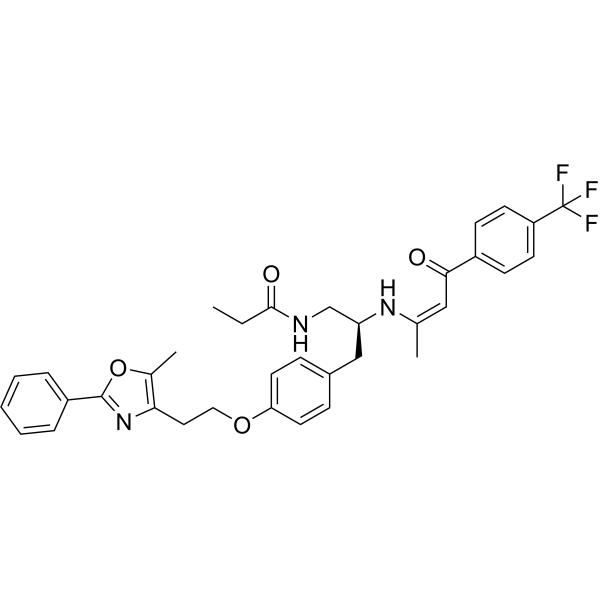
GW6471 is a selective peroxisome proliferator-activated receptor α (PPARα) antagonist. GW6471 reduces cancer stem cell viability, proliferation, and spheroid formation. GW6471 induces apoptosis and causes metabolic impairment including energy imbalance. GW6471 can be used for the research of paragangliomas and triple-negative breast cancer .
loading...
    loading...
6
6 Cited Publications
Cat. No.: HY-18768
CAS No.: 1802088-50-1
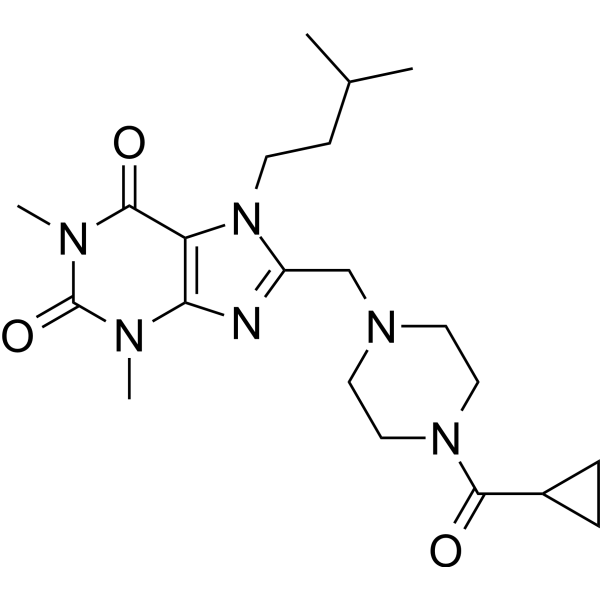
NCT-501 is a reversible, non-competitive, selective, blood-brain barrier-permeable ALDH1A1 inhibitor with an IC50 of 40 nM. NCT-501 inhibits the AKT-β-catenin signaling pathway, induces necroptosis in nasopharyngeal carcinoma cells, suppresses their proliferation and inhibits stem cell spheroid formation. NCT-501 can be used in research related to nasopharyngeal carcinoma, esophageal squamous cell carcinoma and malignant tumors .
loading...
    loading...
5
5 Cited Publications
Cat. No.: HY-12868
CAS No.: 1225037-39-7
Purity:  98.62%
Synonyms: PQR309
Target:  

PI3K mTOR Apoptosis

Research Areas:  

Cancer

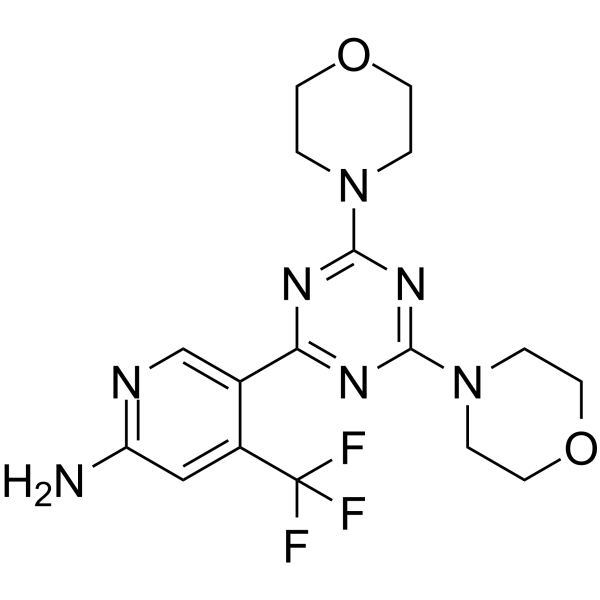
Bimiralisib (PQR309) is an orally active, blood-brain barrier-penetrant PI3K/mTOR inhibitor with in vitro antiproliferative activity and in vivo antitumor activity. Bimiralisib induces G1 cell cycle arrest, apoptosis and cell death in cancer cells, while inhibiting cancer cell proliferation, migration, invasion, colony formation and spheroid generation. Bimiralisib upregulates the expression of E2F4. The combination of Bimiralisib with venetoclax enhances therapeutic efficacy in acute myeloid leukemia models. Bimiralisib can be used in cancer-related research .
loading...
    loading...
2
2 Cited Publications
Cat. No.: HY-111334
CAS No.: 105748-59-2
Purity:  99.74%
Synonyms: Brassinine
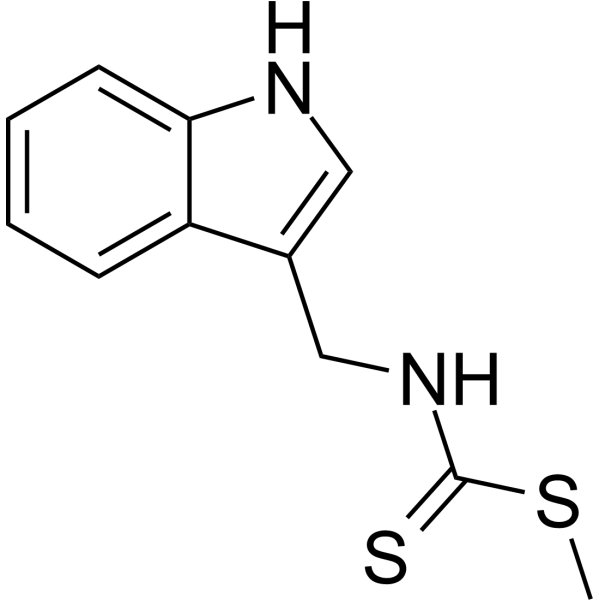
Brassinin is an indole derivative found in cruciferous plants. Brassinin acts as an IDO inhibitor (Ki = 97.7 μM). Brassinin inhibits angiogenesis and induces apoptosis, autophagy, paraptosis, ROS production, and ER stress. Brassinin selectively stimulates lysosomal degradation of Tie2 and promotes lysosomal and proteasomal degradation of FGFR1 in endothelial cells, downregulating AKT and ERK phosphorylation. Brassinin inhibits endothelial cell proliferation, migration, tube formation, spheroid sprouting, and angiogenesis. Brassinin inhibits PI3K/Akt/mTOR/S6K1 signaling, upregulates p21 and p27, and induces G1 phase cell cycle arrest through RB hypophosphorylation. Brassinin inhibits tyrosinase catalytic activity, reduces tyrosinase mRNA, and inhibits MITF nuclear translocation. Brassinin is used for research on triple-negative breast cancer, chronic myeloid leukemia, colon cancer, glioma, atherosclerosis, and skin cancer .
loading...
    loading...
1
1 Cited Publications
Cat. No.: HY-156675A
Purity:  99.34%
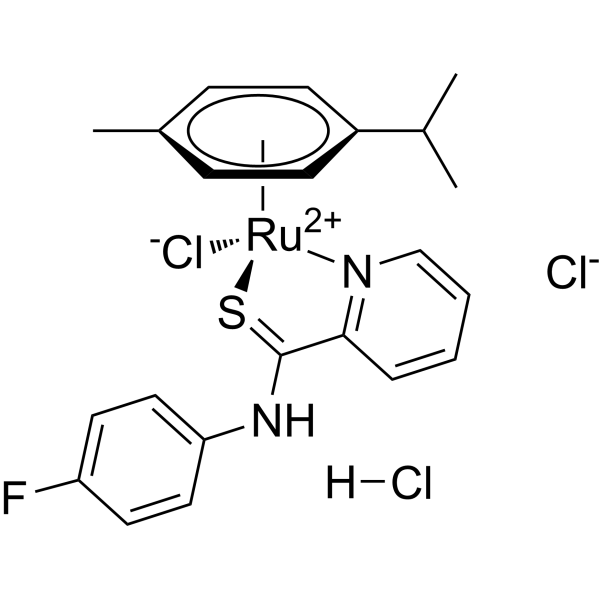
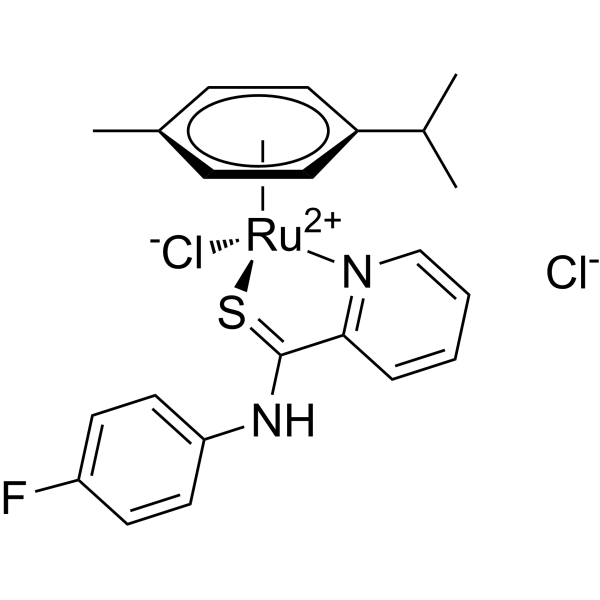
Plecstatin-1 hydrochloride is a metal complex that drives the aggregation and collapse of the plectin network, and disrupts the cytoskeletal structures of α‑tubulin and F‑actin. Plecstatin-1 hydrochloride triggers oxidative stress, mediates the phosphorylation of eIF2α, and induces molecular features associated with immunogenic cell death, including calreticulin membrane exposure, membrane localization of HSP70/HSP90, ATP secretion, and HMGB‑1 release. Plecstatin-1 hydrochloride induces apoptosis via the intrinsic mitochondrial pathway and exerts anti-invasive activity. Plecstatin-1 hydrochloride inhibits sphere proliferation and reduces clonogenicity in the 3D tumor spheroid model of colon cancer cells. Plecstatin-1 hydrochloride is applicable to relevant research on colorectal cancer .
loading...
    loading...
1
1 Cited Publications
Cat. No.: HY-148243
CAS No.: 2756014-24-9
Purity:  99.69%
Synonyms: STL5-T-0057
Research Areas:  

Cancer

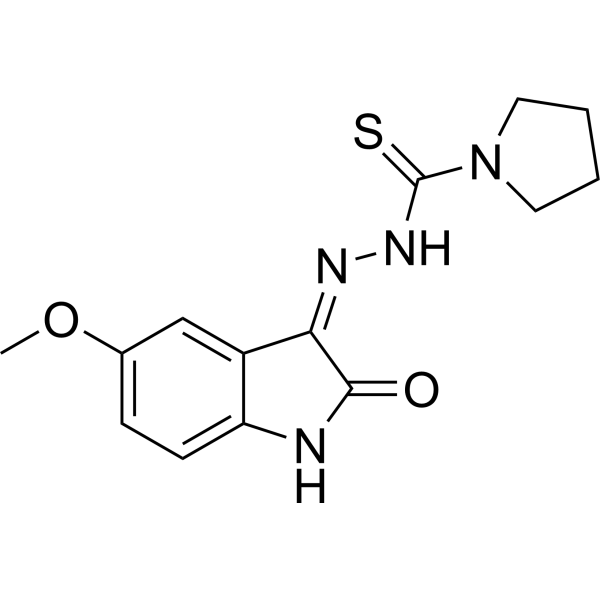
IGUANA-1 free base (STL5-T-0057) is an selective ALDH1 B1 inhibitor with an IC50 value of 30 nM. IGUANA-1 free base inhibits cell growth of SW480 cells in adherent and spheroid conditions with IC50 values of 2.46 and 0.39 μM, respectively. IGUANA-1 free base can be used for the research of cancer .
loading...
    loading...
1
1 Cited Publications
Cat. No.: HY-155974
CAS No.: 2308548-54-9
Purity:  99.84%
Target:  

MDM-2/p53

Research Areas:  

Cancer

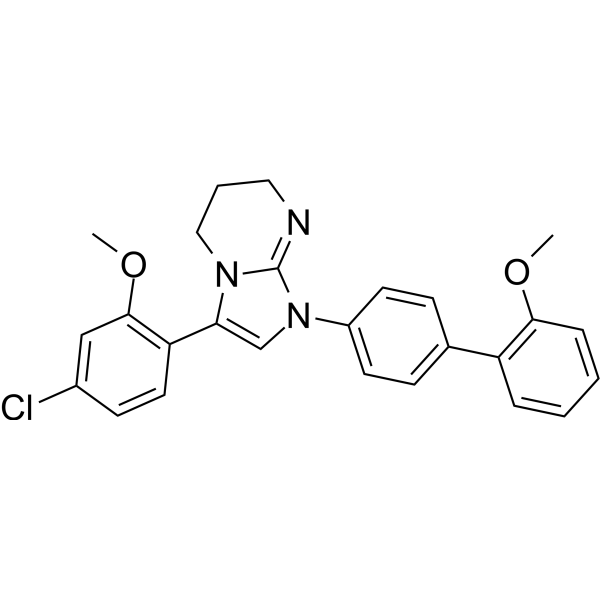
MeOIstPyrd is an anti-skin cancer agent. MeOIstPyrd inhibits cell proliferation, migration, and spheroid formation by activating the mitochondrial intrinsic apoptotic pathway. MeOIstPyrd induces DNA damage. MeOIstPyrd activates p53, and increases the half-life of p53 and stabilizes p53 by phosphorylating it at ser15. MeOIstPyrd binds to MDM2 in the p53 sub-pocket and blocks p53-MDM2 interaction .
loading...
    loading...
Cat. No.: HY-P99896
CAS No.: 2361325-98-4
Synonyms: BTRC-4017A; RG-6194

Target:  

EGFR CD3

Research Areas:  

Cancer

Runimotamab (BTRC-4017A) is a HER2 and CD3 T cell-engaging bispecific antibody. Runimotamab can decrease the size of liver tumor spheroids. Runimotamab can be studied in oncology research such as HER2-expressing cancers. Recommend Isotype Controls: Human IgG1 kappa, Isotype Control (HY-P99001) .
loading...
    loading...
Cat. No.: HY-149449
CAS No.: 208106-41-6
Poly-L-γ-glutamic acid sodium is a macromolecular polymer formed by the linkage of glutamic acid residues via peptide bonds between γ-amino and carboxyl groups. Poly-L-γ-glutamic acid sodium plays an important role as a carrier material in compound delivery systems. Poly-L-γ-glutamic acid sodium can deliver Paclitaxel (HY-B0015) to colon cancer cells, reduce cell viability and inhibit the growth of colon cancer spheroids. Poly-L-γ-glutamic acid sodium can be used as a carrier material and in studies related to colon cancer in mice .
loading...
    loading...
Cat. No.: HY-W250149
CAS No.: 1914-99-4
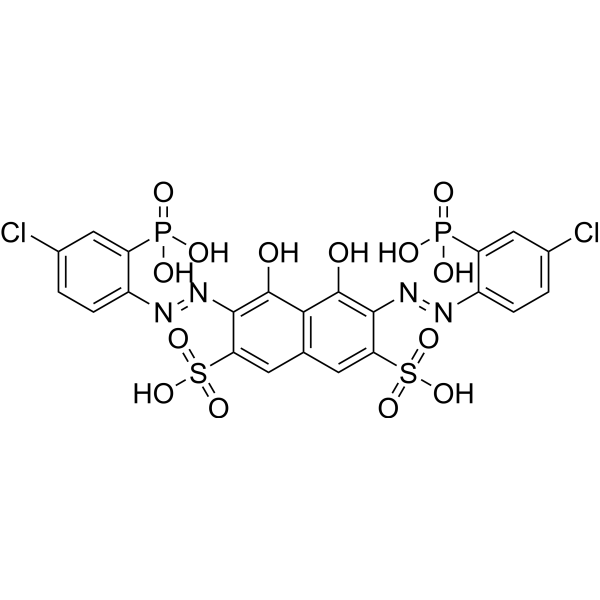
Chlorophosphonazo III is a cell membrane-permeable contrast agent and spectrophotometric reagent. Chlorophosphonazo III forms stable 1:1 complexes with intracellular calcium, magnesium, uranium, titanium, zirconium, thorium, scandium, equivalent actinides and protactinium. Chlorophosphonazo III generates photoacoustic signals correlated with Ca 2+ concentrations, which is applicable for imaging 3D tumor cell cultures and tumor spheroids. Chlorophosphonazo III exhibits no cytotoxicity, can be used for spectrophotometric detection of target ions, and the absorbance of its complexes remains stable for up to one week within the pH range of 2.2 to 7.0 .
loading...
    loading...
Cat. No.: HY-148117
CAS No.: 2758431-97-7
Purity:  99.96%
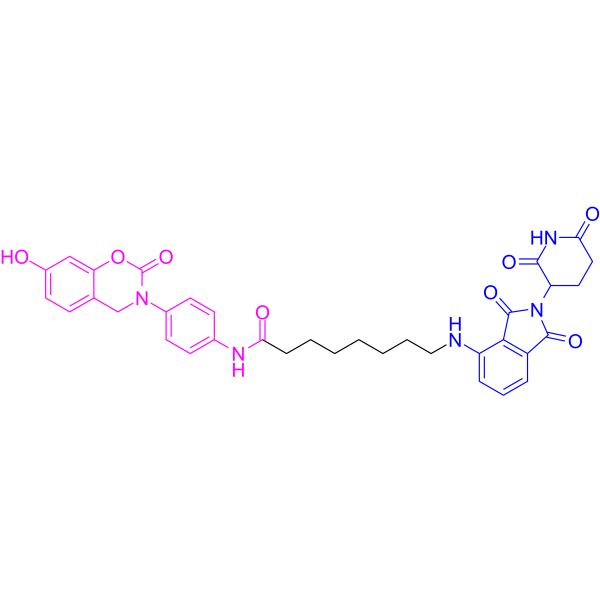
MD13 is a MIF PROTAC degrader with a DC50 of approximately 100 nM. MD13 induces ubiquitination and degradation of MIF by recruiting the Cereblon Cullin RING E3 ubiquitin ligase complex. MD13 inactivates the MAPK pathway and induces G2/M phase cell cycle arrest. MD13 exhibits antiproliferative effects in 3D tumor spheroid models. MD13 can be used in lung cancer-related research .
loading...
    loading...
Cat. No.: HY-168437
Target:  

MicroRNA

Research Areas:  

Cancer

LIN28-IN-2 is a Lin28 inhibitor with activity against Lin28a, Lin28b, and their zinc knuckle domain. LIN28-IN-2 blocks Lin28-RNA substrate binding, perturbs zinc knuckle domain conformation. LIN28-IN-2 inhibits cancer cell proliferation, spheroid growth, and induces G2/M phase arrest. LIN28-IN-2 suppresses cancer stem cell phenotypes, Lin28-mediated stress granule formation, let-7 target genes, cancer stem cell biomarkers, and neuroendocrine biomarkers expression in cancer cells. LIN28-IN-2 can be used for the research of cancer .
loading...
    loading...
Cat. No.: HY-168669
CAS No.: 3052745-16-8
Target:  

PROTACs Ras Caspase ERK

Research Areas:  

Cancer

PROTAC K-Ras Degrader-5 is a cereblon-based K-Ras PROTAC degrader with a DC50 of <100 nM for KRAS G12D. PROTAC K-Ras Degrader-5 recruits KRAS G12D to the cereblon E3 ubiquitin ligase complex for ubiquitination and subsequent proteasomal degradation. PROTAC K-Ras Degrader-5 suppresses pERK levels downstream of KRAS G12D degradation in cancer cells. PROTAC K-Ras Degrader-5 reduces proliferation of cancer cells. PROTAC K-Ras Degrader-5 induces caspase 3/7 activity and cPARP, markers of apoptosis, in pancreatic cancer spheroids and tumors. PROTAC K-Ras Degrader-5 can be used for the research of pancreatic cancer and colorectal cancer .
loading...
    loading...
Cat. No.: HY-P0306
CAS No.: 125720-21-0
Synonyms: Heparin Binding Peptide
Target:  

Others

Research Areas:  

Cardiovascular Disease

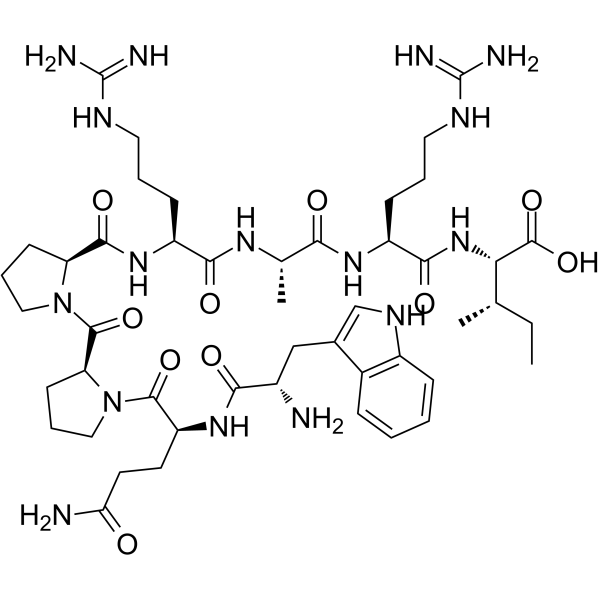
Fibronectin Adhesion-promoting Peptide (Heparin Binding Peptide) is one of the heparin-binding amino acid sequences found in the carboxy-terminal heparin-binding domain of fibronectin. It promotes assembly of mesenchymal stem cell (MSC) spheroids into larger aggregates. Fibronectin Adhesion-promoting Peptide directly promotes the adhesion, spreading, and migration of endothelial cells by reacting with heparin binding domains of cells .
loading...
    loading...
Cat. No.: HY-W001240
CAS No.: 1993-03-9
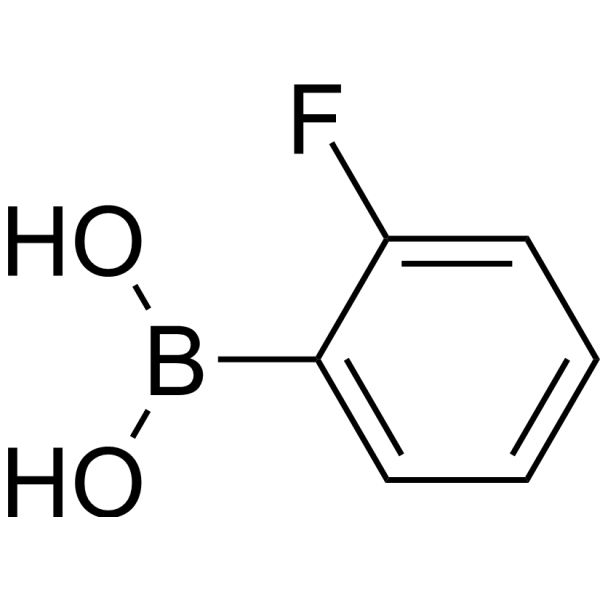
2-Fluorophenylboronic acid is an organic synthesis intermediate belonging to the fluorinated arylboronic acid class. The electron-withdrawing fluorine substituent in 2-Fluorophenylboronic acid reduces its pKa, thereby enhancing boronate bond formation with diols. 2-Fluorophenylboronic acid serves as a key synthetic intermediate for inhibitors of Plasmodium phosphatidylinositol 4-kinase IIIβ (PI4K). 2-Fluorophenylboronic acid can also be used to functionalize linear polyglycerols for constructing dual dynamic covalent cross-linked hydrogels that support 3D tumor spheroid culture of various cancer cells. 2-Fluorophenylboronic acid is applicable to research related to malaria and tumors .
loading...
    loading...
Cat. No.: HY-P3318
CAS No.: 73572-58-4
Synonyms: L-BOC2
Target:  

Leukotriene Receptor

Research Areas:  

Inflammation/Immunology

Boc-Phe-Leu-Phe-Leu-Phe (Boc-FLFLF) is a N-formyl peptide receptors (FPR) inhibitor. Boc-Phe-Leu-Phe-Leu-Phe abolishes the FMLP-induced release of peptide leukotrienes. Boc-Phe-Leu-Phe-Leu-Phe inhibits the sprouting of human umbilical vein endothelial cell (HUVEC) spheroids mediated by proliferative diabetic retinopathy (PDR) vitreous and vascular endothelial growth factor (VEGF) respectively in a three-dimensional fibrin gel. Boc-Phe-Leu-Phe-Leu-Phe inhibits the anti-inflammatory and antifibrotic effects of Ac2-26 (HY-P1098). Boc-Phe-Leu-Phe-Leu-Phe can be used for the study of immunology .
loading...
    loading...
Cat. No.: HY-175780
CAS No.: 1465291-19-3
Research Areas:  

Cancer

CD28-IN-1 (Compound 19MS-5) is a CD28 inhibitor with a KD of 12.48  μM. CD28-IN-1 has a superior binding capacity to CD28 and potently inhibits CD28-B7 interactions. CD28-IN-1 inhibits CD28-driven immune activation and suppresses cytokine (IFN-γ, IL-2 and TNF-α) production in primary human T cells co-cultured with tumor spheroids and human epithelial tissues. CD28-IN-1 can be used for tumor immunity research .
loading...
    loading...
Cat. No.: HY-156675
CAS No.: 2119725-22-1
Plecstatin‑1 is a metal complex that drives the aggregation and collapse of the plectin network, and disrupts the cytoskeletal structures of α‑tubulin and F‑actin. Plecstatin-1 triggers oxidative stress, mediates the phosphorylation of eIF2α, and induces molecular features associated with immunogenic cell death, including calreticulin membrane exposure, membrane localization of HSP70/HSP90, ATP secretion, and HMGB‑1 release. Plecstatin-1 induces apoptosis via the intrinsic mitochondrial pathway and exerts anti-invasive activity. Plecstatin‑1 inhibits sphere proliferation and reduces clonogenicity in the 3D tumor spheroid model of colon cancer cells. Plecstatin-1 is applicable to relevant research on colorectal cancer .
loading...
    loading...
Cat. No.: HY-122844B
CAS No.: 2761021-80-9
Synonyms: BI-853520 tosylate; IN-10018 tosylate
Target:  

FAK

Research Areas:  

Cancer

Ifebemtinib (tosylate) (BI-853520 (tosylate); IN-10018 (tosylate)) is a highly selective PTK2 kinase inhibitor. Ifebemtinib (tosylate) demonstrates anti-tumor activity. Ifebemtinib (tosylate) inhibits FAK autophosphorylation in prostate carcinoma cells. Ifebemtinib (tosylate) can inhibit spheroid formation and orthotopic tumor growth in vivo. Ifebemtinib (tosylate) can be studied in anticancer research such as solid tumors, breast cancer, and malignant pleural mesothelioma .
loading...
    loading...
Cat. No.: HY-165606
CAS No.: 178250-23-2
Target:  

Oct3/4 c-Myc Apoptosis

Research Areas:  

Cancer

SB-T-1214 (SBT) is a taxane. SB-T-1214 efficiently inhibits expression of stem cell-related genes (Oct4, Sox2, and c-Myc) and induces apoptosis of colon cancer spheroids with drug resistant tumorigenic CD133 +/CD44 + cells. SB-T-1214 strongly represses tumor growth in Pgp+ DLD-1 human colon tumor xenografts mice model. SB-T-1214 can be used for antitumor research, especially against tumors with drug resistance, such as colon, pancreatic and renal cancers .
loading...
    loading...

