14 Results for "

striatal cell

" in MedChemExpress (MCE) Product Catalog:
Products (14)

14 Results for "striatal cell" in MCE Product Catalog:

8
8 Cited Publications
Cat. No.: HY-12294A
Purity:  ≥98.0%
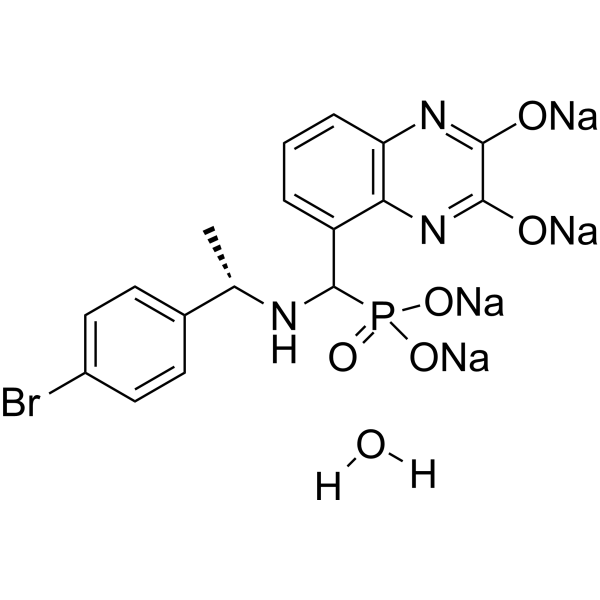
Synonyms: NVP-AAM077 tetrasodium hydrate
Target:  

Apoptosis Caspase iGluR

Research Areas:  

Neurological Disease

PEAQX tetrasodium hydrate (NVP-AAM077 tetrasodium hydrate) is a tetrasodium hydrate of PEAQX (HY-12294). PEAQX tetrasodium hydrate is an orally active and selective NMDA antagonist, with IC50 values of 270 nM and 29.6 μM for hNMDAR 1A/2A and hNMDAR 1A/2B, respectively. PEAQX tetrasodium hydrate can promote the activation of caspase-3 and induce cell apoptosis in cortical striatal slice cultures .
loading...
    loading...
Cat. No.: HY-16677A
CAS No.: 120635-25-8
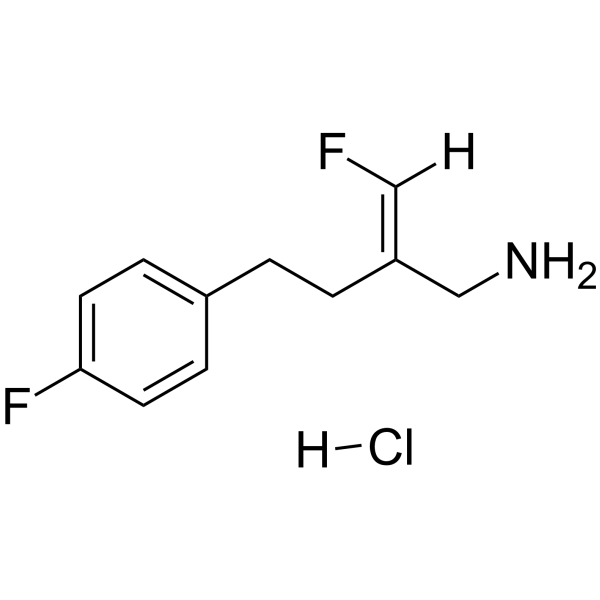
Synonyms: MDL72974A
Target:  

Monoamine Oxidase VAP-1

Research Areas:  

Neurological Disease

Mofegiline hydrochloride (MDL-72974A) is an orally active and blood-brain barrier-penetrant MAO-B/SSAO selective inhibitor, with an IC50 of 3.6 nM for MAO-B and 10 nM for SSAO. Mofegiline hydrochloride is a cationic amphiphilic compound that can induce indirect sympathomimetic effects, lysosomal accumulation, hERG channel interactions, phospholipidosis, and cell death. Mofegiline hydrochloride protects mice from MPTP-induced depletion of striatal dopamine, DOPAC, and HVA. Mofegiline hydrochloride can be used in research related to Parkinson's disease .
loading...
    loading...
Cat. No.: HY-125339
CAS No.: 125628-97-9
Purity:  98.0%
Target:  

COMT Apoptosis

Research Areas:  

Neurological Disease Cancer

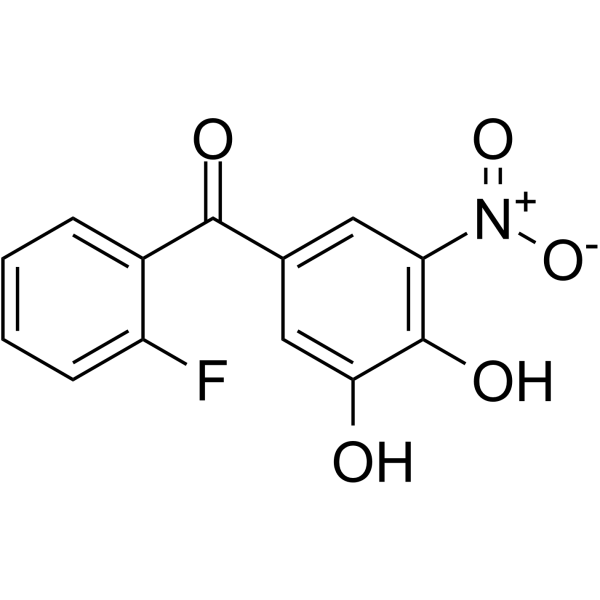
Ro 41-0960 is a CNS-penetrant, orally active catechol-O-methyl transferase (COMT) inhibitor. Ro 41-0960 reduces dopamine catabolism, increases striatal dopamine and DOPAC levels, decreases striatal HVA levels, induces apoptosis, inhibits proliferation and extracellular matrix formation in uterine fibroid cells. Ro 41-0960 arrests or shrinks uterine fibroid lesions in rats. Ro 41-0960 can be used for the research of Parkinson’s disease, uterine leiomyomas, and breast cancer .
loading...
    loading...
Cat. No.: HY-W283726
CAS No.: 141-95-7
Sodium malonate is an inhibitor of succinate dehydrogenase (SDH) and can interfere with the TCA cycle. Sodium malonate can act as an AcrAB‑TolC efflux pump inhibitor, blocking multidrug efflux processes in bacteria and enhancing the efficacy of antibiotics. Sodium malonate can be converted to malonyl‑CoA, which mediates protein lysine malonylation, relieves the transcriptional repression effect of STAT6, upregulates TCF1 protein expression, and thereby promotes CD8 + T cell memory differentiation. Sodium malonate can stimulate ovarian steroidogenesis in immature rats, increasing ovarian and uterine weights and ovarian cholesterol production. Sodium malonate can inhibit brain ATP production, leading to energy deficiency, neuronal glutamate accumulation, and excitotoxic striatal lesions. Sodium malonate can be used in research on metabolism-related diseases, immune-related diseases, and bacterial infections, and can also serve as an intermediate for research related to organic synthesis .
loading...
    loading...
Cat. No.: HY-12294
CAS No.: 459836-30-7
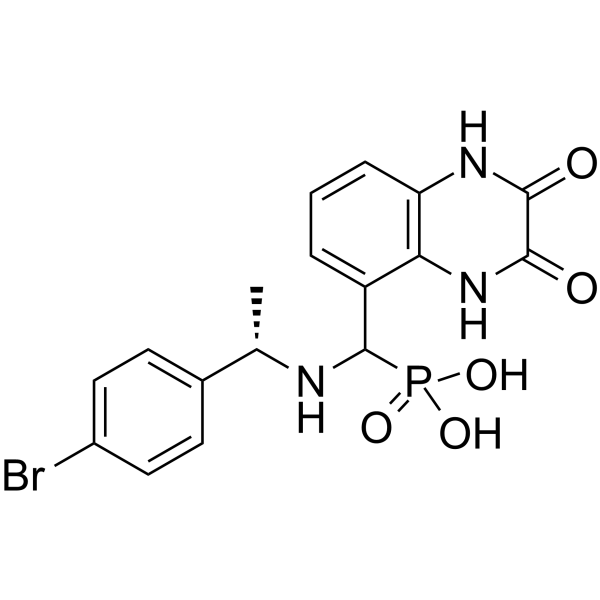
Synonyms: NVP-AAM077
Target:  

Caspase Apoptosis iGluR

Research Areas:  

Neurological Disease

PEAQX (NVP-AAM077) is an orally active and selective NMDA antagonist, with IC50 values of 270 nM and 29.6 μM for hNMDAR 1A/2A and hNMDAR 1A/2B, respectively. PEAQX can promote the activation of caspase-3 and induce cell apoptosis in cortical striatal slice cultures .
loading...
    loading...
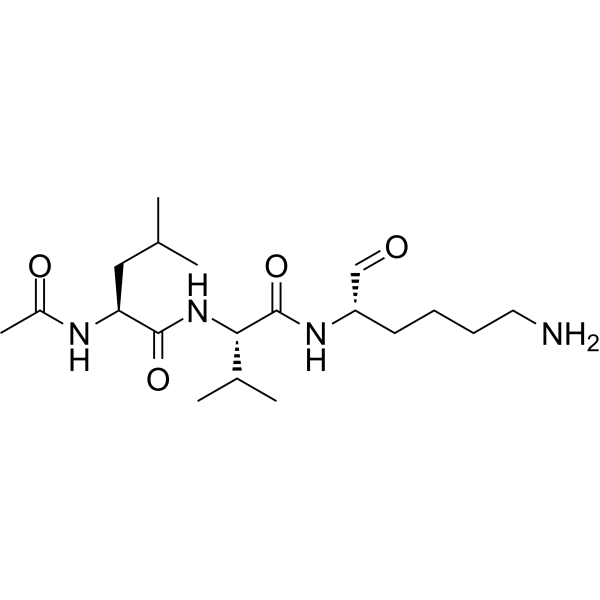
Cat. No.: HY-P4532
CAS No.: 147600-40-6
Target:  

Cathepsin

Research Areas:  

Neurological Disease

Ac-Leu-Val-Lys-Aldehyde is a potent cathepsin B inhibitor with IC50s of 4 nM. Ac-Leu-Val-Lys-Aldehyde significantly reduces quinolinic acid (HY-100807)-induced striatal cell death and causes accumulation of LC3-II .
loading...
    loading...
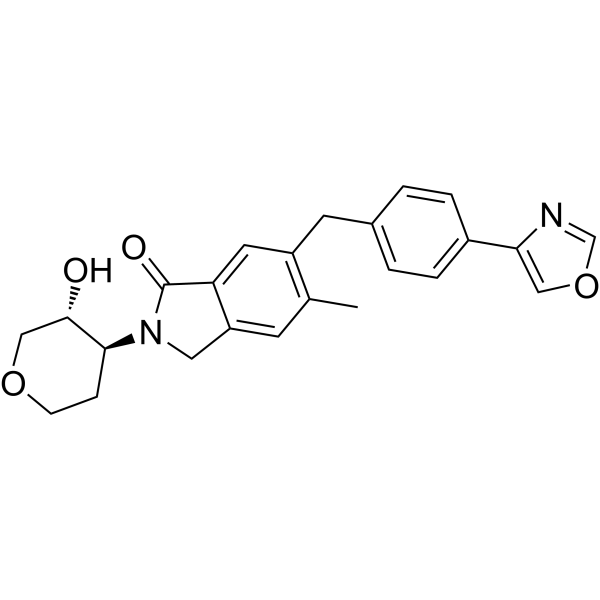
Cat. No.: HY-120004
CAS No.: 2115022-67-6
Target:  

mAChR

Research Areas:  

Neurological Disease

PF-06827443 is an orally active M1 receptor positive allosteric modulator with an EC50 of 47 nM and a Ki of 16 nM, and a PDE11A4 inhibitor with an IC50 of 5.06 μM. PF-06827443 enhances the effects of acetylcholine. PF-06827443 crosses the blood-brain barrier, induces LTD in the prefrontal cortex, increases sEPSC frequency in layer V pyramidal cells, and increases striatal inositol monophosphate accumulation. PF-06827443 induces convulsions, impairs cognition, reduces stimulant-evoked locomotion, reverses Scopolamine (HY-N0296)-induced learning/memory deficits, and causes cholinergic adverse events and convulsions in rats and dogs. PF-06827443 can be used for research on schizophrenia and Alzheimer's disease .
loading...
    loading...
Cat. No.: HY-138967
CAS No.: 2095489-35-1
BRF110 is an orally active, blood-brain barrier-penetrant Nurr1-RXRα heterodimer activator with an EC50 of 0.9 μM in human systems. BRF110 increases the mRNA level of BDNF, upregulates the transcription of TH, AADC and GCH1 to elevate striatal dopamine levels. BRF110 exhibits neuroprotective activity against MPP +-induced cytotoxicity. BRF110 prevents dopaminergic neuron death, protects nerve cells from toxic damage, and improves motor coordination in mouse models. BRF110 can be used in research related to Parkinson's disease .
loading...
    loading...
Cat. No.: HY-12294B
CAS No.: 2514919-70-9
Synonyms: (Rac)-NVP-AAM077
Target:  

iGluR Caspase Apoptosis

Research Areas:  

Neurological Disease

(Rac)-PEAQX is a NMDA receptor agonist. (Rac)-PEAQX can promote the activation of caspase-3 and induce cell apoptosis in cortical striatal slice cultures .
loading...
    loading...
Cat. No.: HY-171328
CAS No.: 1076189-55-3
Target:  

Dopamine Receptor

Research Areas:  

Neurological Disease

RG-15 is the orally active antagonist for dopamine receptor that exhibits goof affinity to human D2 receptor and human D3 receptor with pKi of 8.23 and 10.49. RG-15 inhibits dopamine-stimulated [ 35S]GTPγS binding with IC50 of 21.2 nM (rat striatal membranes), 36.7 nM (mouse A9 cells expressing human D2L receptors) and 7.2 nM (CHO cells expressing human D3 receptors). RG-15 increases the turnover and biosynthesis of dopamine in mouse striatum and olfactory bulb, exhibiting antipsychotic activity .
loading...
    loading...
Cat. No.: HY-122979
CAS No.: 55528-07-9
Synonyms: (+)-AY-23,028; d-Butaclamol hydrochloride
Target:  

Dopamine Receptor

Research Areas:  

Neurological Disease

(+)-Butaclamol hydrochloride ((+)-AY-23,028; d-Butaclamol hydrochloride) is a dopamine receptor antagonist that blocks D2 and D1 receptors. (+)-Butaclamol hydrochloride antagonizes Dopamine (HY-B0451)-induced relaxation with a KB of 2 nM-0.17 µM and a Ki of 0.19-0.37 µM. (+)-Butaclamol hydrochloride inhibits adenylyl cyclase-coupled dopamine receptors, displaces striatal D2 radioligand binding, and acts as a non-selective D2 antagonist to retain D1-NLS and D1-D2 hetero-oligomers on the cell surface. (+)-Butaclamol hydrochloride inhibits the rewarding effects and self-administration behavior of dopaminergic agonists. (+)-Butaclamol hydrochloride can be used in research related to schizophrenia .
loading...
    loading...
Cat. No.: HY-P7856
Purity:  ≥ 95%, as determined by reducing SDS-PAGE.
Synonyms: AIFM1; Programmed cell Death Protein 8; Prev. PDCD8; Apoptosis Inducing Factor, Mitochondria Associated 1; Prev. AUNX1; striatal Apoptosis-Inducing Factor; Prev. NAMSD; Testicular Secretory Protein Li 4; AIF; Alternative Protein AIFM1; Apoptosis-Inducing
Species:  
Human
Source:  
E. coli
loading...
    loading...
Cat. No.: HY-16677
CAS No.: 119386-96-8
Synonyms: MDL-72974
Target:  

Monoamine Oxidase VAP-1

Research Areas:  

Neurological Disease

Mofegiline (MDL-72974) is an orally active and blood-brain barrier-penetrant MAO-B/SSAO selective inhibitor, with an IC50 of 3.6 nM for MAO-B and 10 nM for SSAO. Mofegiline is a cationic amphiphilic compound that can induce indirect sympathomimetic effects, lysosomal accumulation, hERG channel interactions, phospholipidosis, and cell death. Mofegiline protects mice from MPTP-induced depletion of striatal dopamine, DOPAC, and HVA. Mofegiline can be used in research related to Parkinson's disease .
loading...
    loading...
Cat. No.: HY-122979A
CAS No.: 56245-67-1
Synonyms: (+)-AY-23,028 free base; d-Butaclamol
Target:  

Dopamine Receptor

Research Areas:  

Neurological Disease

(+)-Butaclamol ((+)-AY-23,028 free base; d-Butaclamol) is a dopamine receptor antagonist that blocks D2 and D1 receptors. (+)-Butaclamol antagonizes Dopamine (HY-B0451)-induced relaxation with a KB of 2 nM-0.17 µM and a Ki of 0.19-0.37 µM. (+)-Butaclamol inhibits adenylyl cyclase-coupled dopamine receptors, displaces striatal D2 radioligand binding, and acts as a non-selective D2 antagonist to retain D1-NLS and D1-D2 hetero-oligomers on the cell surface. (+)-Butaclamol inhibits the rewarding effects and self-administration behavior of dopaminergic agonists. (+)-Butaclamol can be used in research related to schizophrenia .
loading...
    loading...
  • 1

