14 Results for "

ATP leakage

" in MedChemExpress (MCE) Product Catalog:
Products (14)

14 Results for "ATP leakage" in MCE Product Catalog:

1
1 Cited Publications
Cat. No.: HY-16485
CAS No.: 560130-42-9
Synonyms: TD-6424 hydrochloride
Target:  

Antibiotic Bacterial

Research Areas:  

Infection

Telavancin hydrochloride (TD-6424 hydrochloride) is a bactericidal agent that exhibits inhibitory activity against Staphylococcus aureus. Telavancin hydrochloride inhibits bacterial cell wall synthesis by binding to the lipid-linked N-acetylglucosamine-N-muramyl pentapeptide (with a D-Ala-D-Ala terminus), a peptidoglycan precursor, and blocks the transglycosylation and transpeptidation steps. Telavancin hydrochloride disrupts bacterial membrane barrier function, induces dissipation of bacterial membrane potential, and causes leakage of cytoplasmic ATP and potassium ions, with its activity restricted exclusively to bacterial membranes. Telavancin hydrochloride can be used in research on bacterial infections, central venous catheter-related bloodstream infections, and Gram-positive bacterial pneumonia .
loading...
    loading...
Cat. No.: HY-W099729
CAS No.: 70445-33-9
Target:  

Bacterial

Research Areas:  

Infection Inflammation/Immunology

Ethylhexylglycerin is an antibacterial agent. Ethylhexylglycerin can induce allergic contact dermatitis. Ethylhexylglycerin inhibits the growth of various bacteria, disrupts the integrity of bacterial cell membranes, and causes proton leakage, reduced ATP levels, morphological abnormalities, and DNA aggregation. Ethylhexylglycerin serves as a skin conditioning agent, deodorant active ingredient, and preservative synergist. Ethylhexylglycerin is applicable to research related to contact dermatitis and bacterial infections .
loading...
    loading...
Cat. No.: HY-N125722
CAS No.: 33538-71-5
Synonyms: Aabomycin A1
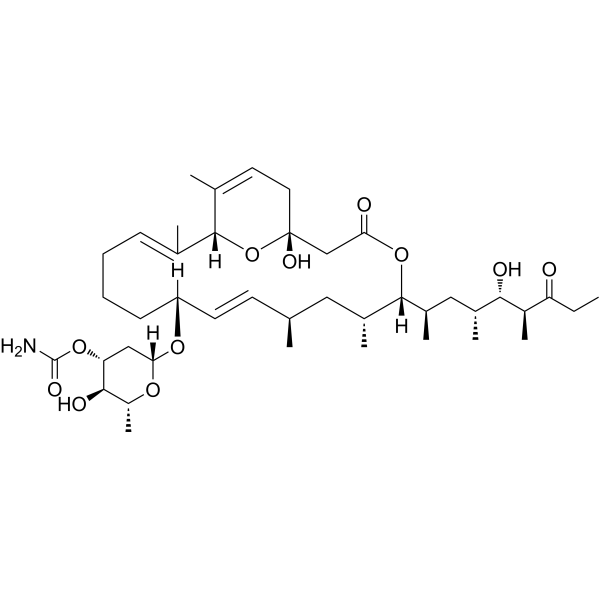
Venturicidin A (Aabomycin A1) is a natural product derived from Streptomyces, possessing antifungal, anti-Trypanosoma brucei, anti-Leishmania donovani, and ATP synthase inhibitory activities. Venturicidin A acts as an antibiotic adjuvant, promoting the uptake of aminoglycoside antibiotics and enhancing bactericidal efficacy. Venturicidin A inhibits ATP synthesis by blocking proton translocation through the FO subunit. In bloodstream-form Trypanosoma brucei, Venturicidin A causes collapse of the mitochondrial membrane potential; in fungi, it disrupts cell membrane integrity, induces leakage of cytoplasmic contents, elevates ROS levels, and downregulates the expression of fungal pathogenicity-related genes. Venturicidin A exhibits antifungal activity against Botrytis cinerea. Venturicidin A is used in research on bacterial infections, trypanosome/leishmania infections, and gray mold disease .
loading...
    loading...
Cat. No.: HY-N6663
CAS No.: 13466-78-9
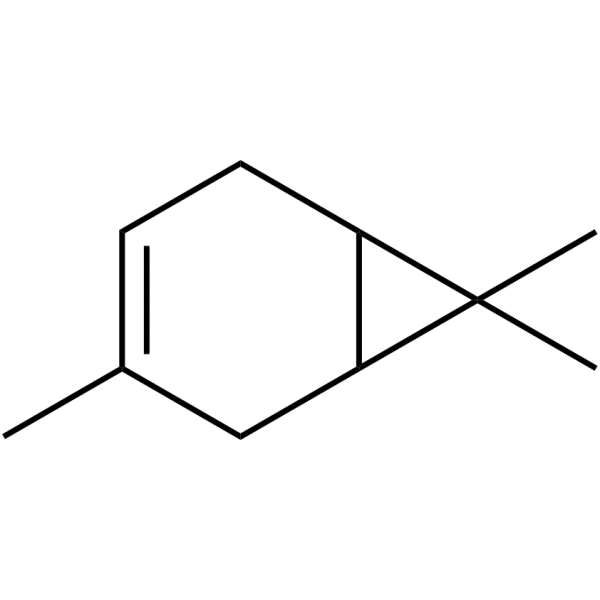
3-Carene is an orally active TCA cycle enzyme inhibitor. 3-Carene inhibits succinate dehydrogenase and malate dehydrogenase as well as pyruvate kinase, disrupting energy metabolism. 3-Carene disrupts cell wall and cell membrane integrity, leading to potassium ion leakage, protein leakage, membrane depolarization, ATP depletion, morphological disruption, and cell lysis. 3-Carene interferes with amino acid metabolism, pantothenate and CoA biosynthesis, purine and pyrimidine metabolism, and aminoacyl-tRNA biosynthesis. 3-Carene enhances GABA receptor-mediated synaptic responses. 3-Carene can be used in research on bacterial infections, inflammation, anxiety, and sleep disorders .
loading...
    loading...
Cat. No.: HY-P10696
CAS No.: 2154327-48-5
Target:  

Bacterial

Research Areas:  

Infection

C16G2 is a specifically targeted antimicrobial peptide (STAMP) that targets the cariogenic oral pathogen (Streptococcus mutans). C16G2 links a CSP-derived targeting domain to the bactericidal domain G2 via glycine, thereby selectively binding to and disrupting the cell membrane of S. mutans, leading to the leakage of intracellular contents such as ATP and loss of membrane potential, ultimately causing cell death. C16G2 can be used for research on dental caries .
loading...
    loading...
Cat. No.: HY-139467
CAS No.: 1072100-81-2
Target:  

SHP2 PKC

Research Areas:  

Metabolic Disease

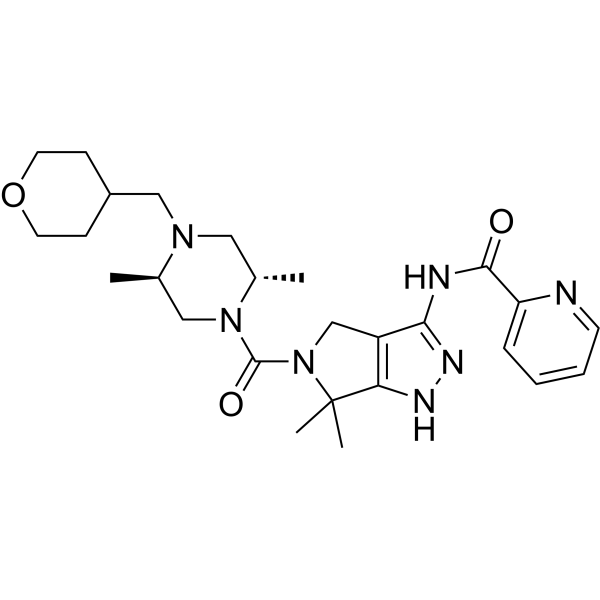
PF-04577806 is a potent, selective and ATP competitive PKC inhibitor. PF-04577806 shows potent inhibitory activity towards PKCα, PKCβI, PKCβII, PKCγ, and PKCθ with IC50s of 2.4 nM, 8.1 nM, 6.9 nM, 45.9 nM, and 29.5 nM, respectively. PF-04577806 can reverse retinal vascular leakage in diabetic rats .
loading...
    loading...
Cat. No.: HY-P10696A
Target:  

Bacterial

Research Areas:  

Infection

C16G2 TFA is a specifically targeted antimicrobial peptide (STAMP) that targets the cariogenic oral pathogen (Streptococcus mutans). C16G2 TFA links a CSP-derived targeting domain to the bactericidal domain G2 via glycine, thereby selectively binding to and disrupting the cell membrane of S. mutans, leading to the leakage of intracellular contents such as ATP and loss of membrane potential, ultimately causing cell death. C16G2 TFA can be used for research on dental caries .
loading...
    loading...
Cat. No.: HY-W856819
CAS No.: 469-22-7
Eseroline is a potent μ-opioid receptor agonist, which is the hydrolytic metabolite of Physostigmine (HY-N6608). Eseroline is a selective and competitive acetylcholinesterase (AChE) inhibitor, with its Ki values for AChE and BuChE being 0.1 μM and 200 μM respectively. Eseroline has nicotinic acetylcholine receptor allosteric enhancing ligand (nAChR-APL) activity, meaning it does not activate the receptor but significantly enhances the signal transduction of Ach triggered by the receptor. Eseroline is neurotoxic, causing cell membrane damage (LDH leakage) and energy metabolism collapse (ATP depletion). Eseroline can be used for the study of Alzheimer's disease .
loading...
    loading...
Cat. No.: HY-133621
CAS No.: 5829-48-1
Research Areas:  

Cancer

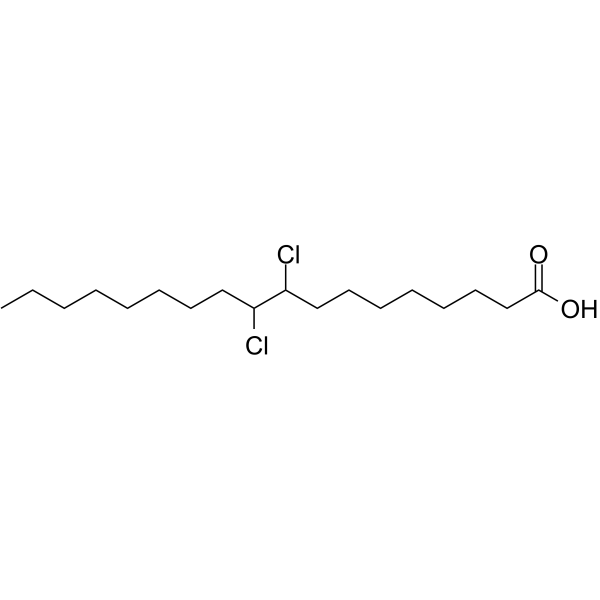
9,10-Dichlorostearic acid is a chlorinated stearic acid with antimutagenic properties. 9,10-Dichlorostearic acid can cause membrane damage by inducing leakage of adenosine triphosphate (ATP) from mammalian tumour cells in vitro .
loading...
    loading...
Cat. No.: HY-N6663R
CAS No.: 13466-78-9
3-Carene (Standard) is the analytical standard of 3-Carene (HY-N6663). This product is intended for research and analytical applications. 3-Carene is an orally active TCA cycle enzyme inhibitor. 3-Carene inhibits succinate dehydrogenase and malate dehydrogenase as well as pyruvate kinase, disrupting energy metabolism. 3-Carene disrupts cell wall and cell membrane integrity, leading to potassium ion leakage, protein leakage, membrane depolarization, ATP depletion, morphological disruption, and cell lysis. 3-Carene interferes with amino acid metabolism, pantothenate and CoA biosynthesis, purine and pyrimidine metabolism, and aminoacyl-tRNA biosynthesis. 3-Carene enhances GABA receptor-mediated synaptic responses. 3-Carene can be used in research on bacterial infections, inflammation, anxiety, and sleep disorders .
loading...
    loading...
Cat. No.: HY-N17853
CAS No.: 511-77-3
Siaresinolic acid is a compound found in the leaves of Sabicea grisea. Siaresinolic acid shows antinociceptive and anti-inflammatory activity. Siaresinolic acid reduces nociceptive behavior by ATP-dependent potassium channel, inhibits leukocyte influx, plasma leakage, and proinflammatory mediator (TNF-α, IL-1β) production. Siaresinolic acid does not induce cytotoxicity in murine macrophages, alter locomotor activity at high doses. Siaresinolic acid can be used for the research of pleurisy and pain .
loading...
    loading...
Cat. No.: HY-179593
Target:  

Bacterial

Research Areas:  

Inflammation/Immunology

GM47-1, a naphthalene scaffold derivative, is a potent mycolic acid transporter MmpL3 inhibitor exhibiting potent bactericidal activity against Mycobacterium abscessus (Mabs) with an MIC50 of 2.1 µM. GM47-1 targets MmpL3, disrupts cell wall integrity, and induces ATP leakage and uncouples respiration. GM47-1 can be used for Mycobacterium abscessus pulmonary disease (Mabs-PD) research .
loading...
    loading...
Cat. No.: HY-187605
CAS No.: 113476-61-2
Gymnopusin is an L-type voltage-dependent calcium channel blocker and vasorelaxant. Gymnopusin inhibits KCl- and Norepinephrine-induced contractility as well as CaCl2-induced contractions. Gymnopusin induces endothelium-independent relaxation involving the opening of ATP-sensitive and calcium-activated potassium channels. Gymnopusin disrupts membranes through tonoplast lysis, leading to electrolyte leakage, chlorophyll loss, and photobleaching in duckweed. Gymnopusin inhibits radicle elongation in Amaranthus hypochondriacus seedlings and exhibits phytotoxicity against duckweed. Gymnopusin shows moderate cytotoxicity against mammalian cell lines. Gymnopusin can be used for research on hypertension .
loading...
    loading...
Cat. No.: HY-189732
CAS No.: 2883235-38-7
Research Areas:  

Infection

Anti-MRSA agent 46 is a Methicillin-resistant Staphylococcus aureus (MRSA) membrane-disrupting agent. Anti-MRSA agent 46 disrupts bacterial membrane integrity and morphology, dissipates membrane potential, increases membrane permeability, and perturbs glycerophospholipid metabolism. Anti-MRSA agent 46 induces intracellular DNA and protein leakage, reduces intracellular ATP levels, and induces reactive oxygen species (ROS) production. Anti-MRSA agent 46 disrupts MRSA biofilms, reduces bacterial burden, exhibits a low propensity for resistance, and retains antibacterial activity after plasma exposure, and improves survival in a mouse sepsis infection model. Anti-MRSA agent 46 can be used for research related to MRSA infection .
loading...
    loading...
  • 1

