


52 Results for "

Disulfide bond

" in MedChemExpress (MCE) Product Catalog:
Products (52)

52 Results for "Disulfide bond" in MCE Product Catalog:

  • Categories Recommended:
    More
52
52 Publications Verification
Cat. No.: HY-15917
CAS No.: 3483-12-3
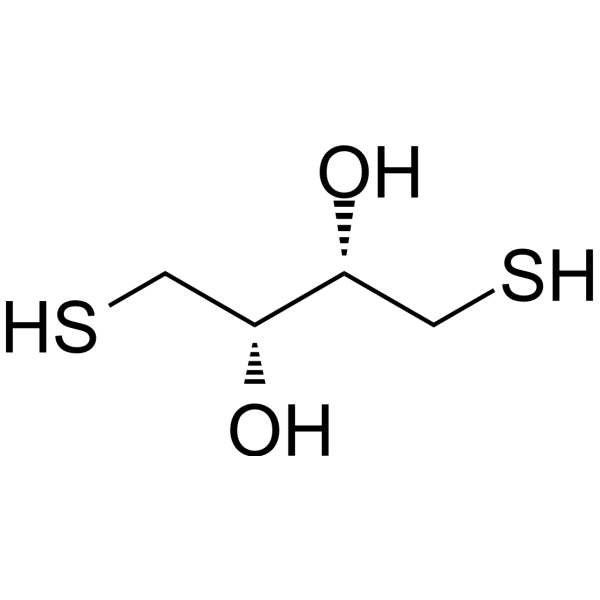
Synonyms: DTT; rel-(2R,3R)-1,4-Dimercapto-2,3-butanediol
DL-Dithiothreitol (DTT) is a strong reductant with anti-disulfidptosis activity. When DL-Dithiothreitol is oxidized, it forms a stable six-membered ring with an internal disulfide bond .
loading...
    loading...
6
6 Cited Publications
Cat. No.: HY-100433
CAS No.: 1401089-31-3
Purity:  99.32%
Target:  

PDI

Research Areas:  

Cancer

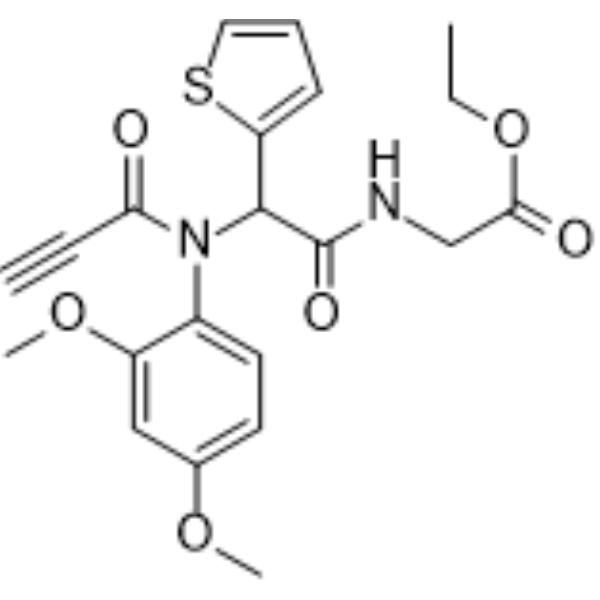
PACMA 31 is an irreversible, orally active protein disulfide isomerase (PDI) inhibitor with an IC50 of 10 μM. PACMA 31 forms a covalent bond with the active site cysteines of PDI. PACMA 31 shows tumor targeting ability and significantly suppresses ovarian tumor growth without causing toxicity to normal tissues . PACMA 31 is a click chemistry reagent, it contains an Alkyne group and can undergo copper-catalyzed azide-alkyne cycloaddition (CuAAc) with molecules containing Azide groups.
loading...
    loading...
3
3 Cited Publications
Cat. No.: HY-15917A
CAS No.: 16096-97-2
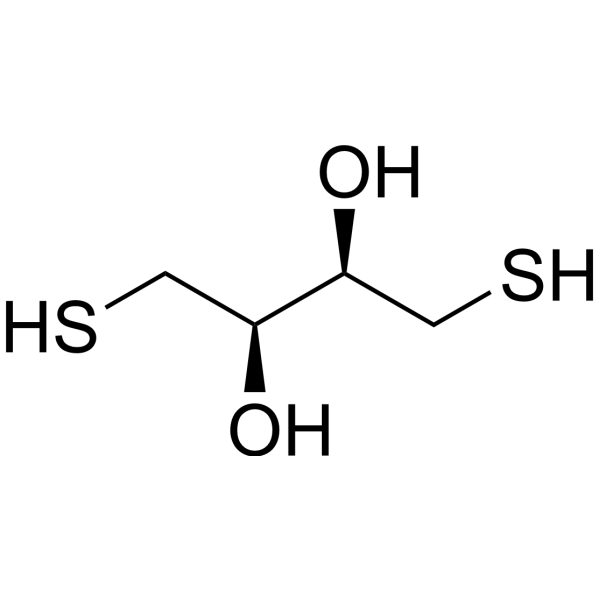
L-Dithiothreitol (DTT) is a reducing agent commonly used in various biochemical applications to break disulfide bonds in proteins, thereby denaturing proteins or preventing the formation of unwanted aggregates. DTT has a unique chemical property that cleaves the sulfur-sulfur bond in the disulfide bond to form a sulfhydryl group. This makes it a useful tool for protein purification, enzyme assays, and protein structure studies.
loading...
    loading...
1
1 Cited Publications
Cat. No.: HY-P4452
CAS No.: 209006-18-8
Research Areas:  

Endocrinology

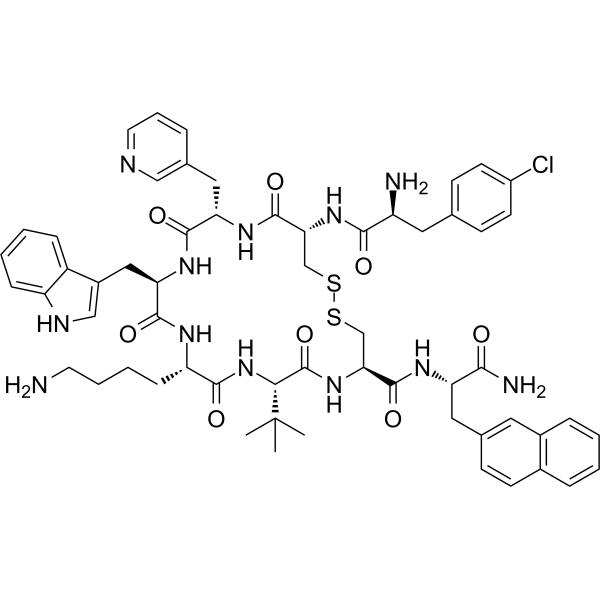
PRL 2915 is a potent human somatostatin subtype 2 receptor (hsst2) antagonist with a Ki of 12 nM .
loading...
    loading...
Cat. No.: HY-P99391
CAS No.: 1781223-80-0
Synonyms: ABT-700; ABBV-400 Antibody
Target:  

c-Met/HGFR Apoptosis

Research Areas:  

Cancer

Telisotuzumab (ABT-700) is a bivalent humanized IgG1 anti-c-Met monoclonal antibody. Telisotuzumab binds cellular c-Met and disrupts its productive dimerization and activation induced by HGF or by the high density of c-Met on the cell surface independent of ligand. Telisotuzumab induces apoptosis. The Fc hinge region of Telisotuzumab has been engineered to enhance its rigidity by introducing a new disulfide bond (K222C) and shortening the hinge length (T223del, T225del). Telisotuzumab can be used for the study of cancers harboring amplified MET, such as gastric and lung cancers .
loading...
    loading...
Cat. No.: HY-128945
CAS No.: 2616704-22-2
Purity:  99.49%
Target:  

ADC Linkers

Research Areas:  

Inflammation/Immunology Cancer

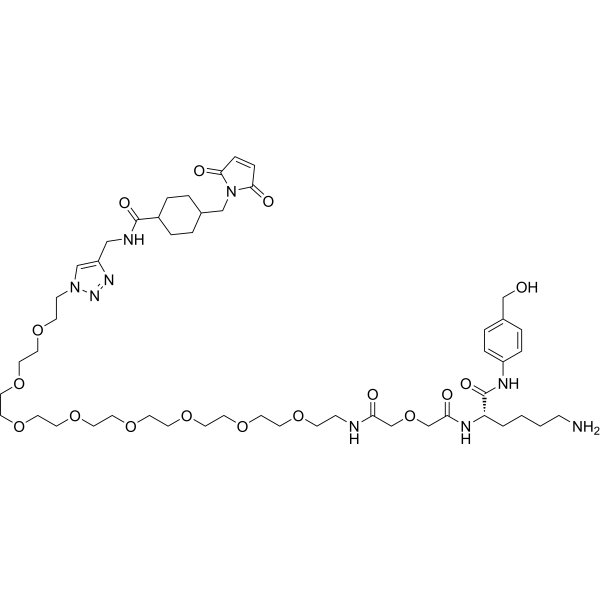
CL2A is a claevable complicated PEG8- and triazole-containing PABC-peptide-mc linker. CL2A is cleavable through pH sensitivity, giving rise to bystander effect, and binds the antibody at a cysteine residue via a disulfide bond. Labetuzumab govitecan used this linker .
loading...
    loading...
Cat. No.: HY-134633
CAS No.: 1808266-58-1
Synonyms: EV 06 chloride; UNR 844 chloride
Target:  

Drug Intermediate

Research Areas:  

Neurological Disease

Alpha-lipoic acid choline ester (EV 06) chloride is choline ester of alpha-lipoic acid. Alpha-lipoic acid choline ester chloride reduces the disulfide bond level of lens proteins. Alpha-lipoic acid choline ester chloride improves lens elasticity. Alpha-lipoic acid choline ester chloride is hydrolyzed by ocular esterases to release alpha-lipoic acid and choline. Alpha-lipoic acid choline ester chloride is used for the research of presbyopia .
loading...
    loading...
Cat. No.: HY-P5601
CAS No.: 214542-43-5
Target:  

Bacterial Fungal

Research Areas:  

Infection

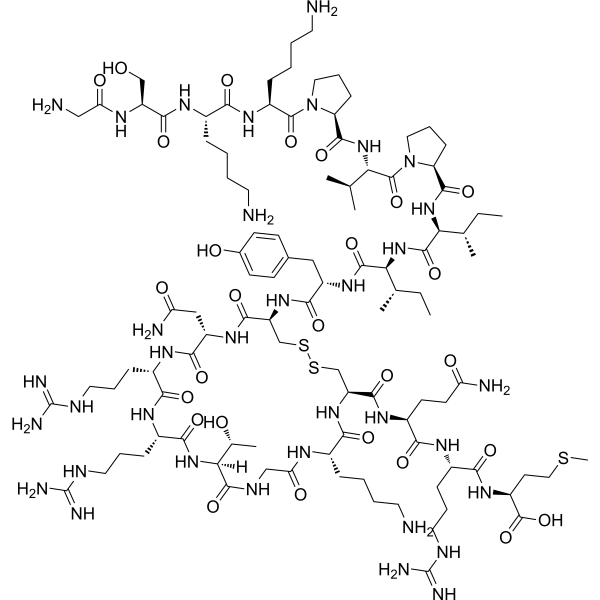
Thanatin is an inducible cationic antimicrobial peptide. Thanatin is a pathogen-inducible single-disulfide-bond-containing β-hairpin AMP. Thanatin displays broad-spectrum activity against both Gram-negative and Gram-positive bacteria as well as against various species of fungi with MICs of 0.3-40 µM, 0.6-40 µM and 0.6-20 µM, respectively. Thanatin has the property of competitive replacement of divalent cations from bacterial outer membrane (OM), leading to OM disruption .
loading...
    loading...
Cat. No.: HY-P5601A
Target:  

Bacterial Fungal

Research Areas:  

Infection

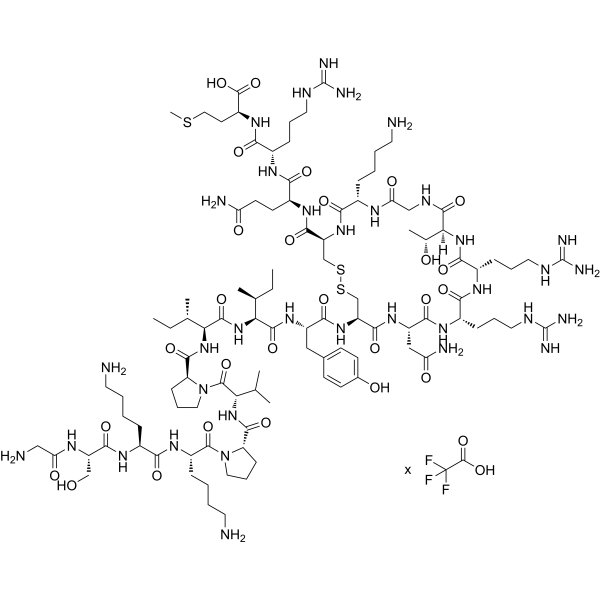
Thanatin TFA is an inducible cationic antimicrobial peptide. Thanatin TFA s a pathogen-inducible single-disulfide-bond-containing β-hairpin AMP. Thanatin TFA displays broad-spectrum activity against both Gram-negative and Gram-positive bacteria as well as against various species of fungi with MICs of 0.3-40 µM, 0.6-40 µM and 0.6-20 µM, respectively. Thanatin TFA has the property of competitive replacement of divalent cations from bacterial outer membrane (OM), leading to OM disruption .
loading...
    loading...
Cat. No.: HY-130082
CAS No.: 796073-68-2
Purity:  99.99%
Research Areas:  

Cancer

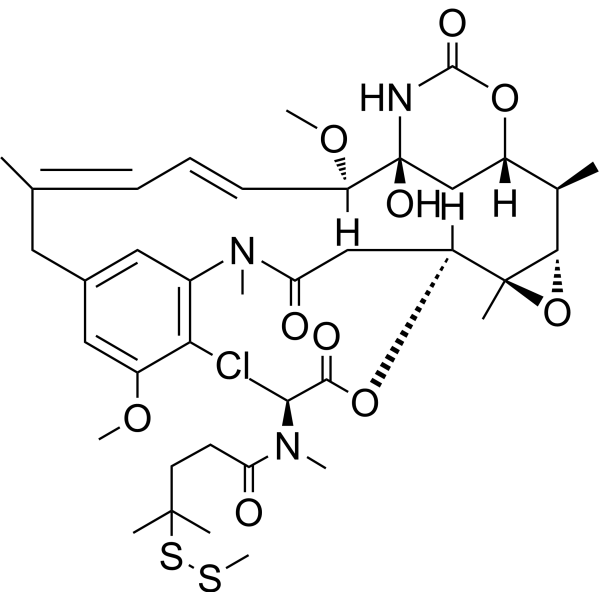
DM4-SMe is a metabolite of antibody-maytansin conjugates (AMCs) and a tubulin inhibitor, and also a cytotoxic moiety of antibody-drug conjugates (ADCs), which can be linked to antibody through disulfide bond or stable thioether bond. DM4-SMe inhibits KB cells with an IC50 of 0.026 nM. DM4-SMe is a highly toxic metabolite that can be oxidized and detoxified by human liver microsomes .
loading...
    loading...
Cat. No.: HY-P99493
CAS No.: 868747-45-9
Synonyms: IMGN242; huC242-DM4
Cantuzumab ravtansine (IMGN242; huC242-DM4), an ADC, is a humanized monoclonal antibody, huC242, covalently linked via a disulfide bond to DM4 (HY-12454). Cantuzumab ravtansine has broad antitumor efficacy against a range of CanAg-positive human tumor xenografts .
loading...
    loading...
Cat. No.: HY-W106411
CAS No.: 71865-37-7
Synonyms: Dithio-bis-maleimidoethane
Research Areas:  

Others

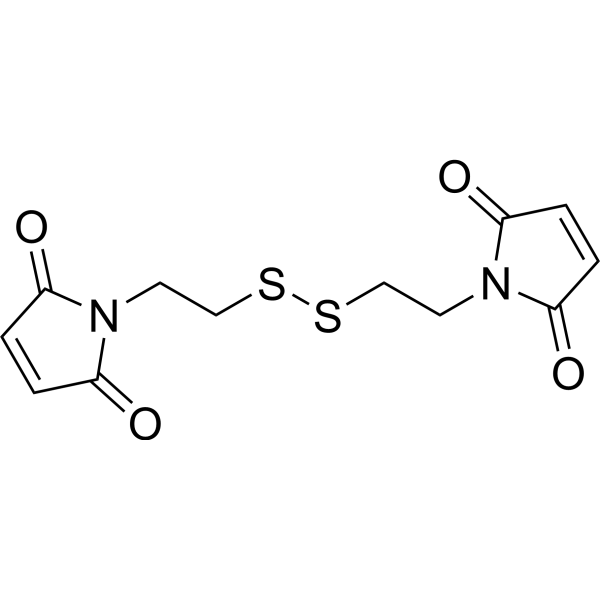
DTME (Dithio-bis-maleimidoethane) is a molecular crosslinker. The molecular structure of DTME contains two maleimide groups connected by an ethane disulfide bond, and this structure enables it to react specifically with molecules containing thiol groups (such as cysteine residues) to form stable covalent bonds. DTME is commonly used to investigate and characterize protein structure (especially oligomerization) or protein interactions .
loading...
    loading...
Cat. No.: HY-15917S2
CAS No.: 850153-85-4
Synonyms: DTT-d6
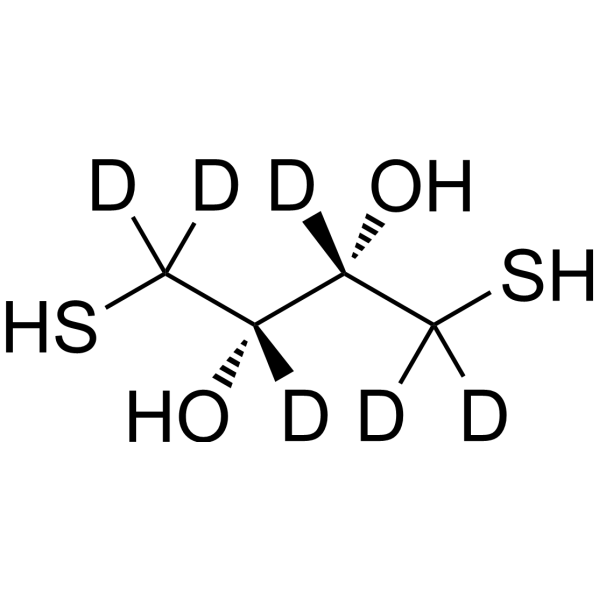
DL-Dithiothreitol-d6 is the deuterated form of DL-Dithiothreitol. DL-dithiothreitol (DTT) is a strong reductant with anti-disulfidptosis activity. DL-dithiothreitol is oxidized to form a stable six-membered ring with an internal disulfide bond .
loading...
    loading...
Cat. No.: HY-P4597
CAS No.: 62130-80-7
Target:  

Inhibitory Antibodies

Research Areas:  

Others

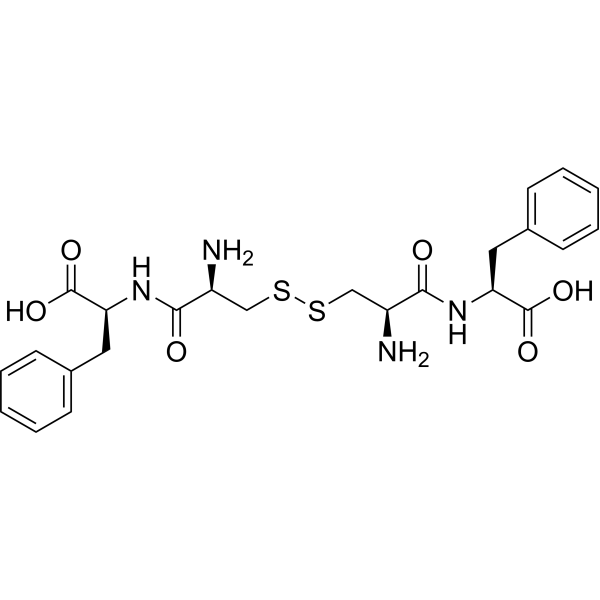
(H-Cys-Phe-OH)2 (disulfide bond) is a polypeptide that can be found by peptide screening. Peptide screening is a research tool that pools active peptides primarily by immunoassay. Peptide screening can be used for protein interaction, functional analysis, epitope screening, especially in the field of agent research and development .
loading...
    loading...
Cat. No.: HY-P11035
Target:  

Ephrin Receptor

Research Areas:  

Neurological Disease Cancer

APY-d3 is a highly selective EphA4 receptor inhibitor, with an IC50 value of 17-56 nM for human EphA4, an IC50 value of 20 nM for mouse EphA4, and a Kd value of 138 nM for EphA4-LBD. APY-d3 binds to EphA4, blocks its interaction with ephrin ligands, inhibits tyrosine phosphorylation of EphA4, prevents growth cone collapse, and does not induce EphA4 phosphorylation in primary cortical neurons. APY-d3 adopts a β-hairpin conformation stabilized by an N-terminal to C-terminal disulfide bond. APY-d3 can be used in research related to amyotrophic lateral sclerosis, Alzheimer's disease, stroke, neurodegenerative diseases and cancer .
loading...
    loading...
Cat. No.: HY-W615327
CAS No.: 899452-51-8
Research Areas:  

Others

Bis-sulfone NHS Ester is a bis-alkylating labeling reagent that is selective for the cysteine sulfur atoms from a native disulfide. These reagents undergo bis-alkylation to conjugate both thiols derived from the two cysteine residues of a reduced native disulfide bond such as the interchain disulfide bonds of an antibody. The reaction results in covalent rebridging of the disulfide bond via a three carbon bridge leaving the protein structurally intact.
loading...
    loading...
Cat. No.: HY-W096122
CAS No.: 142702-31-6
Research Areas:  

Others

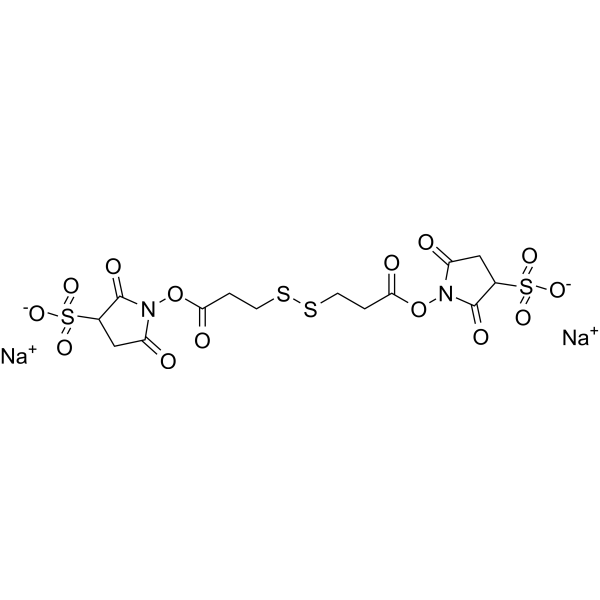
DTSSP Crosslinker disodium is a protein cross-linker containing a disulfide bond. DTSSP Crosslinker disodium can react with sidechains of amino acids that are within close proximity .
loading...
    loading...
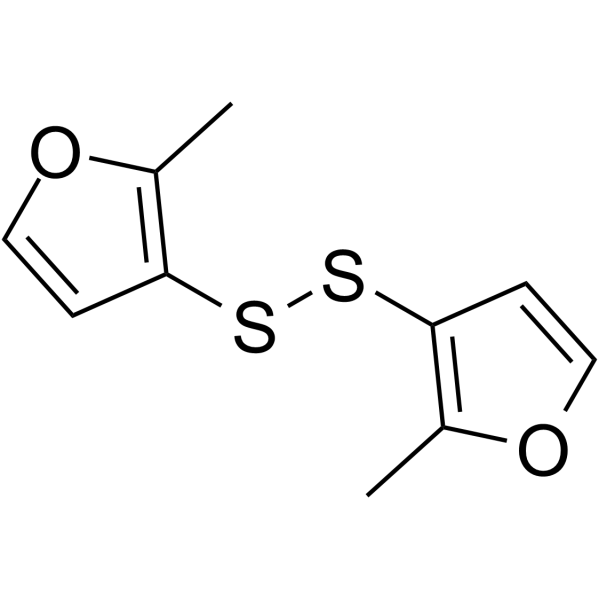
Cat. No.: HY-W009708
CAS No.: 28588-75-2
Bis (2-methyl-3-furyl) disulfide is a meat-characteristic aroma compound that binds to oral mucins. Bis (2-methyl-3-furyl) disulfide interacts with oral mucins via hydrogen bonding, hydrophobic interactions and van der Waals forces to form stable spontaneous 1:1 complexes, and the interaction strength varies with pH. Bis (2-methyl-3-furyl) disulfide contributes to the production of unique meat aroma and flavor, and its binding to oral mucins alters aroma perception .
loading...
    loading...
Cat. No.: HY-E70193
CAS No.: 37341-53-0
Synonyms: KerA
Research Areas:  

Others

Keratinase (KerA) is an orally active proteolytic enzyme that specifically degrades keratin, and it is mainly secreted by microorganisms such as bacteria, fungi and actinomycetes. Keratinase degrades keratin via reducing disulfide bond cross-links and cleaving peptide bonds, and it can also degrade infectious prion proteins. Keratinase can improve the nutritional bioavailability of keratin-based feed, and it can also be applied in various fields including depilation, proteolytic cleaning, organic fertilizer precursor preparation, cosmetics, bioenergy production, wastewater decolorization, biomolecule extraction, bioremediation, textile biopretreatment and feed processing .
loading...
    loading...
Cat. No.: HY-139036
CAS No.: 27792-36-5
Research Areas:  

Others

Dicyanocobinamide is a precursor to vitamin B12. Dicyanocobinamide is a catalyst for the oxidation of peptides, which is utilized for a rapid, environmentally friendly method of disulfide bond formation in water. Dicyanocobinamide exhibits good biocompatibility .
loading...
    loading...

