39 Results for "

bifunctional molecules

" in MedChemExpress (MCE) Product Catalog:
Products (39)

39 Results for "bifunctional molecules" in MCE Product Catalog:

9
9 Publications Verification
Cat. No.: HY-138642
CAS No.: 2229711-68-4
Purity:  99.60%
Synonyms: ARV-471; PF-07850327
Research Areas:  

Cancer

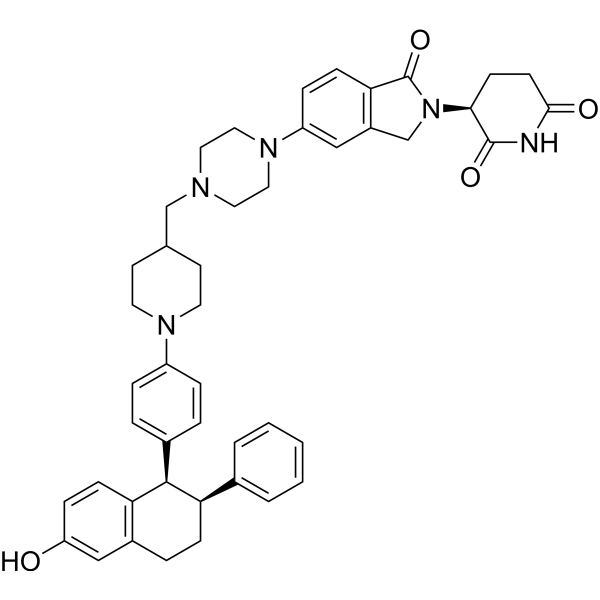
Vepdegestrant (ARV-471) is an orally active PROTAC estrogen receptor degrader against breast cancer. Vepdegestrant is a hetero-bifunctional molecule that facilitates the interactions between estrogen receptor alpha and an intracellular E3 ligase complex. Vepdegestrant leads to the ubiquitylation and subsequent degradation of estrogen receptors via the proteasome. Vepdegestrant robustly degrades ER in ER-positive breast cancer cell lines with a half-maximal degradation concentration (DC50) of about 2 nM .
loading...
    loading...
1
1 Cited Publications
Cat. No.: HY-134797
CAS No.: 1222468-90-7
Purity:  ≥98.0%
Research Areas:  

Cancer

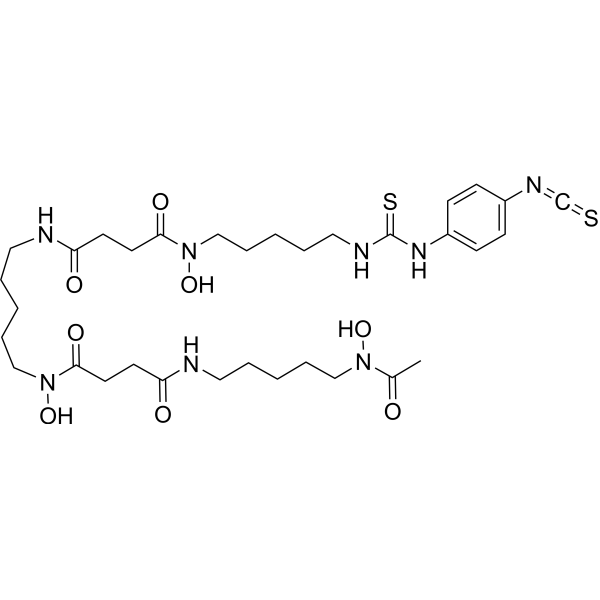
P-SCN-Bn-deferoxamine is a bifunctional chelating agent that can link radioactive metal nuclides (such as Zr-89) and biological targeting molecules (such as antibodies). P-SCN-Bn-deferoxamine can be used for the research of immune PET imaging .
loading...
    loading...
1
1 Cited Publications
Cat. No.: HY-156035
CAS No.: 102650-30-6
Purity:  96.05%
Target:  

Drug Intermediate

Research Areas:  

Others

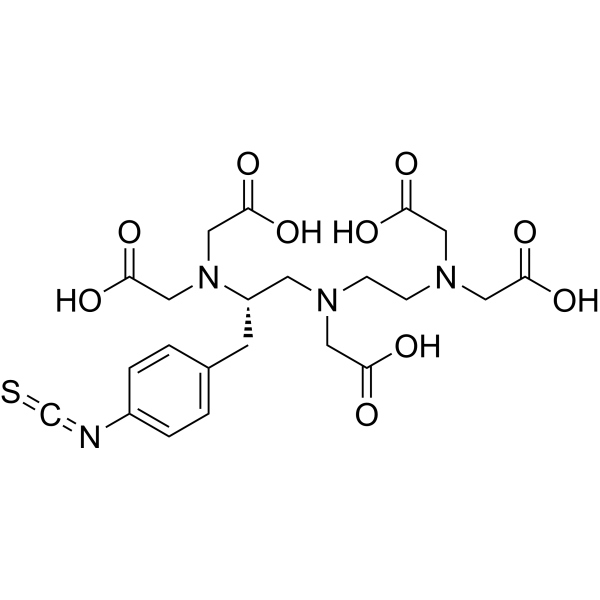
Bz‑DTPA is a bifunctional chelator that can conjugate indium radionuclides to targeting proteins for tumor-targeted tracing. Bz‑DTPA is mainly used in studies related to radioactive targeting molecules .
loading...
    loading...
Cat. No.: HY-131326
CAS No.: 819869-77-7
Purity:  ≥98.0%
Research Areas:  

Cancer

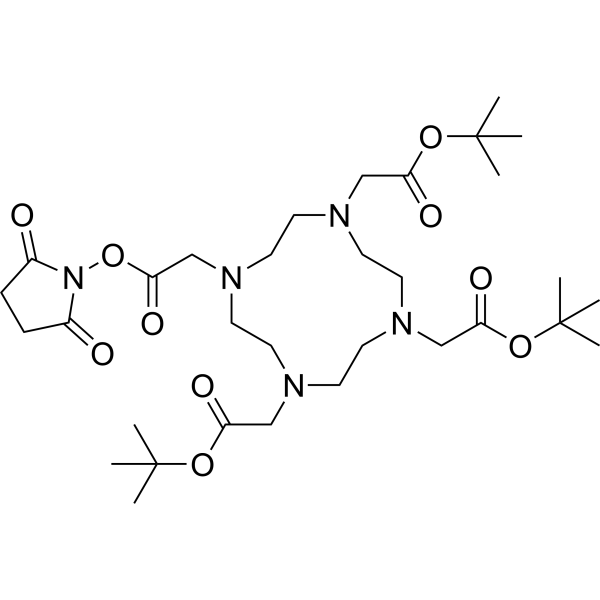
DOTA-tris(tBu)ester NHS ester is a bifunctional precursor to a DOTA-based chelating agent. DOTA-tris(tBu)ester NHS ester can be used to label primary amines (R-NH2) of proteins, amine-modified oligonucleotides, and other amine-containing molecules, and upon deprotection forms stable complexes with metal ions for applications in molecular imaging .
loading...
    loading...
Cat. No.: HY-153552A
CAS No.: 2990021-73-1
Purity:  99.89%
Target:  

FAP

Research Areas:  

Cancer

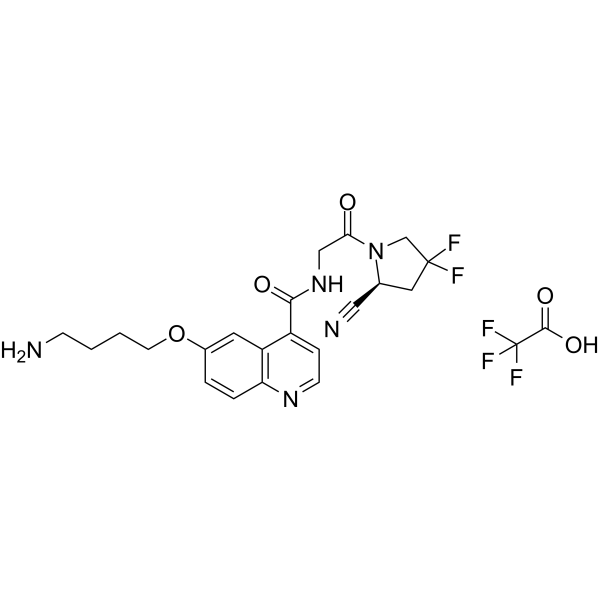
NH2-UAMC1110 TFA is an aminobutoxy derivative of the fibroblast activation protein (FAP) inhibitor UAMC1110 (HY-100684), and is a precursor compound for the synthesis of FAP inhibitor probes, not directly used in bioactivity experiments. For example, NH2-UAMC1110 TFA is involved in the synthesis of the radiotracer FAPI-QS, which exhibits high tumor selectivity and high dose effect, and has been used in tumor diagnosis. NH2-UAMC1110 TFA structurally incorporates an active amino group, allowing it to form covalent bonds with various molecules (such as DOTA, DATA5m, radionuclide chelators, etc.) to synthesize molecular imaging probes or targeted compounds with the ability to target FAP. NH2-UAMC1110 TFA specifically binds to the FAP active site, inhibiting its proline-selective serine protease activity (including dipeptidyl peptidase and endopeptidase activity), blocking FAP-mediated tissue remodeling-related processes. Its key activity is high targeting and high affinity, and its core function is to act as a targeting module coupled with bifunctional chelators (such as DOTA, DATA5m). NH2-UAMC1110 TFA can be applied to diagnostic imaging studies of tumors expressing FAP (such as colorectal cancer, pancreatic cancer, etc.), and also provides molecular tools for targeted research of FAP-related diseases with high FAP expression, such as fibrosis and arthritis .
loading...
    loading...
Cat. No.: HY-153552
CAS No.: 2758337-19-6
Target:  

FAP

Research Areas:  

Cancer

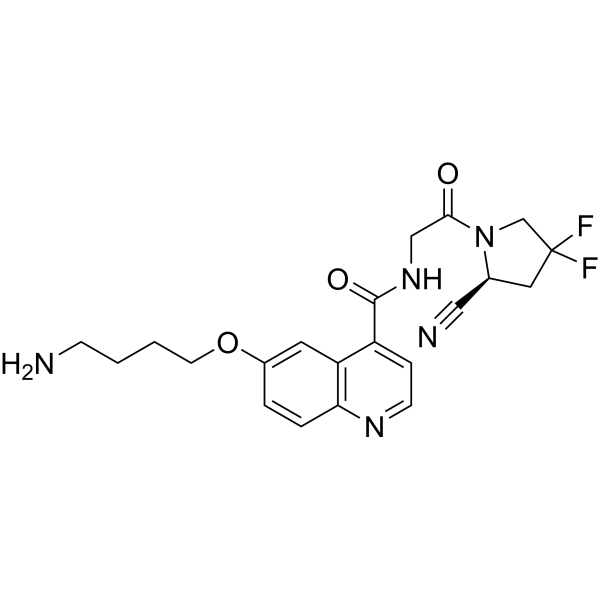
NH2-UAMC1110 is an aminobutoxy derivative of the fibroblast activation protein (FAP) inhibitor UAMC1110 (HY-100684), and is a precursor compound for the synthesis of FAP inhibitor probes, not directly used in bioactivity experiments. For example, NH2-UAMC1110 is involved in the synthesis of the radiotracer FAPI-QS, which exhibits high tumor selectivity and high dose-response, and has been used for tumor diagnosis. NH2-UAMC1110 introduces an active amino group into its structure, enabling it to form covalent bonds with various molecules (such as DOTA, DATA5m, radionuclide chelators, etc.), thereby synthesizing molecular imaging probes or targeted compounds with the ability to target FAP. NH2-UAMC1110 specifically binds to the FAP active site, inhibiting its proline-selective serine protease activity (including dipeptidyl peptidase and endopeptidase activity), blocking FAP-mediated tissue remodeling processes. Its key activity is high targeting and high affinity, and its core function is to be coupled with bifunctional chelators (such as DOTA, DATA5m) as a targeting module. NH2-UAMC1110 can be applied to diagnostic imaging studies of tumors expressing FAP (such as colorectal cancer, pancreatic cancer, etc.), and also provides molecular tools for targeted research of FAP-related diseases with high FAP expression, such as fibrosis and arthritis .
loading...
    loading...
Cat. No.: HY-158067
CAS No.: 2359695-48-8
Purity:  89.40%
Synonyms: DFO-DBCO
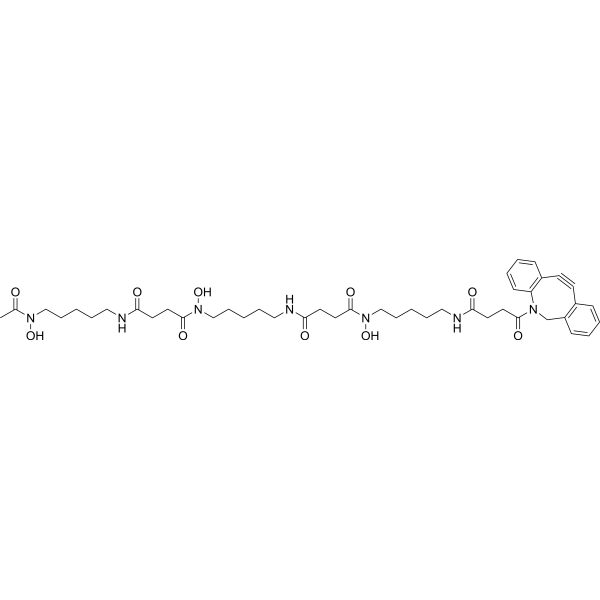
Deferoxamine-DBCO (DFO-DBCO) is a bifunctional small-molecule synthetic building block obtained by covalent conjugation of the DFO metal-chelating group with DBCO, and is a bifunctional chelator. Deferoxamine-DBCO efficiently chelates radioactive metals (such as 89Zr) through the DFO moiety to achieve radiolabeling. Deferoxamine-DBCO undergoes a metal-free Huisgen cycloaddition reaction with azide-containing biomolecules (such as siRNA and monoclonal antibodies) through the DBCO moiety under bioorthogonal conditions to accomplish targeted conjugation. Deferoxamine-DBCO is applicable to research related to bioconjugation chemistry and the preparation of PET radiotracer probes .
loading...
    loading...
Cat. No.: HY-159493
Research Areas:  

Cancer

BI2536-PEG2-Halo is a bifunctional molecule containing a ligand for Halo tag and a Polo-like kinase 1 (PLK1) inhibitor BI-2536 (HY-50698). BI2536-PEG2-Halo inhibits the proliferation of 293T cells with Halo-p53R273H(FL)-mCherry tag (IC50=23 nM), exhibits selective toxicity against p53 mutant cancer cells .
loading...
    loading...
Cat. No.: HY-171962A
CAS No.: 2376132-24-8
Target:  

Phospholipase GHSR

Research Areas:  

Neurological Disease

KARI 201 hydrochloride is an orally active, blood-brain barrier-penetrant bifunctional small molecule. KARI 201 hydrochloride is a selective inhibitor of ASM and an agonist of GHSR-1a. KARI 201 hydrochloride competitively binds ASM, inhibits ASM activity to reduce intracellular ceramide levels, restores lysosomal biogenesis, and repairs impaired autophagic flux in neurons. KARI 201 hydrochloride activates GHSR-1a and induces calcium influx. KARI 201 hydrochloride ameliorates Alzheimer's disease-related pathology, age-related sarcopenia phenotypes, and postoperative ileus-related symptoms. KARI 201 hydrochloride can be used in Alzheimer's disease-related research .
loading...
    loading...
Cat. No.: HY-159758
CAS No.: 3080922-95-5
Target:  

Others

Research Areas:  

Neurological Disease Cancer

EcDHFR/FKBP12 F36V binder-1 (compound 1) is a bifunctional molecule that combines the Escherichia coli dihydrofolate reductase domain (EcDHFR) with the FKBP12 F36V domain .
loading...
    loading...
Cat. No.: HY-132975
CAS No.: 2231405-64-2
Target:  

Bacterial

Research Areas:  

Others

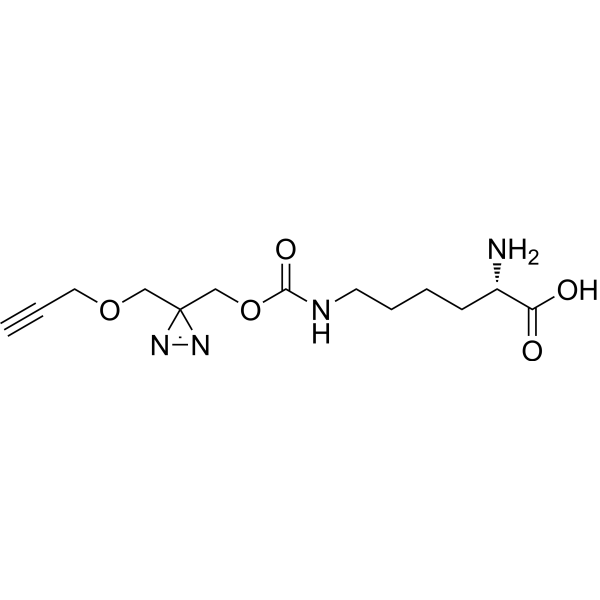
PrDiAzK is a bifunctional amino acid. PrDiAzK can be site-selectively incorporated into proteins in both bacterial and mammalian cell culture. PrDiAzK can be used for proteome-wide incorporation via stochastic orthogonal recoding of translation (SORT) . PrDiAzK is a click chemistry reagent, it contains an Alkyne group and can undergo copper-catalyzed azide-alkyne cycloaddition (CuAAc) with molecules containing Azide groups.
loading...
    loading...
Cat. No.: HY-163039
CAS No.: 188428-79-7
Research Areas:  

Cancer

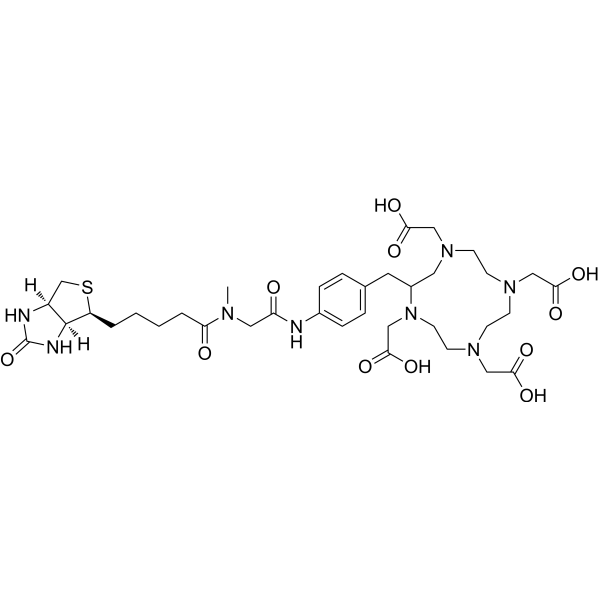
DOTA-biotin is a bifunctional molecule formed by conjugating the chelator DOTA with biotin. The DOTA group of DOTA-biotin can form extremely stable complexes with a variety of radioactive metal nuclides, while the biotin group exhibits highly specific binding affinity for avidin or streptavidin. DOTA-biotin possesses rapid blood clearance activity and minimal systemic and non-target organ retention. DOTA-biotin can be used for cancer research .
loading...
    loading...
Cat. No.: HY-138642S
CAS No.: 3025452-07-4
Synonyms: ARV-471-d5 PF-07850327-d5
Research Areas:  

Cancer

Vepdegestrant-d5 (ARV-471-d5) is the deuterium labeled Vepdegestrant (HY-138642). Vepdegestrant (ARV-471) is an orally active PROTAC estrogen receptor degrader against breast cancer. Vepdegestrant is a hetero-bifunctional molecule that facilitates the interactions between estrogen receptor alpha and an intracellular E3 ligase complex. Vepdegestrant leads to the ubiquitylation and subsequent degradation of estrogen receptors via the proteasome. Vepdegestrant robustly degrades ER in ER-positive breast cancer cell lines with a DC50 of about 2 nM .
loading...
    loading...
Cat. No.: HY-W011118
CAS No.: 23911-26-4
DTPA anhydride is a bifunctional chelator precursor, and its anhydride group can react with primary amino groups in peptides, proteins, or polymers to form stable amide bonds, covalently linking the DTPA chelating scaffold to target molecules. DTPA anhydride reacts with the free amino termini of minigastrin and DGlu1-minigastrin to form DTPA-peptide conjugates without side-chain protection, and the resulting DTPA-conjugates can also bind radionuclides to synthesize radionuclide-labeled drug conjugates (RDCs). RDCs possess the ability to specifically target biomolecules and can be applied in medical imaging .
loading...
    loading...
Cat. No.: HY-171962
CAS No.: 2376132-22-6
Target:  

Phospholipase GHSR

Research Areas:  

Neurological Disease

KARI 201 is an orally active, blood-brain barrier-penetrant bifunctional small molecule. KARI 201 is a selective inhibitor of ASM and an agonist of GHSR-1a. KARI 201 competitively binds ASM, inhibits ASM activity to reduce intracellular ceramide levels, restores lysosomal biogenesis, and repairs impaired autophagic flux in neurons. KARI 201 activates GHSR-1a and induces calcium influx. KARI 201 ameliorates Alzheimer's disease-related pathology, age-related sarcopenia phenotypes, and postoperative ileus-related symptoms. KARI 201 can be used in Alzheimer's disease-related research .
loading...
    loading...
Cat. No.: HY-158685
CAS No.: 2360561-90-4
Target:  

MDM-2/p53

Research Areas:  

Cancer

RG7112D is a potent MDM2 inhibitor with IC50s of 11 nM and >10000 nM and for MDM2-p53 and VHL-HIF1α by binding HTRF assay, respectively. RG7112D is coupled by an amide bond to VHL-Amine, resulting in a bi-functional molecule, YX-02-030. YX-02-03, a MDM2-PROTAC, potently inhibits MDM2-p53 binding (HTRF IC50=63nM). RG7112D can stabilize MDM2 protein and increase p53 protein levels .
loading...
    loading...
Cat. No.: HY-142881
CAS No.: 2378837-67-1
Target:  

LYTACs

Research Areas:  

Others

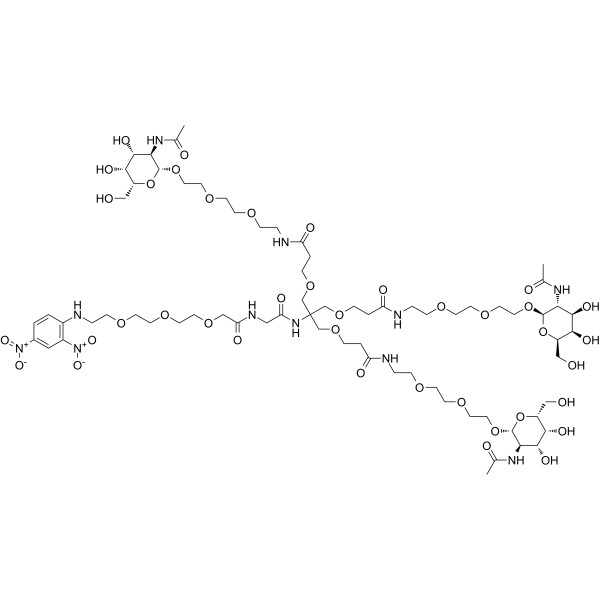
D-MoDE-A (1) is a bifunctional small molecule that mediates the degradation of extracellular proteins through the asialoglycoprotein receptor (ASGPR).
loading...
    loading...
Cat. No.: HY-138642A
CAS No.: 2229711-08-2
Synonyms: (Rac)-ARV-471; (Rac)-PF-07850327
Research Areas:  

Cancer

(Rac)-Vepdegestrant is the isomer of Vepdegestrant (HY-138642). Vepdegestrant is an orally active PROTAC estrogen receptor degrader against breast cancer. Vepdegestrant is a hetero-bifunctional molecule that facilitates the interactions between estrogen receptor alpha and an intracellular E3 ligase complex. Vepdegestrant leads to the ubiquitylation and subsequent degradation of estrogen receptors via the proteasome. Vepdegestrant robustly degrades ER in ER-positive breast cancer cell lines with a half-maximal degradation concentration (DC50) of about 2 nM .
loading...
    loading...
Cat. No.: HY-179560
Research Areas:  

Cancer

PMV6-PEG4-BI2536 is an RIPTAC-like bifunctional molecule that promotes the formation of the p53 Y220C-PLK1 ternary complex (EC50 = 1.4 μM). PMV6-PEG4-BI2536 causes PLK1 mislocalization and inhibits PLK1 activity, inducing G2/M phase arrest and apoptosis in p53 Y220C-mutant cells, while sparing cells with wild-type TP53. PMV6-PEG4-BI2536 can be used in research on uterine, gastric, pancreatic, prostate, and breast cancers harboring the p53 Y220C mutation. PMV6-PEG4-BI2536 is composed of PMV6 (a p53 Y220C mutant-binding ligand), PEG4 (a linker), and BI2536 (HY-159493) (a PLK inhibitor) .
loading...
    loading...
Cat. No.: HY-142885
CAS No.: 2378837-56-8
Target:  

LYTACs

Research Areas:  

Others

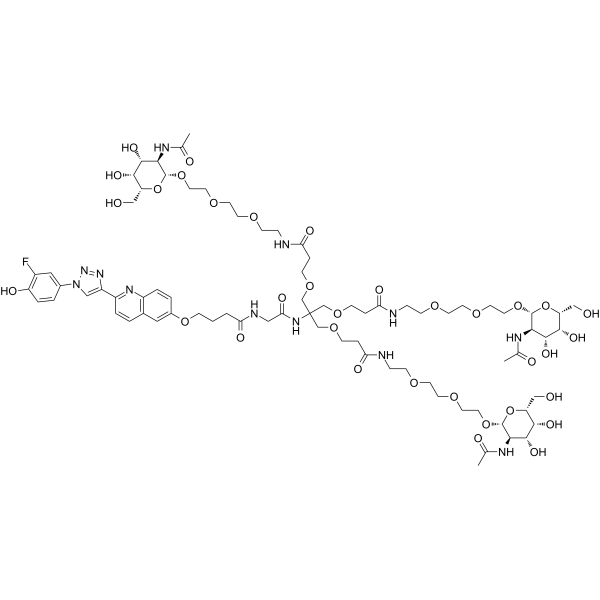
M-MoDE-A (2) is a bifunctional small molecule that mediates the degradation of extracellular proteins through the asialoglycoprotein receptor (ASGPR).
loading...
    loading...

