22 Results for "

spheroid formation

" in MedChemExpress (MCE) Product Catalog:
Products (22)

22 Results for "spheroid formation" in MCE Product Catalog:

88
88 Publications Verification
Cat. No.: HY-15372
CAS No.: 880635-03-0
Purity:  99.64%
Target:  

PPAR Apoptosis

Research Areas:  

Cancer

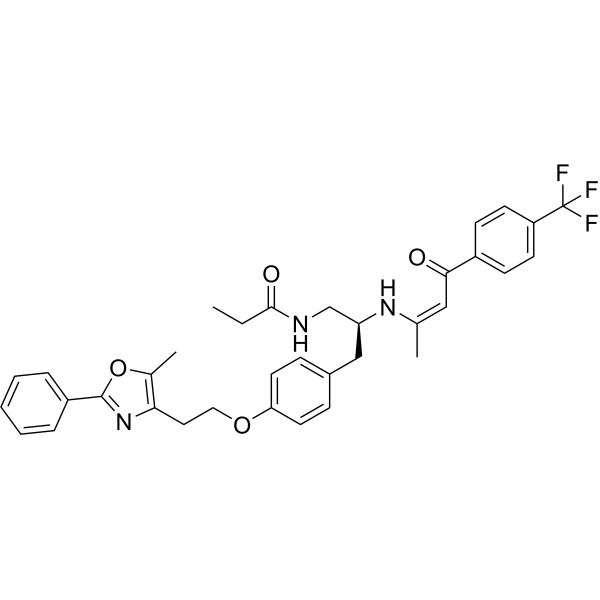
GW6471 is a selective peroxisome proliferator-activated receptor α (PPARα) antagonist. GW6471 reduces cancer stem cell viability, proliferation, and spheroid formation. GW6471 induces apoptosis and causes metabolic impairment including energy imbalance. GW6471 can be used for the research of paragangliomas and triple-negative breast cancer .
loading...
    loading...
6
6 Cited Publications
Cat. No.: HY-18768
CAS No.: 1802088-50-1
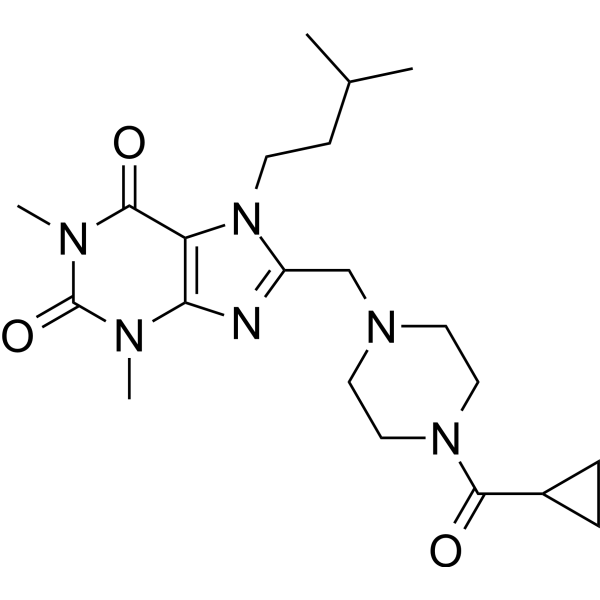
NCT-501 is a reversible, non-competitive, selective, blood-brain barrier-permeable ALDH1A1 inhibitor with an IC50 of 40 nM. NCT-501 inhibits the AKT-β-catenin signaling pathway, induces necroptosis in nasopharyngeal carcinoma cells, suppresses their proliferation and inhibits stem cell spheroid formation. NCT-501 can be used in research related to nasopharyngeal carcinoma, esophageal squamous cell carcinoma and malignant tumors .
loading...
    loading...
5
5 Cited Publications
Cat. No.: HY-12868
CAS No.: 1225037-39-7
Purity:  98.62%
Synonyms: PQR309
Target:  

PI3K mTOR Apoptosis

Research Areas:  

Cancer

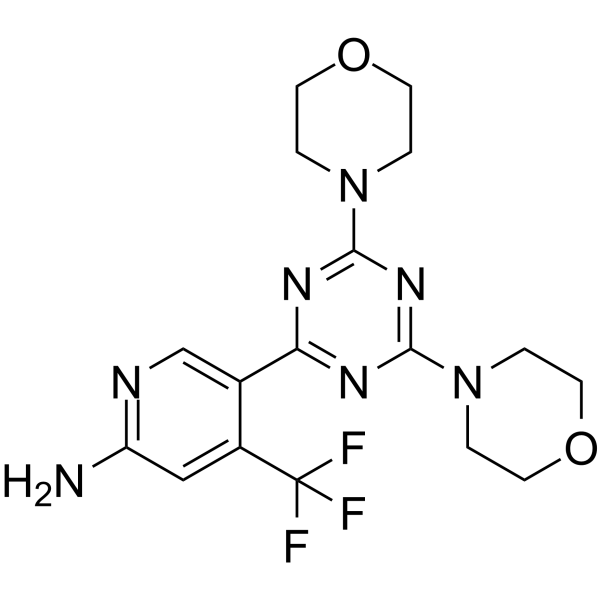
Bimiralisib (PQR309) is an orally active, blood-brain barrier-penetrant PI3K/mTOR inhibitor with in vitro antiproliferative activity and in vivo antitumor activity. Bimiralisib induces G1 cell cycle arrest, apoptosis and cell death in cancer cells, while inhibiting cancer cell proliferation, migration, invasion, colony formation and spheroid generation. Bimiralisib upregulates the expression of E2F4. The combination of Bimiralisib with venetoclax enhances therapeutic efficacy in acute myeloid leukemia models. Bimiralisib can be used in cancer-related research .
loading...
    loading...
2
2 Cited Publications
Cat. No.: HY-111334
CAS No.: 105748-59-2
Purity:  99.74%
Synonyms: Brassinine
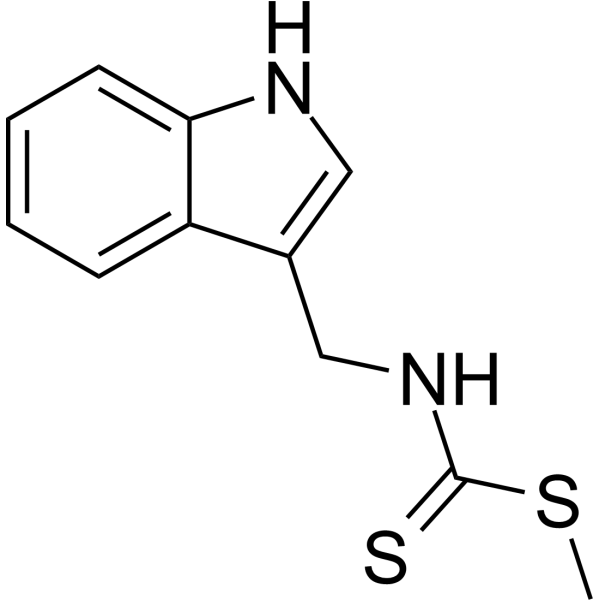
Brassinin is an indole derivative found in cruciferous plants. Brassinin acts as an IDO inhibitor (Ki = 97.7 μM). Brassinin inhibits angiogenesis and induces apoptosis, autophagy, paraptosis, ROS production, and ER stress. Brassinin selectively stimulates lysosomal degradation of Tie2 and promotes lysosomal and proteasomal degradation of FGFR1 in endothelial cells, downregulating AKT and ERK phosphorylation. Brassinin inhibits endothelial cell proliferation, migration, tube formation, spheroid sprouting, and angiogenesis. Brassinin inhibits PI3K/Akt/mTOR/S6K1 signaling, upregulates p21 and p27, and induces G1 phase cell cycle arrest through RB hypophosphorylation. Brassinin inhibits tyrosinase catalytic activity, reduces tyrosinase mRNA, and inhibits MITF nuclear translocation. Brassinin is used for research on triple-negative breast cancer, chronic myeloid leukemia, colon cancer, glioma, atherosclerosis, and skin cancer .
loading...
    loading...
1
1 Cited Publications
Cat. No.: HY-155974
CAS No.: 2308548-54-9
Purity:  99.84%
Target:  

MDM-2/p53

Research Areas:  

Cancer

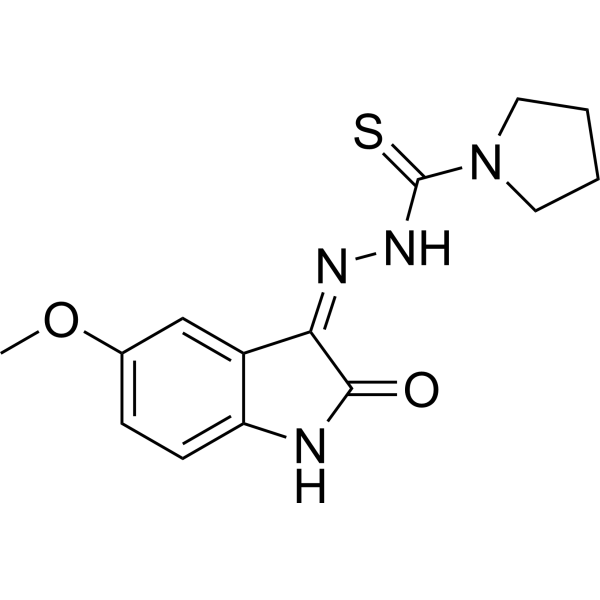
MeOIstPyrd is an anti-skin cancer agent. MeOIstPyrd inhibits cell proliferation, migration, and spheroid formation by activating the mitochondrial intrinsic apoptotic pathway. MeOIstPyrd induces DNA damage. MeOIstPyrd activates p53, and increases the half-life of p53 and stabilizes p53 by phosphorylating it at ser15. MeOIstPyrd binds to MDM2 in the p53 sub-pocket and blocks p53-MDM2 interaction .
loading...
    loading...
Cat. No.: HY-176761
CAS No.: 1033931-92-8
Research Areas:  

Cancer

NSC647889 is an apoptosis and autophagy inducer. NSC647889 induces apoptosis, inhibits mTOR pathway and abrogates DNA synthesis. NSC647889 triggers LC3-positive vesicle formation, modulates AKT and 4EBP1 phosphorylation and shows heightened caspase-3 activation in multicellular spheroids. NSC647889 can be used for the research of solid cancer tumour, head-neck carcinoma, and colorectal cancer .
loading...
    loading...
Cat. No.: HY-168437
Target:  

MicroRNA

Research Areas:  

Cancer

LIN28-IN-2 is a Lin28 inhibitor with activity against Lin28a, Lin28b, and their zinc knuckle domain. LIN28-IN-2 blocks Lin28-RNA substrate binding, perturbs zinc knuckle domain conformation. LIN28-IN-2 inhibits cancer cell proliferation, spheroid growth, and induces G2/M phase arrest. LIN28-IN-2 suppresses cancer stem cell phenotypes, Lin28-mediated stress granule formation, let-7 target genes, cancer stem cell biomarkers, and neuroendocrine biomarkers expression in cancer cells. LIN28-IN-2 can be used for the research of cancer .
loading...
    loading...
Cat. No.: HY-W001240
CAS No.: 1993-03-9
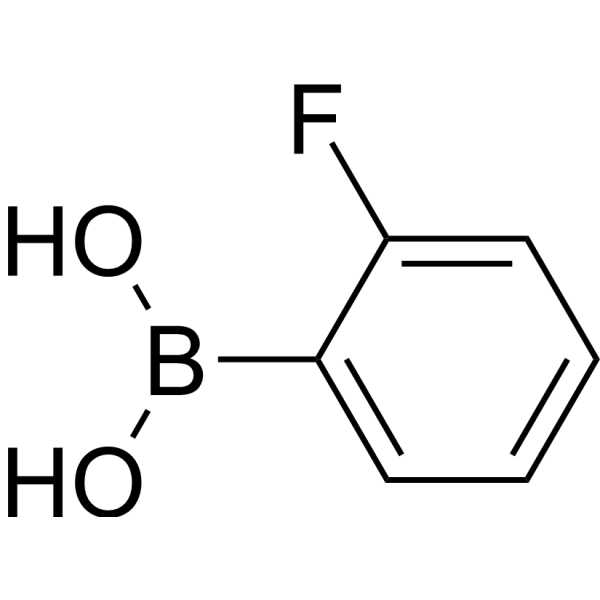
2-Fluorophenylboronic acid is an organic synthesis intermediate belonging to the fluorinated arylboronic acid class. The electron-withdrawing fluorine substituent in 2-Fluorophenylboronic acid reduces its pKa, thereby enhancing boronate bond formation with diols. 2-Fluorophenylboronic acid serves as a key synthetic intermediate for inhibitors of Plasmodium phosphatidylinositol 4-kinase IIIβ (PI4K). 2-Fluorophenylboronic acid can also be used to functionalize linear polyglycerols for constructing dual dynamic covalent cross-linked hydrogels that support 3D tumor spheroid culture of various cancer cells. 2-Fluorophenylboronic acid is applicable to research related to malaria and tumors .
loading...
    loading...
Cat. No.: HY-152159
CAS No.: 2760611-38-7
Target:  

Cytochrome P450

Research Areas:  

Cancer

CYP4Z1-IN-1 (compound 7c) is a potent CYP4Z1 inhibitor, with an IC50 of 41.8 nM. CYP4Z1-IN-1 decreases the expression of breast CSCs stemness markers, spheroid formation, and metastatic ability as well as tumor-initiation capability in a concentration-dependent manner in vitro and in vivo .
loading...
    loading...
Cat. No.: HY-122844B
CAS No.: 2761021-80-9
Synonyms: BI-853520 tosylate; IN-10018 tosylate
Target:  

FAK

Research Areas:  

Cancer

Ifebemtinib (tosylate) (BI-853520 (tosylate); IN-10018 (tosylate)) is a highly selective PTK2 kinase inhibitor. Ifebemtinib (tosylate) demonstrates anti-tumor activity. Ifebemtinib (tosylate) inhibits FAK autophosphorylation in prostate carcinoma cells. Ifebemtinib (tosylate) can inhibit spheroid formation and orthotopic tumor growth in vivo. Ifebemtinib (tosylate) can be studied in anticancer research such as solid tumors, breast cancer, and malignant pleural mesothelioma .
loading...
    loading...
Cat. No.: HY-147706
CAS No.: 2568148-31-0
Target:  

Others

Research Areas:  

Cancer

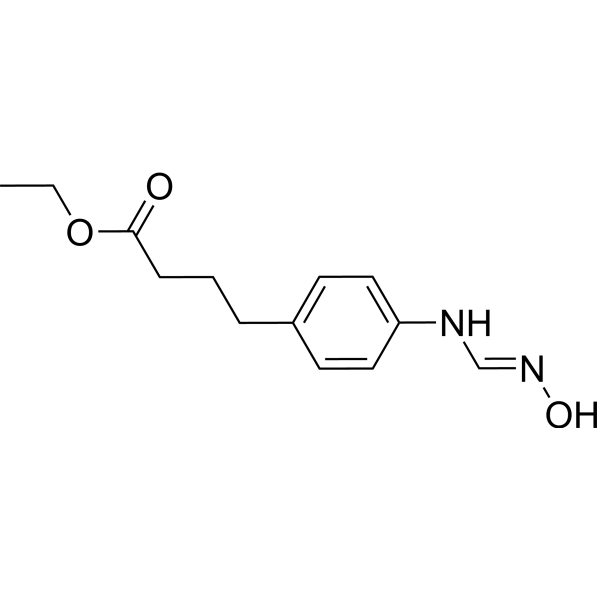
Ar524 has higher inhibitory activity than the known transgenic inhibitor kifunensine. At the same time, ar524 inhibited low concentration (10 μ M) Spheroid formation of human malignant cells.
loading...
    loading...
Cat. No.: HY-161661
CAS No.: 1328150-75-9
Target:  

Caspase

Research Areas:  

Cancer

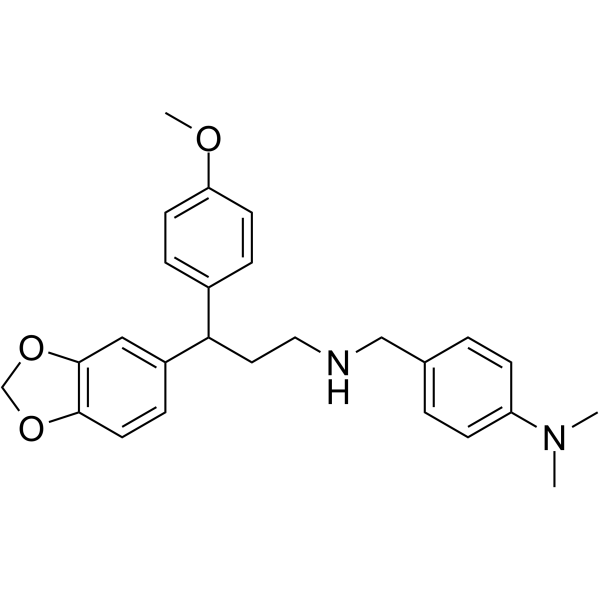
Anticancer agent 223 (Compound V-d) is an anticancer agent that triggers cell death through caspase-dependent and caspase-independent mechanisms. Anticancer agent 223 inhibits tumor spheroid formation and resensitizes cisplatin (HY-17394)-resistant A2780 cells to cisplatin (HY-17394) treatment .
loading...
    loading...
Cat. No.: HY-159580
Target:  

STAT

Research Areas:  

Cancer

STAT3-IN-31 (compound K2071) is a STATtic-derived STAT3 and mitotic inhibitor. STAT3-IN-31 blocks mitotic progression and affects the formation of mitotic spindles. STAT3-IN-31 also affects glioblastoma cell migration and inhibits cell proliferation in tumor spheroids. STAT3-IN-31 is also able to induce glioblastoma senescence, inhibit the growth of Temozolomide (HY-17364)-resistant cells and the secretion of the pro-inflammatory cytokine monocyte chemoattractant protein MCP-1 .
loading...
    loading...
Cat. No.: HY-178921
CAS No.: 1313741-00-2
Research Areas:  

Cancer

HJ-4 is a Piperine (HY-N0144) derivative. HJ-4 potently inhibits the proliferation of CRC cells by dose-dependently reducing colony formation and DNA synthesis. HJ-4 markedly suppresses the adhesion, migration, invasion and induces apoptosis of CRC cells. HJ-4 demonstrates anti-tumor efficacy in chicken embryo chorioallantoic membrane (CAM) model implanted with HCT116/SW480 tumor spheroids. HJ-4 can be used for the study of colorectal cancer (CRC) .
loading...
    loading...
Cat. No.: HY-173007
CAS No.: 3050831-84-7
ALK/PI3K/AKT-IN-1 (Compound 45) inhibits the proliferation of cancer cell A549, H1975 and PC9 with an IC50 of 0.44, 0.83 and 1.51 μM. ALK/PI3K/AKT-IN-1 increases the expression of p21 and p27, inhibits the activity of CDK2 and p-Rb, arrests the cell cycle at G1 phase. ALK/PI3K/AKT-IN-1 inhibits the ALK/PI3K/AKT signaling pathway, promotes the depolarization of mitochondrial membrane potential, and inducing apoptosis in A549 cell. ALK/PI3K/AKT-IN-1 inhibits the formation and growth of A549 cell spheroids .
loading...
    loading...
Cat. No.: HY-15372R
CAS No.: 880635-03-0
Research Areas:  

Cancer

GW6471 (Standard) is the analytical standard of GW6471 (HY-15372). This product is intended for research and analytical applications. GW6471 is a selective peroxisome proliferator-activated receptor α (PPARα) antagonist. GW6471 reduces cancer stem cell viability, proliferation, and spheroid formation. GW6471 induces apoptosis and causes metabolic impairment including energy imbalance. GW6471 can be used for the research of paragangliomas and triple-negative breast cancer .
loading...
    loading...
Cat. No.: HY-N21627
CAS No.: 1011528-65-6
Phanginin H is an Autophagy inducer with an IC50 of 18.13 μM in PANC-1 cells. Phanginin H induces Reactive Oxygen Species accumulation and mitochondrial depolarization, activates AMPK signaling, inhibits mTORC1/ULK signaling and promotes autophagic flux, and simultaneously induces G2/M phase cell cycle arrest, thereby inhibiting PANC-1 cell proliferation, spheroid formation, and migration. Phanginin H can be used in research related to pancreatic ductal adenocarcinoma .
loading...
    loading...
Cat. No.: HY-12868A
CAS No.: 1820902-72-4
Synonyms: PQR309 hydrochloride
Target:  

PI3K mTOR Apoptosis

Research Areas:  

Cancer

Bimiralisib hydrochloride (PQR309 hydrochloride) is an orally active, blood-brain barrier-penetrant PI3K/mTOR inhibitor with in vitro antiproliferative activity and in vivo antitumor activity. Bimiralisib hydrochloride induces G1 cell cycle arrest, apoptosis and cell death in cancer cells, while inhibiting cancer cell proliferation, migration, invasion, colony formation and spheroid generation. Bimiralisib hydrochloride upregulates the expression of E2F4. The combination of Bimiralisib hydrochloride with venetoclax enhances therapeutic efficacy in acute myeloid leukemia models. Bimiralisib hydrochloride can be used in cancer-related research .
loading...
    loading...
Cat. No.: HY-P12384
CAS No.: 287184-75-2
Research Areas:  

Inflammation/Immunology

GPQ-W is a synthetic peptide containing a type I collagen-derived protease cleavage site and serves as a protease-degradable crosslinker in PEG-4MAL/RGD synthetic hydrogels. GPQ-W is cleaved by cell-secreted matrix metalloproteinases, enabling cell-mediated matrix degradation and remodeling. GPQ-W, as a PEG-4MAL hydrogel component, supports the in vitro generation of human intestinal and lung organoids from hPSC-derived spheroids, long-term survival of intestinal organoids, normal epithelial cyst polarity, and lumen formation at the rapidly degrading crosslinker threshold level. GPQ-W can be used in research related to intestinal mucosal injury and organoid transplantation .
loading...
    loading...
Cat. No.: HY-187511
CAS No.: 3133892-41-5
Target:  

STAT HDAC

Research Areas:  

Cancer

NS06 is a dual-target inhibitor of STAT3 and HDAC, with a Kd of 5.82 μM for human STAT3, an IC50 of 129.1 nM for human HDAC1, an IC50 of 451.2 nM for human HDAC3, and an IC50 of 230.4 nM for human HDAC6. NS06 binds to STAT3 to inhibit its phosphorylation without altering the total STAT3 level; it inhibits the enzymatic activity of HDAC via coordination with Zn 2+ at the catalytic center of HDAC1 and increases the acetylation level of histone H3. NS06 induces cell apoptosis, inhibits cancer cell migration and colony formation, and exhibits antiproliferative activity against solid tumor cells and 3D tumor spheroid models. NS06 is applicable to solid tumor-related research .
loading...
    loading...

